Key Findings: Fujitsu States Explosive Growth of AI Workloads Redefines Semiconductor Industry, Boosting Importance of Advanced Materials
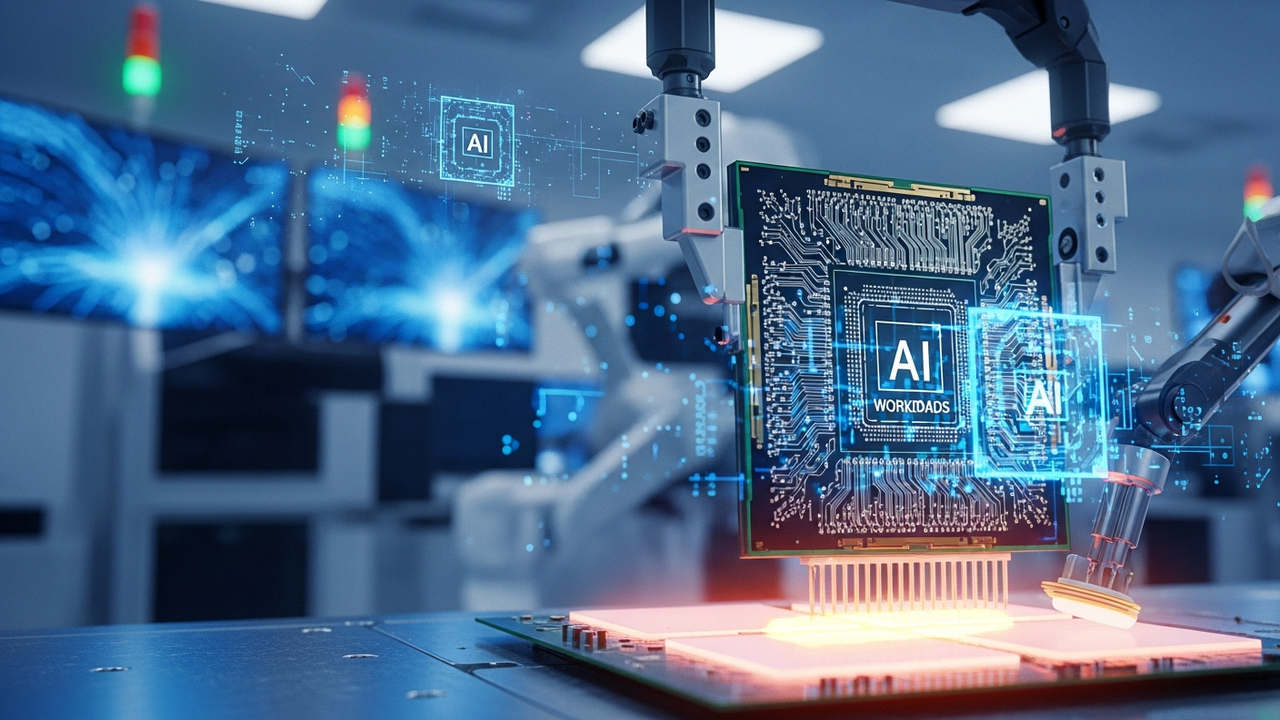
Fujitsu has articulated its view that the explosive growth of Artificial Intelligence (AI) workloads is fundamentally redefining the semiconductor industry. This shift implies that AI-driven optimization of the entire computing ecosystem, not just the pursuit of individual chip performance, is essential. Consequently, the importance of advanced packaging technologies and materials, such as silicon interposers and next-generation thermal materials, is soaring to unprecedented levels. Innovation in materials science is highlighted as the decisive factor that will determine the future of semiconductor technology.
Technical & Clinical Details: Evolution of Packaging Technology and Thermal Management Materials in the AI Era
AI workloads demand massive data processing and parallel computation, leading to higher density integration and greater heat generation in high-performance chips. To address this challenge, Fujitsu points out that advanced packaging technologies like silicon interposers, which integrate multiple chips, are critical for maximizing data transfer speeds and minimizing signal delays. Moreover, highly efficient thermal management is indispensable for stable operation and extended lifespan of chips, making the development of next-generation thermal materials like diamond and graphite composites a pressing issue. These materials, with their high thermal conductivity, efficiently dissipate heat generated by AI processors, enabling maximum performance. AI itself is also being utilized for the design and optimization of these materials and the improvement of manufacturing processes, accelerating the cycle from material discovery to implementation.
Background & Context: Physical Limits of Moore’s Law and AI-Driven Innovation
The semiconductor industry is encountering the physical limits of Moore’s Law, making it increasingly difficult to sustain performance improvements solely through transistor miniaturization. As a result, packaging technology and advanced materials are gaining attention as new frontiers for enhancing performance and reducing costs in next-generation semiconductors. While the evolution of AI technology has dramatically increased demand for high-performance AI chips, it has also brought to light issues such as heat generation and power consumption. Fujitsu’s analysis emphasizes AI’s role not just as an application technology but as an “enabler” that fundamentally transforms the design and manufacturing processes of semiconductors themselves, along with the materials science that underpins them.
Strategic Significance & Outlook: The Future of Semiconductor Innovation Led by Materials and Packaging
Fujitsu concludes that strategic investment in materials science and packaging technology is essential for the semiconductor industry to adapt to the AI era. Innovations in silicon interposers and next-generation thermal materials will dramatically improve the performance and reliability of AI processors, accelerating technological innovation in all fields where AI is utilized, including data centers, edge devices, and autonomous vehicles. Moving forward, semiconductor manufacturers will need to focus not only on individual chip performance but also on overall optimization, including system integration, thermal management, and power efficiency, making collaboration with materials scientists more crucial than ever. Fujitsu’s recommendations suggest the potential for Japanese technology to play a significant role in this global competition.
Get our weekly technology intelligence — free
Receive an infographic that lets you judge at a glance whether each field’s analysis report is worth reading.
Subscribe Free — Weekly Tech Intelligence
By subscribing, you’ll receive Troy-Technical’s weekly technology intelligence newsletter.
- Your email and selected fields are used only to deliver the newsletter.
- We never share your information with third parties.
- You can unsubscribe anytime via the link in each email.
See our Privacy Policy for details.
Takes about a minute · Unsubscribe anytime