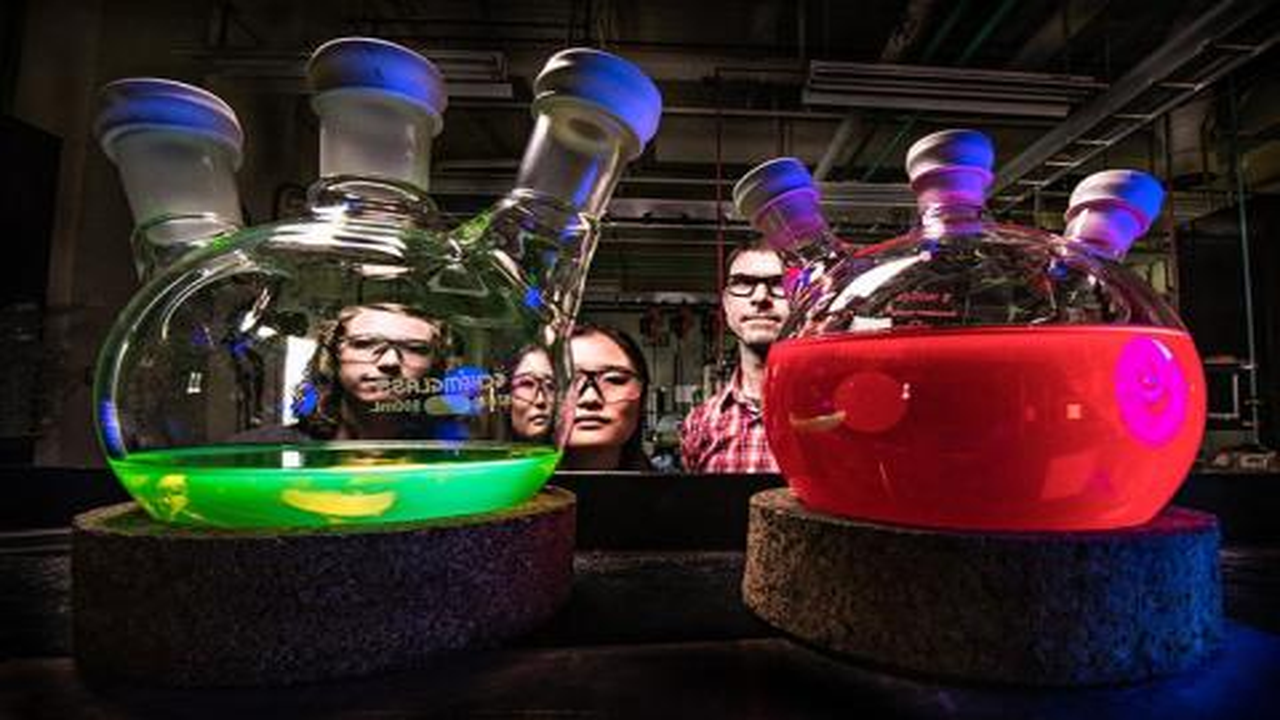
Background: Advancements in Quantum Dot Technology and the Search for Next-Generation Materials
Quantum dots (QDs) are nanocrystalline materials that exhibit superior optical and electronic properties due to their unique quantum size effects. They have been extensively researched for their potential to revolutionize various fields including displays, lighting, and solar cells. The ongoing search for next-generation QD materials that offer even higher performance and easier manufacturing has led to significant attention on perovskite quantum dots (PQDs).
Key Findings: Characteristics and Advantages of Perovskite Quantum Dots (PQDs)
This informational page provides a fundamental overview of Perovskite Quantum Dots (PQDs) and highlights their remarkable characteristics. PQDs are nanoscale materials derived from perovskite-structured compounds (e.g., CsPbBr₃) represented by the general formula ABX₃. This crystal structure is analogous to the mineral perovskite (calcium titanate, CaTiO₃).
The main characteristics and advantages of PQDs include:
- Exceptional Optical Properties: PQDs exhibit very high photoluminescence quantum yields (PLQY, often exceeding 90%), narrow emission spectral full-width at half-maximum (FWHM), a broad excitation wavelength range, and readily tunable emission colors (by modifying quantum size and composition). These properties enable vivid and pure color reproduction, which is particularly advantageous for display applications. For example, their narrow emission lines contribute to a significantly larger color gamut, covering up to 140% of the NTSC standard.
- Defect Tolerance: Compared to traditional semiconductor QDs (e.g., CdSe), PQDs possess a higher tolerance to defects. This means their performance is less severely impacted by crystal imperfections, contributing to simplified manufacturing processes and improved stability, particularly against surface trapping states.
- High Color Purity: The narrow FWHM translates to exceptionally high color purity (very pure red, green, and blue), enabling the realization of displays that meet wide color gamut standards such as BT.2020.
- Easy Synthesis: PQDs can typically be synthesized through relatively low-temperature solution-phase processes. This allows for reduced manufacturing costs and suitability for large-scale production, differentiating them from other QDs that require high-temperature reactions.
Due to these superior properties, PQDs are highly suitable for various electronic and optoelectronic applications:
- LED Displays: PQDs are expected to enable wider color gamuts and highly efficient light emission in next-generation displays like QLEDs (Quantum Dot Light-Emitting Diodes) and QD-OLEDs, significantly enhancing the visual experience.
- Solar Cells: They hold promise for improving power conversion efficiency, potentially further boosting the performance of perovskite solar cells, a rapidly advancing photovoltaic technology.
- Lighting: PQDs contribute to the development of high color rendering index (CRI) and energy-efficient LED lighting.
- Photodetectors, Lasers, and Bioimaging: Applications in these fields are also actively being explored, leveraging their high absorption coefficients and fast emission lifetimes.
Technical Significance & Outlook: Revolutionizing Displays and Energy
Perovskite quantum dots, with their unparalleled optical properties and relatively straightforward synthesis methods, have the potential to revolutionize both the display and energy industries. In next-generation displays, which demand high color purity and efficiency, PQDs are anticipated to become a standard technology. In the solar cell sector, they contribute to the realization of low-cost, high-efficiency devices, accelerating the adoption of renewable energy.
However, PQDs still face challenges related to their stability in the presence of moisture and oxygen, making the pursuit of lead-free compositions and long-term durability enhancements a key focus for future R&D. If these challenges are overcome, PQDs are poised to play a central role in two major markets—more vibrant and energy-efficient displays, and more efficient solar power generation systems—thereby making significant contributions to a sustainable society. This field of research continues to be a global focus due to its immense technological and economic impact.
Source: https://www.perovskite-info.com/perovskite-quantum-dots-pqds









Comments