Background
For individuals with diabetes, continuous glucose monitoring (CGM) is critical for effective disease management and the prevention of complications. However, conventional finger-prick blood glucose testing is inherently invasive, burdensome for patients, and often fails to provide a complete picture of real-time glucose fluctuations. While current CGM systems have advanced, they continue to grapple with issues related to accuracy, cost, and patient comfort. Against this backdrop, the convergence of pain-free microneedle (MN) technology with biosensors is garnering considerable interest as a promising next-generation CGM solution.
Key Findings
This review provides a comprehensive summary of the latest research trends in microneedle-based enzymatic biosensors for continuous glucose monitoring (CGM). Its primary focus encompasses materials, architectural designs, and performance evaluation.
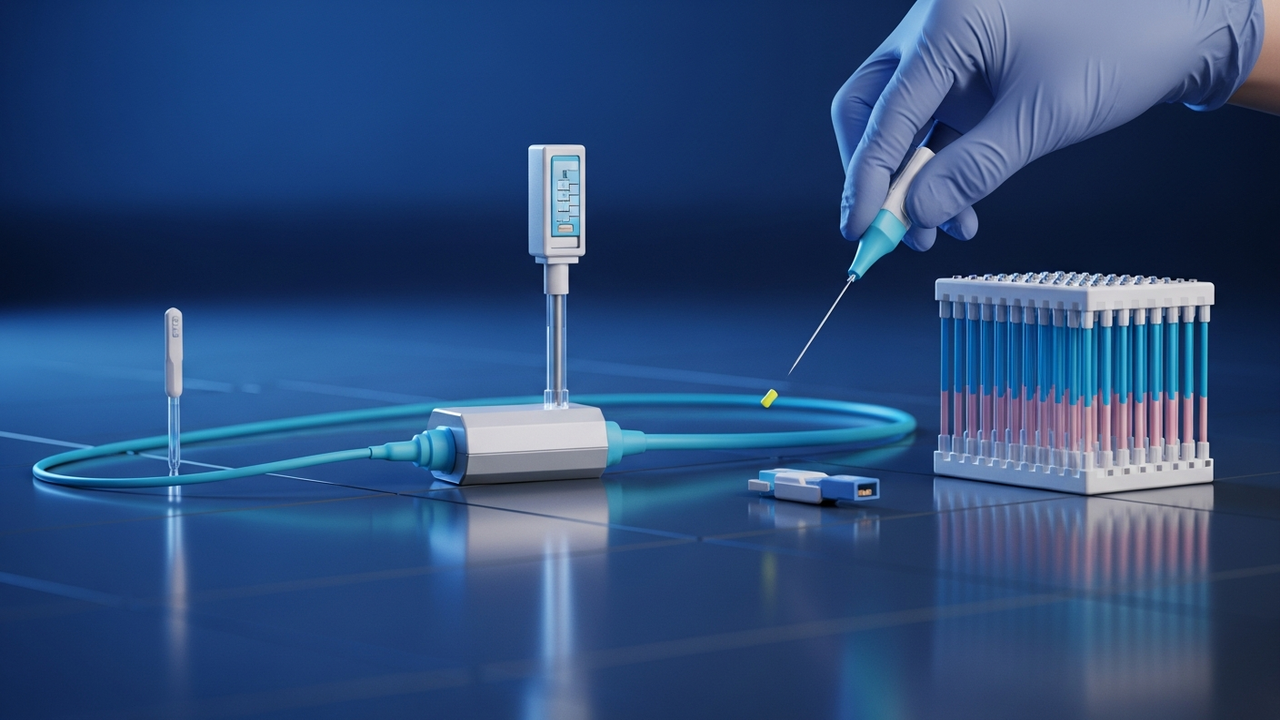
- Microneedle Materials and Fabrication: MN biosensors employ materials such as silicon, polymers, and various metals, selected for their biocompatibility, mechanical strength, ease of fabrication, and permeability to biofluids. Fabrication techniques range from lithography and etching to, significantly, 3D printing, which allows for custom manufacturing of complex-shaped and highly functional MN arrays.
- Integration of Enzymatic Biosensors: Enzymes, such as glucose oxidase (GOx), are immobilized at or within the tips of MNs. These enzymes react with glucose present in the interstitial fluid, producing electrochemical or optical signals proportional to glucose concentration. The stability, activity, and immobilization methods of the enzymes critically influence sensor performance.
- Diverse Architectures: Microneedle biosensors are realized in several distinct designs:
- Solid Microneedles: Feature sensors coated directly onto their surface.
- Hollow Microneedles: Designed to aspirate biofluid for internal analysis or to facilitate reagent injection.
- Dissolvable Microneedles: Biodegrade after insertion, enabling controlled drug release or functioning as transient sensors.
The selection of these architectures is dictated by the target analyte and specific application objectives.
- Performance Evaluation and Animal Studies: The review assesses reports on the detection limit, linear range, response time, selectivity, and biocompatibility of developed MN biosensors. Significantly, integrated MN biosensing devices fabricated via 3D printing have demonstrated accurate monitoring of subcutaneous glucose levels in mice, representing a crucial step towards clinical translation.
MN technology is evolving not merely for painless drug delivery but also as an innovative platform for real-time disease diagnostics.
Technical Significance & Outlook
Microneedle-based enzymatic biosensors possess the potential to dramatically enhance the quality of life for individuals with diabetes. Their pain-free, minimally invasive, and continuous monitoring capabilities represent powerful tools, empowering patients to actively manage their glucose levels and mitigate the risk of complications. Significant impacts are anticipated in the following areas:
- Improved Patient Compliance: The reduction in pain and discomfort will diminish resistance to daily use, thereby increasing patient adoption rates for CGM.
- More Accurate Data Provision: Real-time and continuous data will empower clinicians to discern more detailed glucose fluctuation patterns and formulate truly personalized treatment plans.
- New Application Fields: Expansion into the detection of other biomarkers (e.g., lactate, ketone bodies) and integration with AI for predictive analytics will further advance their multifunctionality.
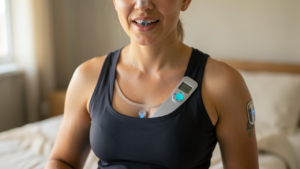
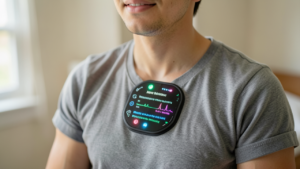
Looking ahead, these MN-based CGM systems are anticipated to be seamlessly integrated with smartwatches and patch-type devices, facilitating widespread adoption in increasingly convenient and sophisticated forms. This progression will contribute significantly not only to advanced diabetes management but also to the broader advancement of preventive and personalized medicine, ultimately fostering a society where individuals can lead healthier and more active lives.

Comments