Background: Evolution and Challenges in Computational Materials Design
Modern high-performance machinery and structures demand both extreme reliability and lightweight characteristics, especially in motorsports and aerospace where marginal material performance differences can dictate outcomes. Historically, material development heavily relied on trial-and-error and empirical rules. However, recent advancements in computational materials science have dramatically improved the ability to predict material behavior from atomic to macro scales, enabling the design of novel materials tailored to specific requirements. A persistent challenge has been the successful scale-up and validation of computationally designed materials in real-world applications.
Features and Applications of MIT’s High-Performance Steel
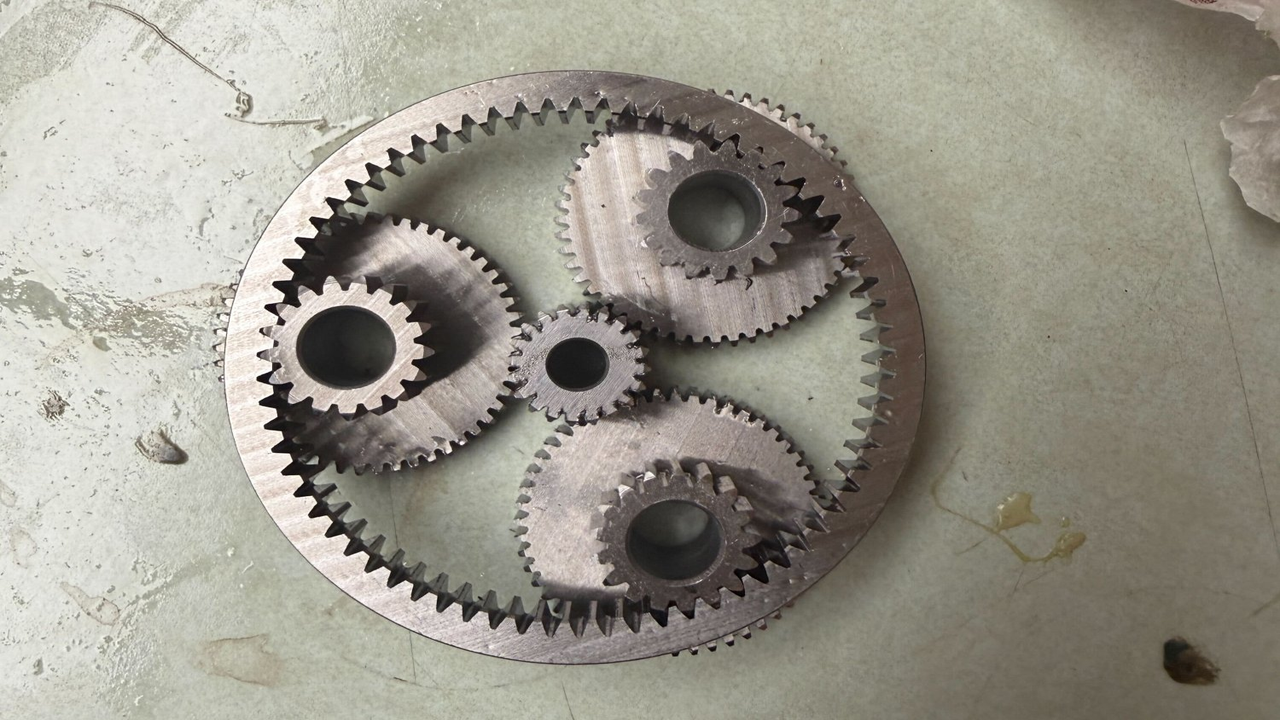
The high-performance steel developed by researchers at the Massachusetts Institute of Technology (MIT) stands as a prime example of successful computational materials design. Initially engineered for aerospace applications, such as helicopter gears, which demand exceptional durability and fatigue strength, this steel boasts a unique combination of properties. Through a proprietary heat treatment process and alloy composition, it achieves a remarkably hard and wear-resistant surface while maintaining a tough and fatigue-resistant core. This dual-property characteristic makes it highly resilient to external impact and abrasion, simultaneously resisting internal crack propagation.
This material has already proven its capabilities in world-renowned motorsports events. In Formula One, it has been deployed in critical components like engine gearboxes and suspension systems, demonstrating reliability under the sport’s most demanding conditions. Similarly, in off-road endurance races such as the Baja 1000, its long-term durability has been validated in environments characterized by severe vibrations, impacts, and abrasive dust.
Deployment in Next-Generation Motorsports and Future Outlook
The latest deployment sees this MIT-developed steel integrated into the MIT Motorsports team’s electric race car for the 2026 season. This adoption underscores a virtuous cycle where academic material innovation translates into top-tier engineering applications and then feeds back into further technological advancements. Its suitability for electric race cars, which impose high torque and rotational speed demands on powertrains, further attests to the material’s versatility and adaptability.
This success unequivocally demonstrates that computational materials science is not merely an academic tool but an indispensable element for solving complex real-world engineering challenges and creating high-performance products. Moving forward, this approach is expected to accelerate the development of lighter, stronger, and more durable materials across various industries, including automotive, aerospace, and robotics. Furthermore, by enabling the design of materials with consideration for their entire lifecycle, it will contribute significantly to resource efficiency and the realization of a more sustainable society.
Source: https://news.mit.edu/2026/steel-developed-at-mit-formula-one-baja-1000-mit-motorsports-0520








Comments