Background
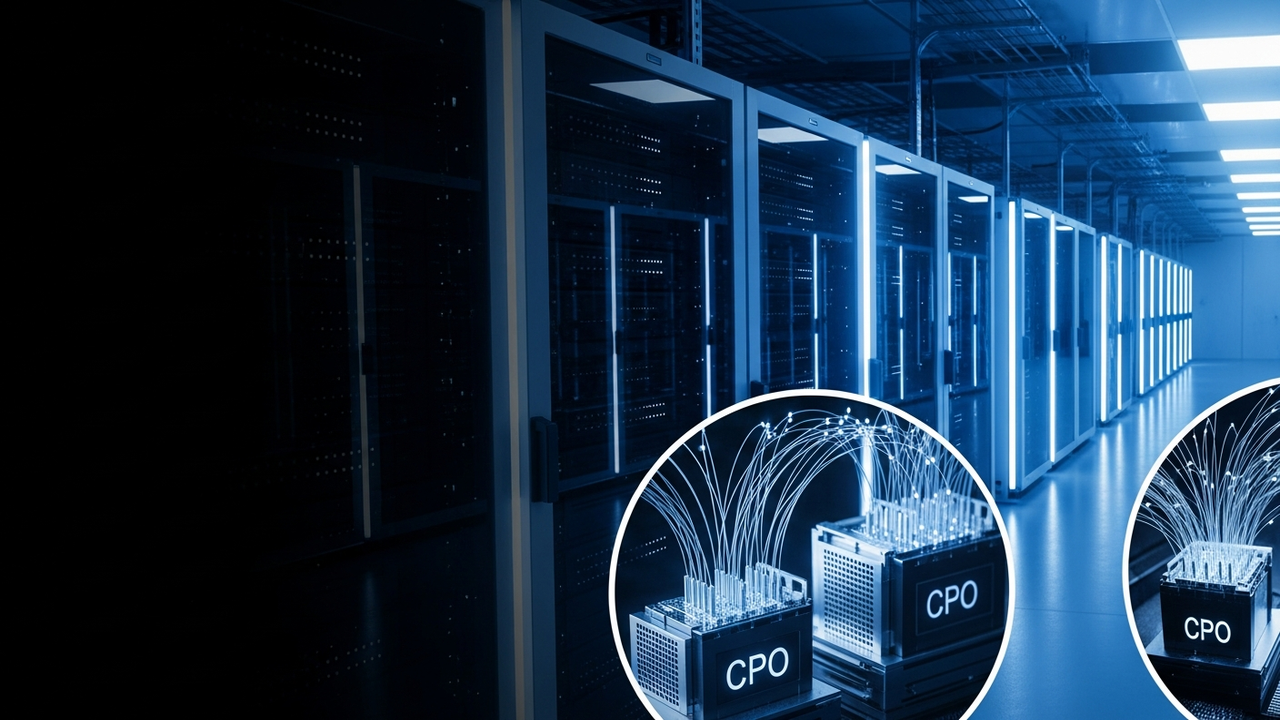
The burgeoning complexity and scale of AI models have driven an exponential increase in data movement within modern data centers. Traditional electrical signaling over copper interconnects is rapidly approaching its fundamental limits in terms of bandwidth, latency, and power efficiency. Co-Packaged Optics (CPO) emerges as a transformative solution designed to overcome this critical ‘data movement wall.’ Optical signals inherently offer superior speed, extended reach, and immunity to electromagnetic interference, rendering them indispensable for next-generation AI supercomputing and high-performance cloud infrastructures. This shift from conventional electrical to advanced optical interconnects at the package level represents a fundamental paradigm change in data center architecture.
Key Findings
Tokyo Electron’s analysis underscores the critical role of Co-Packaged Optics (CPO) technology in significantly advancing AI data center performance. CPO achieves dramatic improvements by integrating electrical-to-optical signal conversion directly within the processing package itself, which substantially mitigates communication bottlenecks and drastically reduces overall system power consumption compared to traditional pluggable optical modules. This intimate integration facilitates ultra-high-speed, energy-efficient data transfer—a crucial requirement for increasingly dense and demanding AI processing workloads.
Technical Details
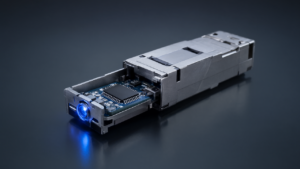
The core innovation of CPO lies in co-locating the optical transceivers in close proximity to high-bandwidth processing chips, such as CPUs or GPUs. This minimized physical distance drastically reduces the path electrical signals must traverse on the printed circuit board (PCB), thereby mitigating signal degradation and parasitic power loss. By executing optical conversion closer to the processor, CPO inherently eliminates the substantial power draw and latency penalties associated with conventional pluggable transceivers. Leading industry players like NVIDIA and Broadcom have already introduced CPO-enabled chips, deploying them in state-of-the-art AI accelerators and high-performance network switches, unequivocally demonstrating the technology’s maturity and readiness for widespread practical application.
Strategic Significance & Outlook
The widespread adoption of CPO technology is poised to revolutionize AI data center architecture, enabling the construction of significantly higher-density and more energy-efficient systems. This architectural shift will directly accelerate AI model training cycles and enhance the deployment of real-time inference capabilities. Beyond traditional data centers, CPO is expected to find compelling applications in other demanding sectors, including advanced edge computing and high-performance computing (HPC) environments, where extreme speed, ultra-low latency, and minimal power consumption are paramount. Tokyo Electron’s active engagement in CPO manufacturing process development underscores its commitment to supporting the industrialization of this breakthrough technology, positioning it as a fundamental enabler for the future of digital infrastructure.
Source: https://www.tel.co.jp/museum/magazine/report/202608_01/
Get our weekly technology intelligence — free
Receive an infographic that lets you judge at a glance whether each field’s analysis report is worth reading.
Subscribe Free — Weekly Tech Intelligence
By subscribing, you’ll receive Troy-Technical’s weekly technology intelligence newsletter.
- Your email and selected fields are used only to deliver the newsletter.
- We never share your information with third parties.
- You can unsubscribe anytime via the link in each email.
See our Privacy Policy for details.
Takes about a minute · Unsubscribe anytime