Key Findings
Micron Technology announced the commencement of mass production for its innovative 36GB 12-layer HBM4 memory in March 2026, with shipments already underway to NVIDIA for its next-generation AI platform, Vera Rubin. This significant milestone highlights Micron’s robust position in the AI accelerator market and the rapid evolution of high-bandwidth memory technology. Furthermore, Micron revealed plans to substantially increase its total semiconductor manufacturing and technology R&D investments in the United States to over $250 billion by 2035, aiming to address the accelerating demand for advanced memory driven by AI.
Technical / Clinical Details
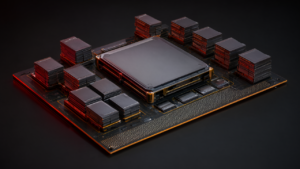
HBM4 offers significantly higher bandwidth compared to its predecessor, HBM3E, through an increased number of data channels and improved interface speeds. Micron’s 36GB 12-layer HBM4 achieves its high density and performance by vertically stacking 12 DRAM dies, integrated using Through Silicon Via (TSV) technology and micro-bump bonding. This high-density, high-performance memory is indispensable for supporting the immense data processing capabilities required by state-of-the-art AI GPUs and accelerators like NVIDIA’s Vera Rubin. HBM4 dramatically enhances computational speed and efficiency in data-intensive AI workloads, including large language model (LLM) training and inference, High-Performance Computing (HPC), and data center applications. The adoption of HBM4 not only boosts the overall performance of AI systems but also contributes to improved power efficiency, fostering the development of more sustainable AI infrastructure.
Background & Context
The increasing complexity and scale of AI models have led to the ‘memory wall’ problem, where the data transfer rate between the processor and memory becomes a bottleneck for overall system performance. HBM technology was developed to address this issue and has become a de facto standard in the AI semiconductor industry. While HBM3E is expected to remain a crucial technology in 2026, the transition to HBM4 is an inevitable trend, with major memory manufacturers accelerating production and qualification. Micron’s mass production of HBM4 and shipments to NVIDIA will intensify competition with rivals like SK Hynix and Samsung in the HBM market. The substantial investment plan in the United States aligns with government initiatives like the CHIPS Act, aiming to strengthen domestic semiconductor manufacturing capabilities and enhance supply chain resilience.
Strategic Significance & Outlook
Micron’s initiation of HBM4 mass production and its supply to the NVIDIA Vera Rubin platform marks a critical turning point in the evolution of the AI accelerator market. The widespread adoption of HBM4 is expected to dramatically enhance the performance of AI applications, enabling the development of more advanced AI models. Furthermore, the investment exceeding $250 billion in the United States reflects Micron’s strong commitment to establishing long-term leadership not only in HBM but also across a broad spectrum of advanced semiconductor technologies. This strategy will allow the company to build a robust foundation for meeting the demands of next-generation AI infrastructure and further expand its influence in the global semiconductor supply chain. The coming period will see intensified competition in HBM4 market share and continued technological innovation.
Source: https://www.openpr.com/news/4602776/high-bandwidth-memory-market-2026-ai-accelerators-and-hbm4
Get our weekly technology intelligence — free
Receive an infographic that lets you judge at a glance whether each field’s analysis report is worth reading.
Subscribe Free — Weekly Tech Intelligence
By subscribing, you’ll receive Troy-Technical’s weekly technology intelligence newsletter.
- Your email and selected fields are used only to deliver the newsletter.
- We never share your information with third parties.
- You can unsubscribe anytime via the link in each email.
See our Privacy Policy for details.
Takes about a minute · Unsubscribe anytime