Key Findings
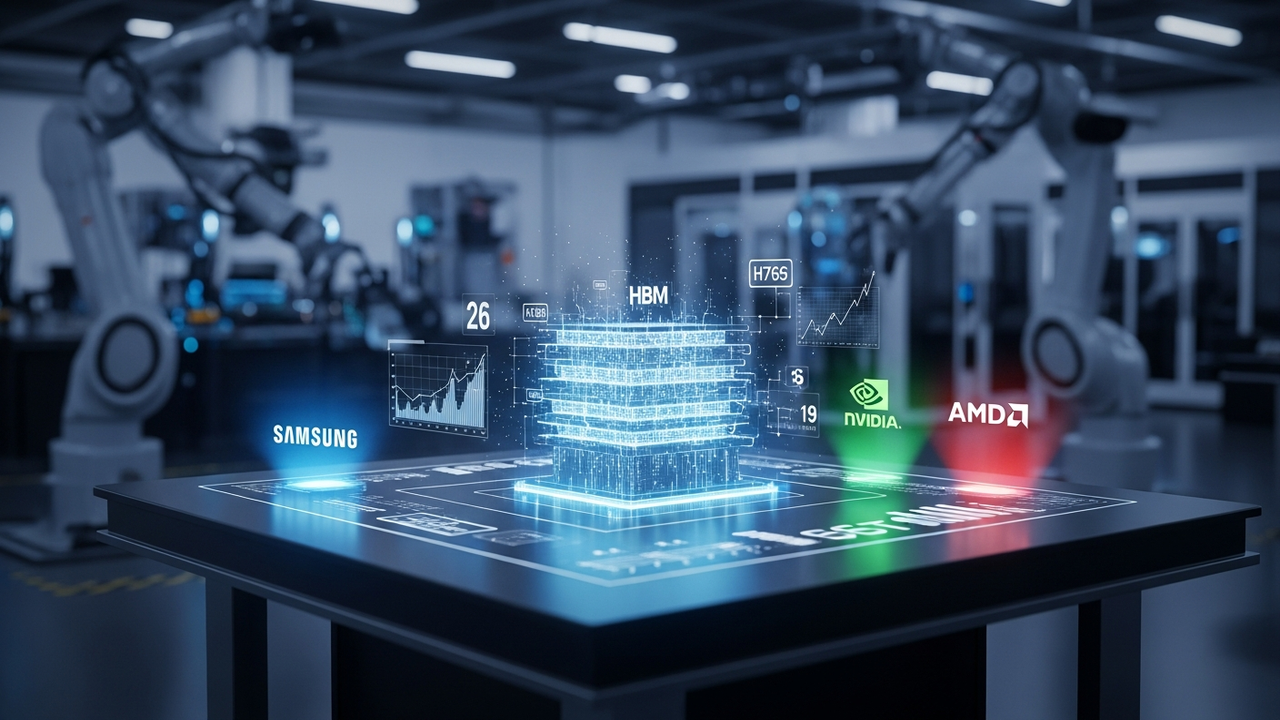
According to the latest forecasts from UBS, Samsung Electronics is strategically positioned to capture the top global market share in HBM memory next year, driven by its aggressive investments and enhanced production capacity for HBM4, the next generation of High Bandwidth Memory. This projection comes amidst an explosive increase in HBM demand, propelled by the escalating data processing requirements of AI systems. The early and large-scale transition to HBM4 technology is identified as a primary catalyst for Samsung’s potential market leadership. Reports also indicate strong interest in Samsung’s HBM4 technology from leading AI chip manufacturers such as NVIDIA and AMD.
Technical / Clinical Details
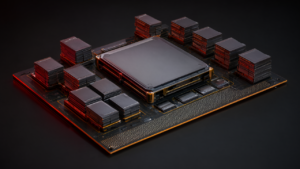
HBM4 is designed to deliver a significant leap in data transfer performance compared to previous HBM generations. One of its most crucial improvements is the doubling of data channels from the HBM3E standard of 1,024 bits to 2,048 bits. This dramatically expands the data bandwidth between memory and AI chips (GPUs, ASICs, etc.), enabling the ultra-fast data movement essential for training and inference of large-scale AI models. HBM4 achieves high density and efficient memory solutions by vertically stacking multiple DRAM dies using Through Silicon Via (TSV) technology and connecting them at ultra-fine pitches. Samsung is intensifying its investments in advanced manufacturing facilities to scale HBM4 production, focusing on yield improvement and cost efficiency. This technology is expected to play a vital role in resolving memory bottlenecks and maximizing overall system performance in sectors such as AI data centers, High-Performance Computing (HPC), and autonomous automotive systems.
Background & Context
The evolution of AI is transforming the semiconductor industry, making the supply of high-bandwidth memory like HBM a key determinant of AI chip performance, alongside processor computational power. Currently, SK Hynix leads the HBM market, but Samsung is pursuing a tripartite strategy encompassing memory, foundry, and packaging to regain market dominance. As HBM4 is poised to become a critical component of next-generation AI chips, its development and the establishment of mass production capabilities are strategically paramount for major memory manufacturers. The reported interest from leading AI chip companies like NVIDIA and AMD reflects high confidence in Samsung’s technological capabilities and supply capacity, which is expected to further intensify the market share competition.
Strategic Significance & Outlook
Samsung’s substantial commitment to HBM4 has the potential to significantly reshape the competitive landscape of the AI memory market. Should Samsung successfully achieve early mass production, ensure quality stability, and secure supply to key customers, it could rapidly bolster its presence in the HBM market. Capturing the top market share next year would be a crucial milestone in solidifying Samsung’s leadership in the AI era. This heightened competition will accelerate technological innovation, ultimately leading to the introduction of more powerful and efficient AI systems to the market. The HBM4 generation competition will be a critical factor influencing the overall development of the AI industry.
Source: https://www.sammyfans.com/2026/08/08/samsungs-hbm4-push-could-help-it-take-the-top-spot-next-year/
Get our weekly technology intelligence — free
Receive an infographic that lets you judge at a glance whether each field’s analysis report is worth reading.
Subscribe Free — Weekly Tech Intelligence
By subscribing, you’ll receive Troy-Technical’s weekly technology intelligence newsletter.
- Your email and selected fields are used only to deliver the newsletter.
- We never share your information with third parties.
- You can unsubscribe anytime via the link in each email.
See our Privacy Policy for details.
Takes about a minute · Unsubscribe anytime