Key Findings
The 2026 Electronic Components and Technology Conference (ECTC 2026) clearly underscored a significant paradigm shift in semiconductor innovation, moving from traditional transistor scaling to advanced packaging and integration technologies. The conference prominently featured the latest advancements in heterogeneous integration, hybrid bonding, innovative advanced substrates, photonic packaging, and sophisticated thermal management solutions. Particularly, glass substrates and Fan-Out Panel Level Packaging (FOPLP) garnered substantial attention as next-generation high-density packaging platforms, identified as essential technologies for enhancing the performance of High-Performance Computing (HPC) and AI applications.
Technical / Clinical Details
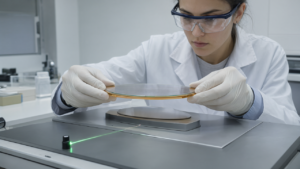
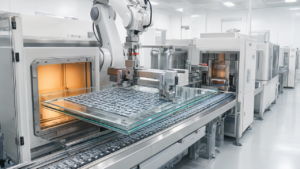
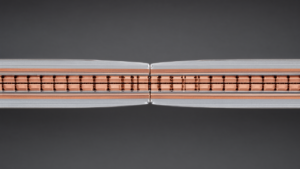
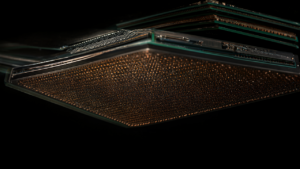
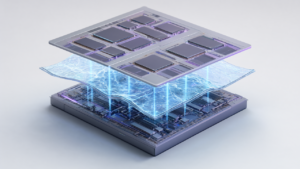
Heterogeneous integration involves combining multiple dies (chiplets) with different functionalities into a single package, thereby improving overall system performance, power efficiency, and functionality. Hybrid bonding is a key enabler, offering direct copper-to-copper bonding between chips at sub-micron pitches, drastically increasing interconnect density and data transfer speeds compared to traditional micro-bumps. At ECTC 2026, glass substrates were specifically discussed as a promising solution for next-generation high-density packaging. Compared to silicon interposers, glass substrates offer easier large-area scaling, superior electrical properties, enhanced mechanical stability, and the potential for more cost-effective manufacturing. Furthermore, Fan-Out Panel Level Packaging (FOPLP) is gaining traction as a technology that processes chips on larger panel sizes, allowing for more units per batch than wafer-level packaging, thus reducing manufacturing costs while achieving high integration density. These technologies are crucial for optimizing the balance of performance, power, and cost in complex systems integrating AI processors and HBM (High Bandwidth Memory).
Background & Context
With the perceived limits of Moore’s Law, the semiconductor industry is finding it increasingly difficult to sustain performance improvements solely through transistor miniaturization. Consequently, packaging technology has emerged as a new frontier driving system-level innovation. The demand from compute-intensive applications like AI and HPC accelerates this trend, necessitating packaging solutions that offer higher performance, bandwidth, lower latency, and greater power efficiency. Emerging technologies such as glass substrates and FOPLP are vital for overcoming the limitations of conventional organic substrates and silicon interposers to meet these demands. The discussions at the conference signify that these technologies are transitioning from research phases towards practical implementation, charting the course for the industry’s future direction.
Strategic Significance & Outlook
Glass substrates and FOPLP are expected to play pivotal roles in the future advanced packaging market. Their adoption is likely to accelerate in sectors requiring high-density and high-performance semiconductors, including AI accelerators, data centers, and automotive electronics. FOPLP, in particular, holds the potential to reduce the cost of high-performance packages through economies of scale in manufacturing. Over the next few years, further research and development, along with industry standardization, are anticipated to drive the commercialization of these technologies. The insights from ECTC 2026 suggest that these advancements will form the next wave of semiconductor innovation, establishing new paradigms for system performance.
Get our weekly technology intelligence — free
Receive an infographic that lets you judge at a glance whether each field’s analysis report is worth reading.
Subscribe Free — Weekly Tech Intelligence
By subscribing, you’ll receive Troy-Technical’s weekly technology intelligence newsletter.
- Your email and selected fields are used only to deliver the newsletter.
- We never share your information with third parties.
- You can unsubscribe anytime via the link in each email.
See our Privacy Policy for details.
Takes about a minute · Unsubscribe anytime