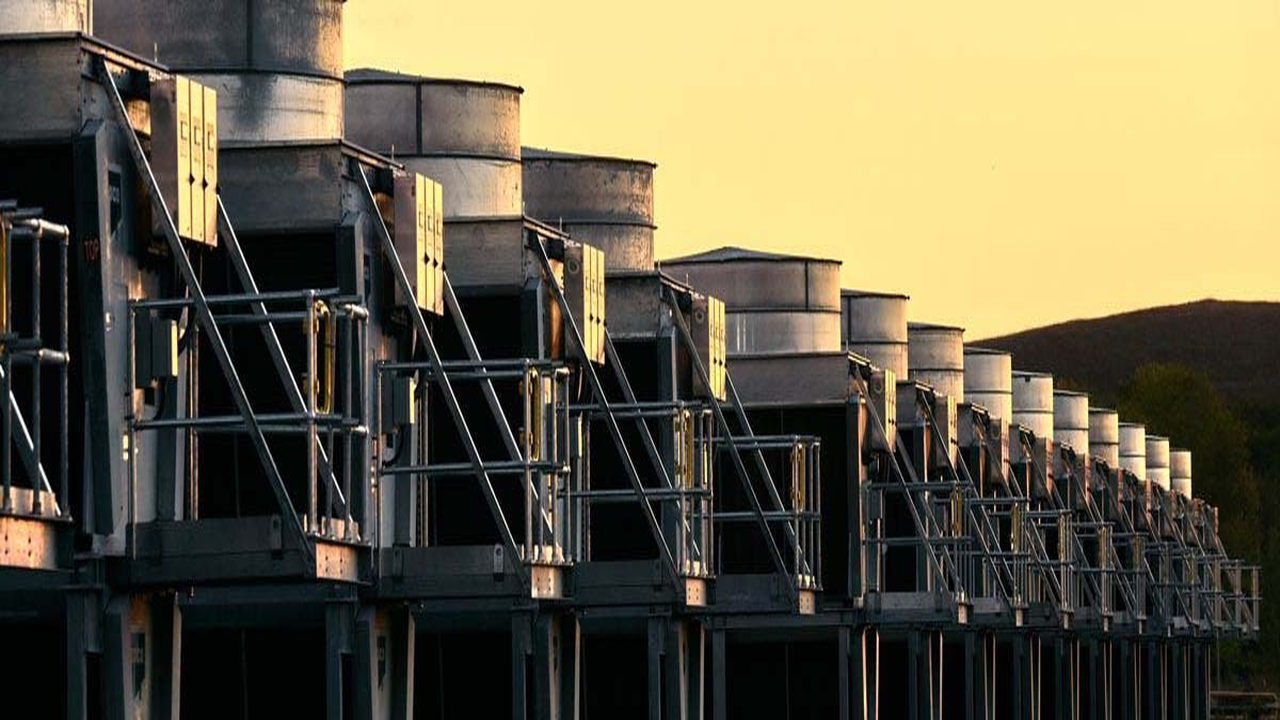
Background: AI Boom and Exploding Data Center Power Demand
The proliferation of generative AI and Large Language Models (LLMs) has placed unprecedented demands on data center infrastructure. The computational power required for training and inference of AI models has reached levels unimaginable just a few years ago, leading to an explosive increase in data center electricity consumption. High-performance GPU clusters, such as NVIDIA’s H100/H200 and Blackwell series, exhibit extremely high power density and heat generation, posing a fundamental challenge where traditional air-cooling systems are no longer sufficient.
Key Findings: GPU Densification and Grid Impact
This article provides a detailed analysis of how AI factories are fundamentally altering the grid calculus:
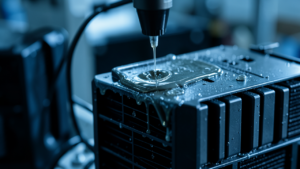
- GPU Densification and Cooling Requirements: To accelerate and improve the efficiency of AI processing, high-density integration of GPUs is imperative. However, this dramatically increases the heat output per server rack, making advanced cooling solutions like direct-to-chip liquid cooling virtually mandatory. Liquid cooling systems are far more efficient at heat dissipation than air cooling and are poised to become the standard for future AI data center designs. Companies like ASMPT are also recognizing thermal management as a primary challenge in their advanced packaging roadmaps, including HBM and CoWoS.
- Electricity Supply Capacity Bottleneck: The rapid pace of AI facility construction and the soaring electricity demand frequently outstrip the capacity of existing electrical grids. In many regions, utilities struggle to swiftly meet new power requests from data centers. This bottleneck is delaying the establishment of new AI data centers and, alongside AI chip supply constraints (such as the CoWoS shortage from TSMC), forms one of the two major impediments to the overall growth of the AI ecosystem.
- Increased Risk of Behind-the-Meter Generation: To cope with grid limitations, some data center operators are exploring “behind-the-meter” power generation solutions, such as on-site natural gas power plants or Small Modular Reactors (SMRs). While these could offer temporary solutions for ensuring stable power supply, they also carry risks of increased environmental impact (in the case of natural gas) or new concerns regarding safety and waste management associated with nuclear power.
Technical Significance & Outlook: The Path to Sustainable AI Infrastructure
The power consumption issue of AI factories transcends mere technical challenges, extending into broader domains such as energy policy, environmental strategy, and urban planning. Addressing this multifaceted problem requires a multi-pronged approach:
- Investment in Renewable Energy and Smart Grids: Meeting the demands of large-scale AI data centers necessitates massive investment in renewable energy sources like solar and wind, coupled with the deployment of smart grid technologies for efficient management. This will help reduce AI’s carbon footprint and promote sustainable growth.
- Development of Energy-Efficient AI Chips and Software: At the hardware level, there is a pressing need for more energy-efficient AI chips (e.g., low-power ASICs). On the software side, efforts to curb power consumption through model miniaturization (e.g., Gemini 3.5 Flash) and inference optimization are crucial.
- Collaboration Between Policymakers and Industry: It is vital for governments, utility companies, and the AI industry to collaborate on long-term energy supply plans and data center infrastructure development. This will enable them to anticipate future power demands and maintain grid stability.
While AI advancements promise immense societal benefits, their sustainable growth hinges on the establishment of robust and clean energy infrastructure. The power issue in data centers stands as one of the most urgent and critical challenges of the AI era, and its resolution will determine the future trajectory of AI development.




Comments