Background
Skin cancer, encompassing basal cell carcinoma, squamous cell carcinoma, and melanoma, represents a significant global health burden, with rising incidence rates. While various treatment modalities exist, including surgery, radiation, chemotherapy, and immunotherapy, topical drug delivery for skin cancer often faces substantial challenges. The skin’s formidable barrier function, primarily the stratum corneum, severely limits the penetration of therapeutic agents to target cells in the epidermis and dermis. This often necessitates systemic drug administration, which can lead to undesirable side effects and reduced patient quality of life. Innovative strategies are urgently needed to enhance localized drug accumulation and efficacy without systemic toxicity.
Key Findings
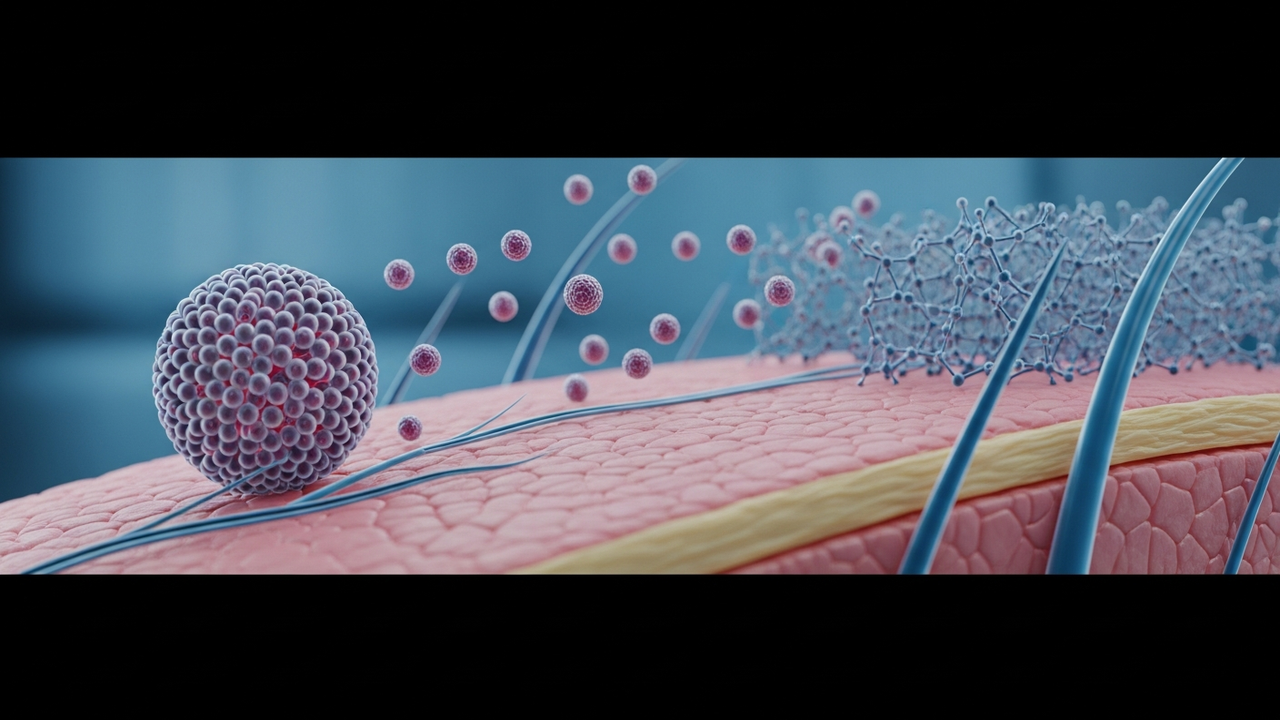
Nanoparticle-based biomaterials have emerged as a highly promising strategy to overcome the skin barrier and significantly improve drug penetration and targeted delivery for skin cancer treatment. These nanocarriers are designed to encapsulate anticancer agents, enhancing their solubility, stability, and enabling their selective accumulation within specific skin layers, thereby maximizing therapeutic efficacy and minimizing systemic exposure. Key types of nanocarriers include:
- Liposomes: Composed of phospholipid bilayers, these nanoscale vesicles can encapsulate both hydrophilic and hydrophobic drugs. Their biocompatibility, ability to enhance drug stability, and capacity to facilitate dermal penetration make them attractive for topical applications.
- Polymeric Nanoparticles: Fabricated from biodegradable polymers, these systems allow for controlled drug release profiles and can be surface-modified with targeting ligands for specific cellular uptake.
- Solid Lipid Nanoparticles (SLNs) and Nanostructured Lipid Carriers (NLCs): These carriers, composed of solid lipids, enhance drug stability, improve skin permeation by interacting with the stratum corneum lipids, and demonstrate excellent biocompatibility.
These nanocarriers facilitate drug permeation by either transiently disrupting the stratum corneum barrier or by utilizing skin appendages like hair follicles and sweat glands as alternative entry pathways. Studies have demonstrated that loading anticancer drugs, such as imiquimod and 5-fluorouracil, into polymeric nanocapsules and integrating them into bioadhesive gel formulations significantly enhances drug retention in the epidermal and dermal layers. This localized accumulation leads to higher drug concentrations at the tumor site, thereby improving therapeutic outcomes while reducing systemic absorption and associated side effects.
Technical Significance & Outlook
The technical significance of nanoparticle-based biomaterials for skin cancer therapy is profound, as they offer a paradigm shift towards more effective and less invasive localized treatments. By improving the efficacy of topical delivery, these systems can reduce the need for systemic chemotherapy, mitigate adverse drug reactions, and enhance patient quality of life. This approach holds particular promise for treating therapy-resistant skin cancers and lesions that are difficult to excise surgically. Future research will focus on optimizing nanocarrier design for precise drug release kinetics, enhancing targeting specificity to cancer cells within the skin, conducting rigorous in vivo safety and efficacy assessments, and developing scalable manufacturing processes for clinical translation. Furthermore, exploring the combination of nanocarrier-mediated drug delivery with other therapeutic modalities, such as photodynamic therapy or immunotherapy, could yield synergistic benefits. The continued advancement of this technology is a critical step towards realizing highly effective and safer therapeutic options for patients with skin cancer.
Source: https://orbit.dtu.dk/files/429983076/jfb-17-00039_1_.pdf




Comments