Background
Displays are ubiquitous interfaces in our daily lives, from mobile devices to large-screen televisions. Consumers consistently demand brighter, more colorful, and sharper image quality, coupled with improved energy efficiency and device longevity. Organic Light-Emitting Diode (OLED) displays and Quantum Dot (QD)-enhanced Liquid Crystal Displays (LCDs) are leading the high-end display market by fulfilling these demands. However, achieving further performance improvements necessitates a deeper understanding and optimization of the underlying light-emitting materials and device architectures.
Key Findings / Results
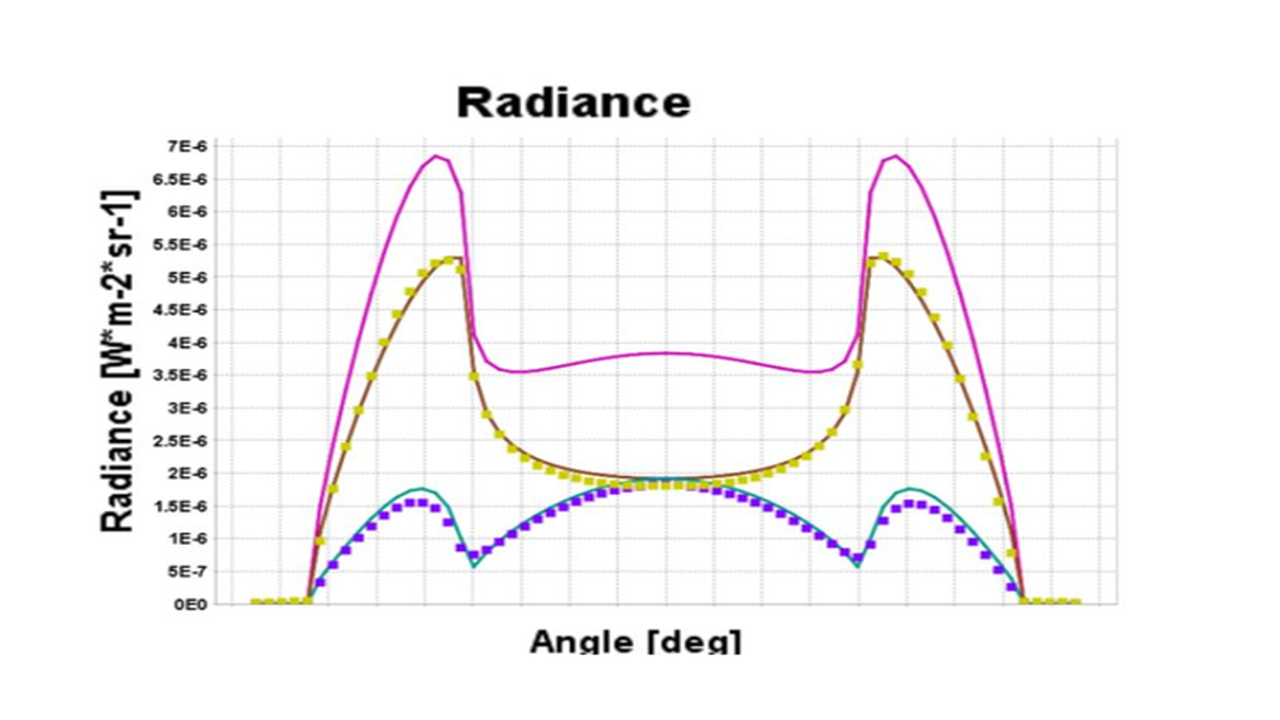
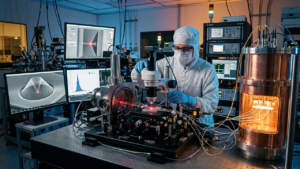
Angular-resolved photoluminescence (AR-PL) and electroluminescence (AR-EL) characterization are indispensable tools for the design and optimization of high-performance display technologies like OLEDs and QD-enhanced LCDs. These advanced measurement techniques enable detailed analysis of how light-emitting materials respond to optical or electrical excitation, specifically examining the spectrum and intensity distribution of emitted light as a function of the emission angle.
- Angular-Resolved Photoluminescence (AR-PL): This technique involves exciting the material with an external light source and then measuring the spectrum and intensity distribution of the re-emitted light at various angles. AR-PL helps in understanding the optical anisotropy, light absorption-emission mechanisms, and the influence of optical microcavity effects within the material structure.
- Angular-Resolved Electroluminescence (AR-EL): In AR-EL, an electrical current is passed through the device, and the resulting emitted light’s spectrum and intensity distribution are measured as a function of emission angle. This is particularly crucial for self-emissive devices like OLEDs, as it helps elucidate how electrode structures, charge transport, and recombination zone positions affect the angular emission characteristics.
- Dipole Orientation Analysis: AR-EL measurements provide valuable information regarding the orientation of light-emitting molecules (dipoles) within the emissive layer. Dipole orientation directly impacts the external quantum efficiency (EQE) of the device; for example, a higher proportion of horizontally oriented dipoles in OLEDs can significantly increase the light out-coupling efficiency and thus the overall luminous efficiency.
- Enhancing Luminous Efficiency (lumens/watt): Insights gained from these measurements are instrumental in optimizing light extraction efficiency. By refining the design of light out-coupling structures (e.g., microlens arrays, diffractive gratings) and selecting appropriate emissive layers and electrode materials, the lumen-per-watt ratio (light output per unit of power) of displays can be substantially improved, leading to significant energy savings.
The ultimate goal is to realize brighter, more colorful, and sharper displays while simultaneously reducing energy consumption and extending device lifetimes.
Technical Significance & Outlook
The advancement of angular-resolved characterization techniques for light-emitting materials provides a critical foundation for innovation in next-generation display technologies. OLEDs and QD-LCDs will continue to deliver more immersive visual experiences across a wide range of applications, including smartphones, tablets, televisions, and VR/AR devices. The detailed data obtained from AR-PL/EL measurements are invaluable for materials scientists and device engineers to understand and optimize the complex relationship between the physical properties of emissive materials and the overall device performance.
The outlook includes further improvements in the precision and speed of measurement techniques, as well as advancements in modeling and simulation capabilities for predicting light behavior in more complex multi-layered device structures. The application of these characterization methods to emerging emissive materials (e.g., perovskite QDs, thermally activated delayed fluorescence materials) is also accelerating. These technological innovations are expected to contribute not only to displays but also to improving the performance of other optoelectronic devices such such as solid-state lighting, sensors, and lasers, serving as a critical key to transforming our digital lives into more vibrant and sustainable experiences.
Source: https://www.fluxim.com/research-blogs/dipole-orientation-led



Comments