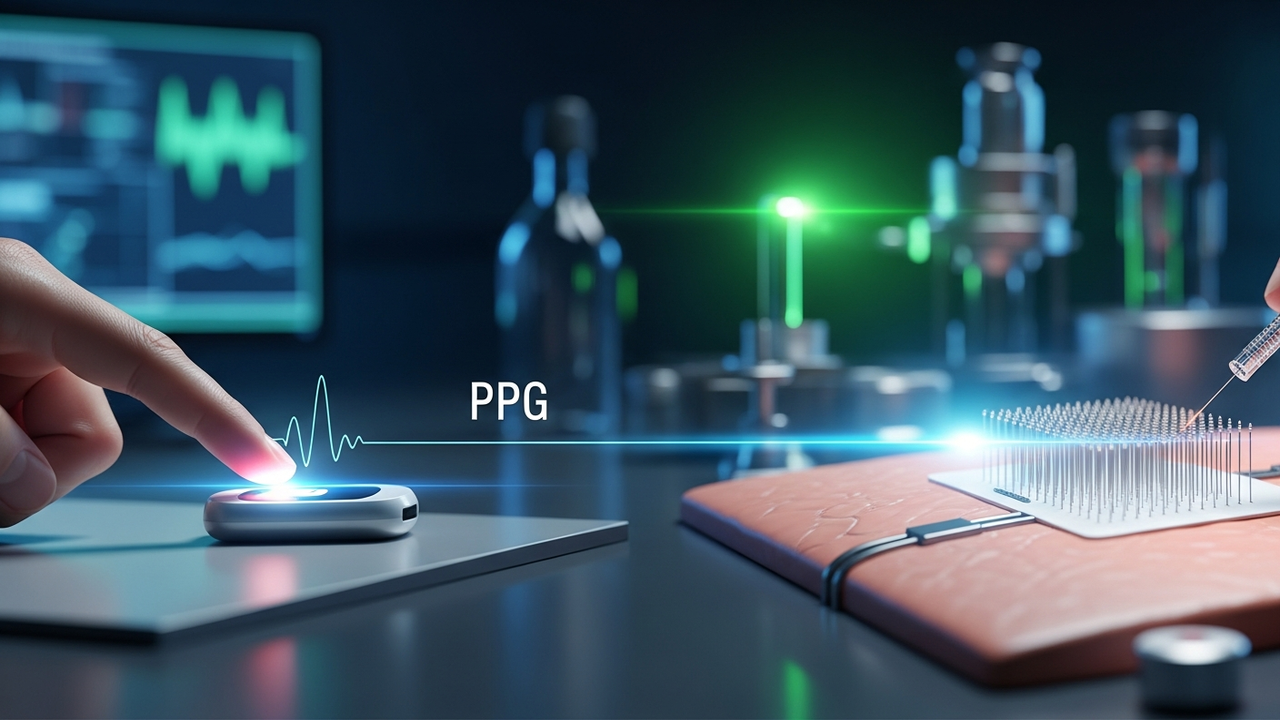
Background: The Quest for Non-Invasive Glucose Monitoring
Continuous glucose monitoring is essential for individuals with diabetes, but traditional blood draws or subcutaneous CGM sensors are invasive, imposing burdens on patients. Consequently, the development of non-invasive glucose monitoring technologies—painless and seamlessly integrated into daily life—has been a long-standing research goal. While optical methods like photoplethysmography (PPG) have succeeded in measuring heart rate and oxygen saturation (SpO2), their underlying principles make them unsuitable for detecting glucose molecules with high accuracy and reliability.
The Rise of Microneedle Technology
While PPG technology falls short of the glucose monitoring objective, microneedle-based platforms are emerging as the most promising and realistic short-term solution for non-invasive glucose monitoring. Microneedles are arrays of tiny needles that penetrate only the outermost layers of the skin (stratum corneum), allowing for the extraction of biomolecules from interstitial fluid without touching nerve endings. This enables continuous monitoring of multiple biomarkers, including blood glucose, with minimal to no pain. Microneedles offer less invasiveness compared to existing subcutaneous sensors, reducing patient apprehension and facilitating easier integration into wearable devices.
Future of Wearable Biosensors and Outlook
The future of wearable biosensors is expected to be shaped not only by the evolution of sensing technology itself but also by integration with data systems and user-centric design. Data collected from highly accurate microneedle sensors will be analyzed by AI and machine learning algorithms, translating into more personalized health insights and treatment recommendations. This will empower patients to better understand their glucose fluctuations and actively manage their diabetes. With advantages such as reduced cost, minimal pain, and lower user friction, medical-grade biosensing is anticipated to become widely adopted as part of daily life, playing a crucial role in advancing preventive and personalized medicine.


Comments