Background: The Transformative Era of Scientific Discovery
Contemporary science faces immense challenges stemming from the generation of vast datasets, complex simulations, and extensive experimental explorations. Traditional scientific methodologies have struggled to cope with these demands and dramatically accelerate the pace of discovery. The rapid advancement of artificial intelligence (AI) has the potential to fundamentally alter this landscape, transforming how scientists conduct research. AI is now capable of extracting patterns from complex datasets, generating new hypotheses, optimizing experimental designs, and even autonomously executing experiments.
Key Findings: Autonomous AI Agents and the Rise of “Virtual Labs”
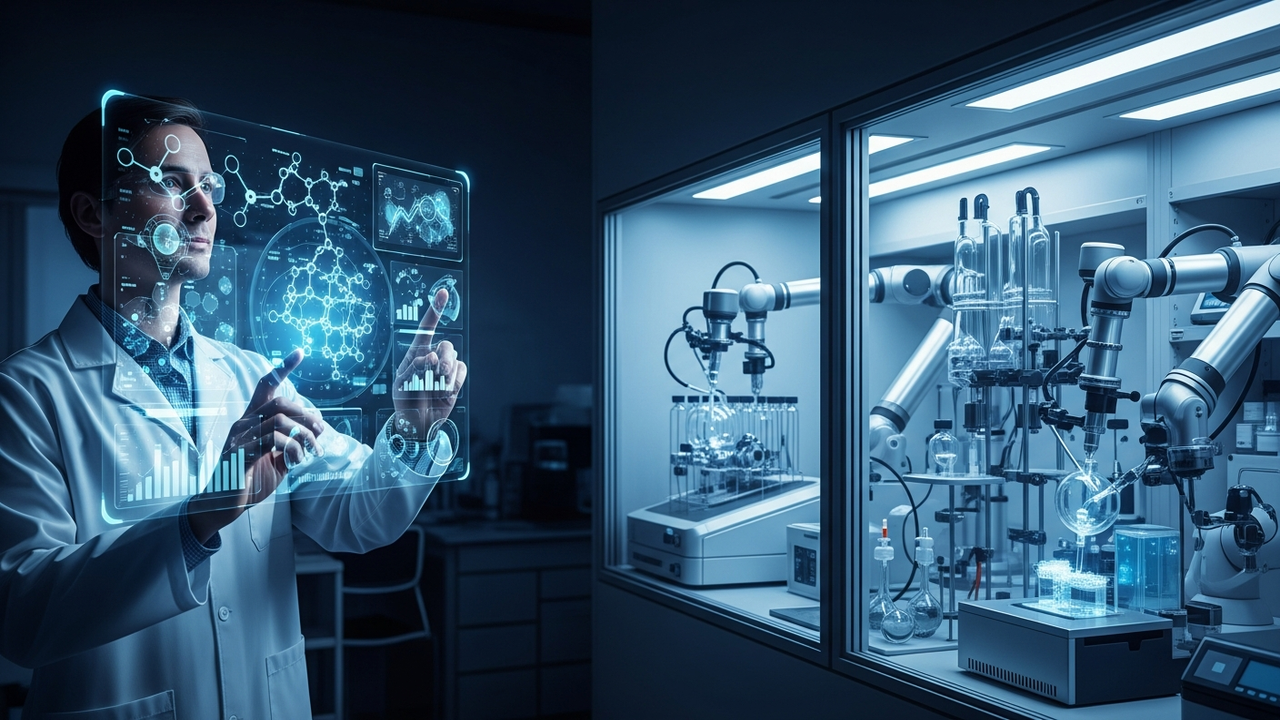
The AI+Science conference hosted by Stanford HAI delved into how AI is contributing to every stage of scientific discovery. A key theme was the transition of AI beyond a mere research tool to a more profound role as an “autonomous scientific agent.” For instance, Professor James Zou from Stanford University is pioneering research towards a “virtual lab” concept, where AI agents autonomously run research group meetings and independently design new antibodies. These AI agents autonomously iterate through cycles of generating new hypotheses from existing knowledge bases, planning optimal experimental pathways, predicting outcomes through simulations, and finally analyzing the results to learn. This paradigm allows researchers to concentrate on higher-level conceptual challenges, while AI handles data-driven, iterative tasks.
Technical Significance and Outlook
The deep integration of AI into the scientific discovery process is crucial not only for accelerating research but also for enabling the understanding of previously intractable complex systems and facilitating unexpected discoveries. AI-driven “virtual labs” in fields such as materials science, biology, chemistry, and physics will dramatically streamline the screening of vast numbers of candidate materials, accelerate drug development, and enable rapid validation of new theories. Furthermore, AI’s ability to analyze data free from human cognitive biases holds the potential to uncover relationships and patterns that have been overlooked by existing knowledge. However, ethical considerations, data transparency, and the division of labor between humans and AI in such autonomous systems require ongoing discussion and careful consideration. In the future, seamless collaboration between AI and human researchers, maximizing each other’s strengths, will further expand the frontiers of scientific understanding.








Comments