Background: Harnessing Untapped Waste Heat and the Need for Self-Powered Devices
Vast amounts of waste heat are generated globally from industrial processes, and even ubiquitous heat sources like human body temperature represent untapped energy. Efficiently converting this heat into electrical energy would significantly contribute to improving energy efficiency and achieving a sustainable society. Particularly, with the proliferation of IoT devices and wearable sensors, there is a growing demand for “self-powered sensors” that eliminate the need for battery replacement or charging. Thermoelectric conversion technology offers a promising solution to this need, but conventional thermoelectric materials have historically faced challenges in conversion efficiency, cost, and flexibility.
Key Findings: UncorrelaTEd Project’s Liquid-Contact Thermoelectric Conversion Technology
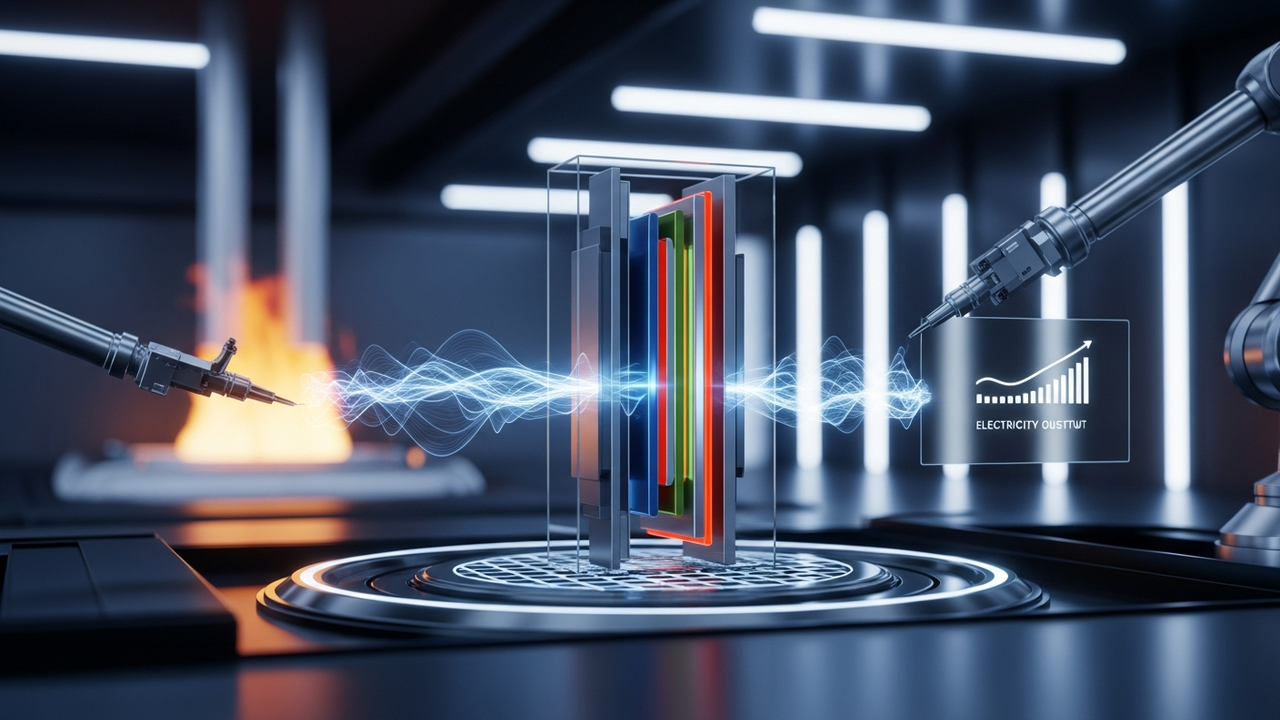
The “UncorrelaTEd (Uncorrelated Transport in Thermoelectric Energy Converters)” project, involving Isop-Hamburg in Germany, is dedicated to developing innovative thermoelectric technology for efficient heat-to-electricity conversion. The core of this project lies in a novel approach: directly contacting porous thermoelectric materials with liquids (e.g., ionic liquids or water-based electrolytes). At this contact interface, a temperature gradient drives the movement of ions within the liquid, generating electrical energy. This liquid-contact approach potentially enables the achievement of both high conversion efficiency and stability under specific environmental conditions, which has been difficult with conventional solid-only thermoelectric devices.
The project is developing diverse families of thermoelectric materials, including:
- Bismuth Telluride Alloys: Known for high thermoelectric conversion efficiency in relatively low-temperature ranges.
- Oxides: Excellent high-temperature stability, with potential for composition from inexpensive and abundant elements.
- Polymers: Flexible materials, anticipated for applications in wearable devices and other flexible electronics.
Through the optimization and combination of these materials, the project aims to improve overall thermoelectric performance, ultimately realizing battery-free, self-powered sensors and small devices that can continuously supply power from various heat sources, such as human body heat and industrial waste heat.
Technical Significance and Outlook
The outcomes of the UncorrelaTEd project open new possibilities for thermoelectric conversion technology, significantly contributing to solving energy challenges and advancing IoT devices. The combination of porous thermoelectric materials and liquids may offer unique properties (e.g., larger Seebeck coefficients, superior mechanical flexibility) not achievable with traditional solid-based thermoelectric elements. This technology is expected to find applications in fields such as:
- Wearable Electronics: Smartwatches and health monitors powered by body heat.
- Industrial IoT Sensors: Sensor networks that operate autonomously using waste heat from factory equipment.
- Smart Buildings: Power generation or thermal management systems utilizing temperature differences across windows or walls.
Future research will focus on improving material durability, further enhancing conversion efficiency, and ensuring manufacturability for mass production. This project is expected to drive innovation in both the science and engineering of thermoelectric materials, laying the foundation for a more environmentally friendly and convenient society.







Comments