Background
Silicon-based computing, the backbone of modern technology, is increasingly confronting fundamental limits imposed by Moore’s Law, with escalating power consumption and heat dissipation posing significant hurdles for continued performance scaling. Superconducting computing is emerging as a critical next-generation paradigm to overcome these challenges, offering the potential for near-zero power dissipation and orders-of-magnitude improvements in energy efficiency. As a global leader in nanoelectronics research, imec has aggressively pursued research into the scalability and practical implementation of superconducting technologies. This latest achievement directly addresses a critical bottleneck by dramatically enhancing the integration density of superconducting circuits, bringing the vision of practical, high-performance superconducting processors significantly closer to reality.
Key Findings
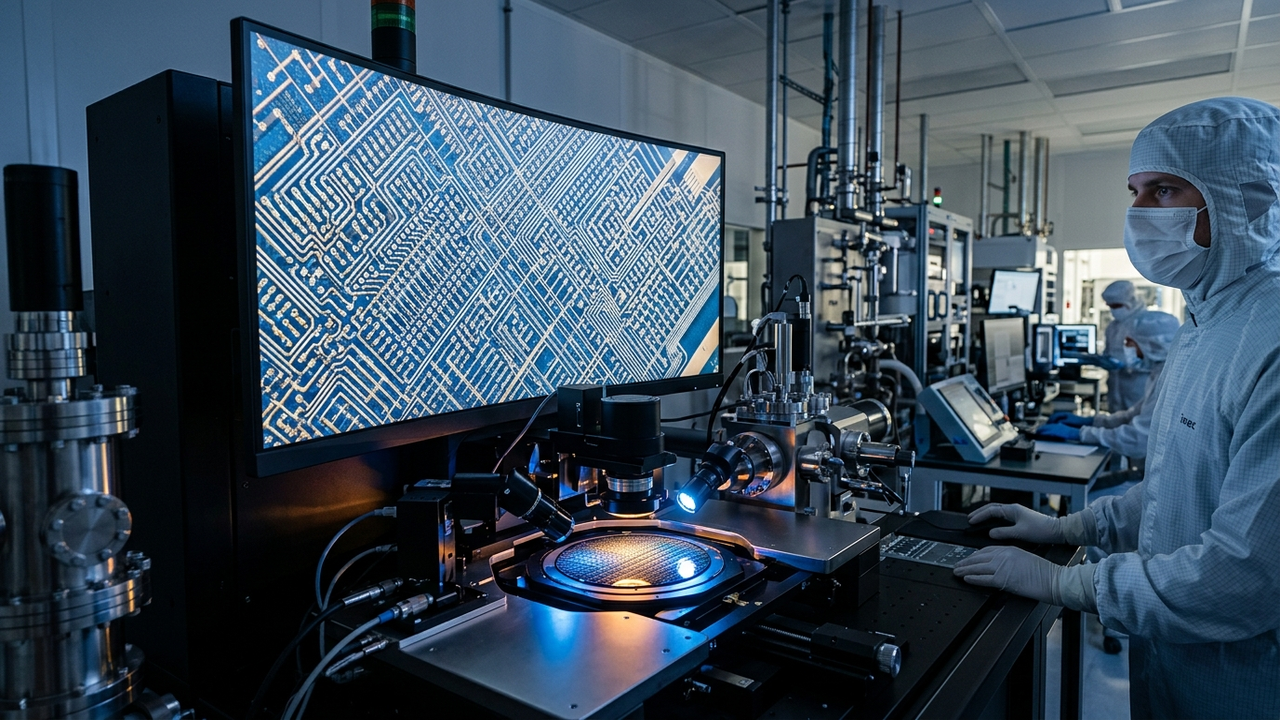
At the 2026 Applied Superconductivity Conference (ASC), imec announced a groundbreaking advancement in superconducting nanotechnology: the successful fabrication of the world’s first 3-metal-level (3ML) superconducting circuit. This innovative circuit integrates niobium titanium nitride (NbTiN)-based Josephson junctions with ultra-fine 30-nanometer (nm) superconducting interconnects. This pioneering approach has yielded an unprecedented circuit design density of 3.8 million Josephson junctions per square centimeter (3.8M junctions/cm²), a substantial leap forward that significantly surpasses previous benchmarks in superconducting circuit technology. This milestone is crucial for realizing a truly scalable superconducting platform, essential for developing future High-Performance Computing (HPC) and Artificial Intelligence (AI) applications that demand extreme speed and energy efficiency.
Technical Details
This breakthrough dramatically enhances the technological feasibility of high-density superconducting computing. Josephson junctions, fundamental components consisting of two superconductors separated by a thin insulating or non-superconducting barrier, are known for their extremely fast switching speeds and intrinsically ultra-low power consumption. NbTiN offers distinct advantages over more conventional superconducting materials like niobium, primarily due to its higher critical temperature (Tc) and superior fabrication compatibility, particularly for integration with established semiconductor (CMOS) manufacturing processes. The introduction of minuscule 30nm interconnect widths drastically increases circuit integration density, enabling the construction of significantly more complex and compact superconducting architectures. Furthermore, the newly developed 3-metal-level (3ML) interconnect structure significantly expands circuit design flexibility, maximizing on-chip data transfer speeds and overall computational power.
- Circuit Design Density: The achieved 3.8M junctions/cm² density represents a substantial leap beyond prior achievements in superconducting circuits, demonstrating the capability to integrate an unprecedented number of Josephson junctions within a compact footprint.
- 30nm Interconnects: This ultra-fine wiring technology is critical for minimizing signal propagation delays and consequently boosting the operating frequency and overall speed of future superconducting processors.
- NbTiN Material Adoption: NbTiN offers robust stability at cryogenic temperatures and enhanced compatibility with existing semiconductor manufacturing processes, laying a crucial foundation for scalable production of superconducting circuits.
This technology is expected to find applications in areas demanding extreme performance, such as control circuits for quantum computing, ultra-fast data centers, and energy-efficient AI accelerators.
Strategic Significance and Outlook
Imec’s announcement marks a pivotal leap forward in the practical realization and maturity of superconducting computing technology. The achieved high density of 3.8M junctions/cm² and the advanced 30nm interconnect technology provide an indispensable foundation for developing next-generation, high-performance superconducting qubit control chips and terahertz-scale superconducting logic circuits. This breakthrough unlocks possibilities for achieving unprecedented levels of performance and energy efficiency in future High-Performance Computing (HPC) systems and Artificial Intelligence (AI) processing units—levels currently unattainable with conventional semiconductor technologies. Future efforts will concentrate on further increasing integration density, refining manufacturing processes for yield and scalability, and exploring integration with other advanced device technologies. These steps aim to make the widespread adoption of superconducting computing in critical applications such as ultra-fast data centers and cutting-edge research institutions a more tangible and imminent prospect.
Get our weekly technology intelligence — free
Receive an infographic that lets you judge at a glance whether each field’s analysis report is worth reading.
Subscribe Free — Weekly Tech Intelligence
By subscribing, you’ll receive Troy-Technical’s weekly technology intelligence newsletter.
- Your email and selected fields are used only to deliver the newsletter.
- We never share your information with third parties.
- You can unsubscribe anytime via the link in each email.
See our Privacy Policy for details.
Takes about a minute · Unsubscribe anytime









Comments