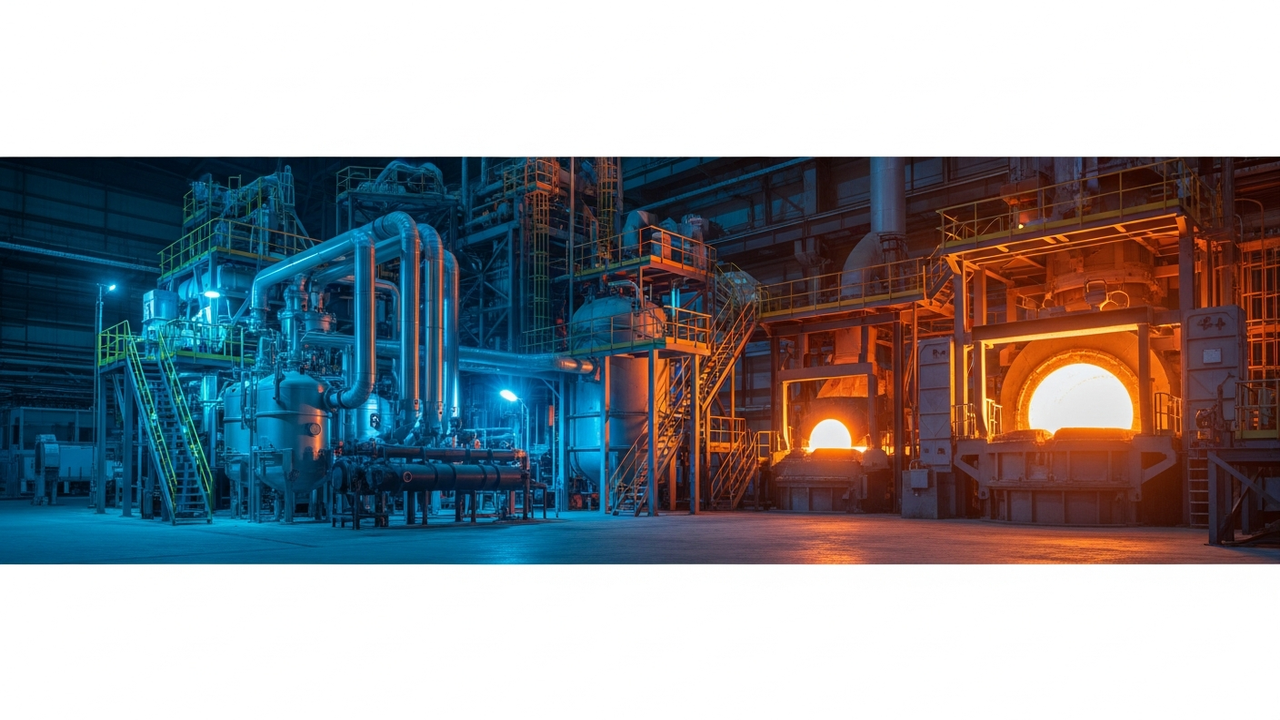
Key Findings: RMI Report Designates H2-DRI and EAF as Primary Pathway for Near-Zero Emissions Steelmaking
According to the latest analysis from the Rocky Mountain Institute (RMI), titled “Steel Production After Coal and Beyond Gas: The Path to Near-Zero Emissions Steelmaking,” the combination of hydrogen-based Direct Reduced Iron (H2-DRI) and Electric Arc Furnaces (EAF) has been identified as the leading commercial pathway to achieve near-zero emissions in steel production. This technology is pivotal for transitioning away from traditional coal and gas-dependent steelmaking processes, thus accelerating the decarbonization of the global steel industry. However, a significant challenge remains: H2-DRI currently carries a higher cost premium compared to conventional steelmaking methods.
Technical & Economic Details
- In the H2-DRI process, hydrogen is used as a reducing agent instead of natural gas to directly produce direct reduced iron (DRI) from iron ore. This DRI is then melted in an Electric Arc Furnace (EAF) and processed into steel. This method allows for substantial CO2 emission reductions compared to traditional blast furnace methods that rely on coke.
- RMI estimates that converting existing DRI facilities to be hydrogen-compatible would cost between $150 million and $200 million. This figure reflects the necessary investment in hydrogen storage and supply infrastructure, process adjustments, and associated retrofit work.
- The report emphasizes that when designing new greenfield steel plants, anticipating future hydrogen utilization is critically important. This approach can significantly reduce the costs of future “hydrogen-ready” modifications and ensure long-term operational flexibility.
Background & Context
The steel industry is a major emitter, accounting for approximately 7-9% of global CO2 emissions, making its decarbonization an urgent priority. Governments and leading steel manufacturers across Europe, Asia, and North America are accelerating investments in green steel technologies. H2-DRI is a cutting-edge technology being adopted in several pilot projects and commercialization plans, such as Sweden’s HYBRIT project and Germany’s ThyssenKrupp Steel Europe.
However, the balance between technical feasibility and economic viability remains a constant point of contention. The stable supply and cost of green hydrogen, in particular, represent the largest bottleneck for the widespread adoption of H2-DRI.
Strategic Significance & Outlook
RMI’s report offers a clear roadmap for stakeholders in the steel industry, policymakers, and investors towards near-zero emissions steelmaking, while also underscoring the critical importance of associated costs and planning. Moving forward, accelerated technological development, cost reduction for green hydrogen, and effective policy support from governments will be key to successfully transitioning to a steelmaking paradigm where H2-DRI combined with EAF becomes mainstream. By clearly quantifying existing conversion costs, companies can make more strategic investment decisions, thereby accelerating the shift towards sustainable steel production.
Source: https://rmi.org/resources/steel-production-after-coal-and-beyond-gas/
Get our weekly technology intelligence — free
Receive an infographic that lets you judge at a glance whether each field’s analysis report is worth reading.
Subscribe Free — Weekly Tech Intelligence
By subscribing, you’ll receive Troy-Technical’s weekly technology intelligence newsletter.
- Your email and selected fields are used only to deliver the newsletter.
- We never share your information with third parties.
- You can unsubscribe anytime via the link in each email.
See our Privacy Policy for details.
Takes about a minute · Unsubscribe anytime

Comments