
Background: Evolution of Hydrogen & Fuel Cell Technologies and Complex Challenges
Hydrogen and fuel cell technologies are positioned as core solutions for achieving decarbonization in transportation, power supply, and industrial processes. However, for these technologies to gain widespread adoption, they must overcome a complex array of challenges related to cost, efficiency, durability, and safety. This necessitates continuous research, development, and innovation across diverse fields, including materials science, systems engineering, and infrastructure development.
U.S. Department of Energy’s Consortium Strategy
To address these complex challenges and accelerate R&D in hydrogen and fuel cell technologies, the U.S. Department of Energy (DOE) has established multiple specialized consortia, centered around its National Laboratories, and strategically coordinates their research activities. These consortia aim to generate breakthroughs by strengthening collaboration with academia and industry, pooling their respective strengths.
- ElectroCat: Focuses on accelerating the development of platinum group metal (PGM)-free catalysts. Since PGMs are expensive and entail supply risks, developing alternative catalysts is key to significantly reducing fuel cell costs.
- H2NEW: Aims to realize large-scale and affordable electrolyzers. It promotes the development of next-generation electrolyzer technologies for green hydrogen production cost reduction and scalability.
- H-Mat: Addresses hydrogen materials compatibility challenges, particularly hydrogen embrittlement and material degradation. Materials with excellent hydrogen resistance are essential for safe hydrogen storage and transport.
- HyBlend: Tackles technical barriers related to hydrogen blending into natural gas pipelines. It explores the potential to utilize existing infrastructure to reduce hydrogen transportation costs.
- HydroGEN: Focuses on advanced water splitting materials, advancing the development of new materials to improve water electrolysis efficiency and reduce costs.
- HyMARC: Addresses the scientific challenges in developing onboard hydrogen storage materials. High-density, safe, and affordable hydrogen storage solutions are directly linked to the range and adoption of fuel cell vehicles.
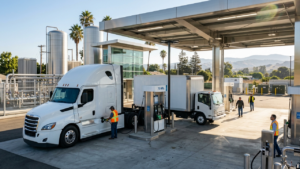
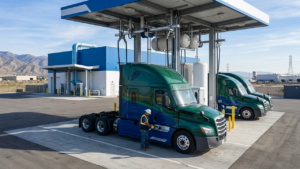
- M2FCT: Focuses on improving the durability, performance, and cost of fuel cell trucks. The commercial viability of fuel cell trucks is critically important for decarbonizing the heavy-duty transportation sector.
Impact and Outlook: U.S. Innovation and Energy Security
The activities of these DOE-led consortia are indispensable for the U.S. to maintain global leadership in hydrogen technologies and accelerate the transition to a clean energy economy. The research outcomes from each consortium will overcome cost and performance challenges at various stages of hydrogen production, storage, transport, and utilization, thereby facilitating market introduction. This is expected to enhance energy security, foster economic growth, and significantly contribute to reducing greenhouse gas emissions.
Source: #






Comments