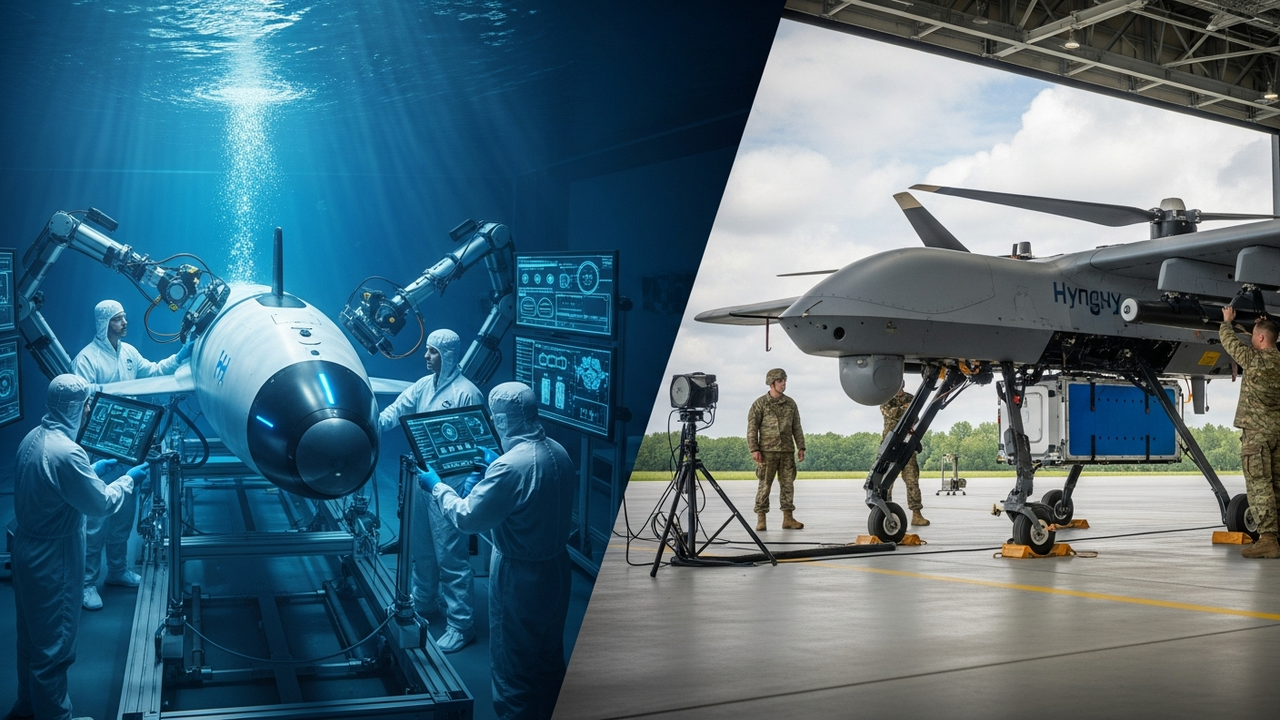
Background: Unmanned Systems and Energy Efficiency Challenges in Defense
In modern defense strategies, unmanned aerial systems (UAS, drones) and unmanned underwater vehicles (UUVs) are indispensable for reconnaissance, surveillance, intelligence gathering, and even offensive capabilities. The operation of these systems demands extended endurance, but conventional battery technologies have limitations in terms of energy density and duration. Especially for remote operations and prolonged missions, new energy solutions are required to reduce refueling frequency and enhance operational efficiency. Hydrogen fuel cell technology is gaining attention as a promising solution to these challenges.
Transition of Hydrogen-Powered Drones to Procurement Phase
The fact that two major Western defense ecosystems—the United States and Germany—have moved hydrogen-powered drones from the prototype and development phase to actual procurement and deployment within the last six months signifies a critical advancement in defense technology.
- U.S. Army’s Airborne Drone Adoption: Heven AeroTech, a U.S. company, was awarded a Basic Ordering Agreement (BOA) by the U.S. Army Contracting Command for its Z1, a hydrogen-powered long-range unmanned aerial system (UAS). This BOA, effective from January 2026, provides a framework that allows Army units to quickly procure Z1 drones and the necessary hydrogen generation equipment for their operation without the need to renegotiate terms for each order. This marks Heven’s second hydrogen-related contract with the U.S. military, strongly indicating that its technology meets military needs. Hydrogen fuel cells offer longer flight duration and mission times compared to traditional batteries, expected to be utilized in diverse missions such as reconnaissance and logistics.
- Germany’s Subsea Drone Development: Meanwhile, Germany’s defense industry is advancing the integration of hydrogen technology into unmanned underwater vehicles (UUVs). In subsea environments, where battery energy density is limited, extended submerged endurance offers a decisive operational advantage. Hydrogen fuel cells, if oxygen supply issues can be resolved, hold the potential to dramatically extend the operational time of conventional UUVs.
Impact and Outlook: Enhanced Defense Capabilities and Military Applications of Hydrogen Technology
These developments indicate that hydrogen fuel cell technology is being recognized not merely as a tool for civilian decarbonization but also as a critical technology for establishing strategic advantages in the defense sector. The characteristics of hydrogen fuel cells, such as extended operational capacity, low vibration, and reduced heat emissions, are particularly advantageous for covert reconnaissance and surveillance missions.
The introduction of hydrogen-powered drones not only enhances national defense capabilities but also holds significance from an energy security perspective. In the future, further advancements in these technologies and international cooperation are expected to accelerate the development of more high-performance and sustainable defense systems.
Source: #





Comments