Key Findings
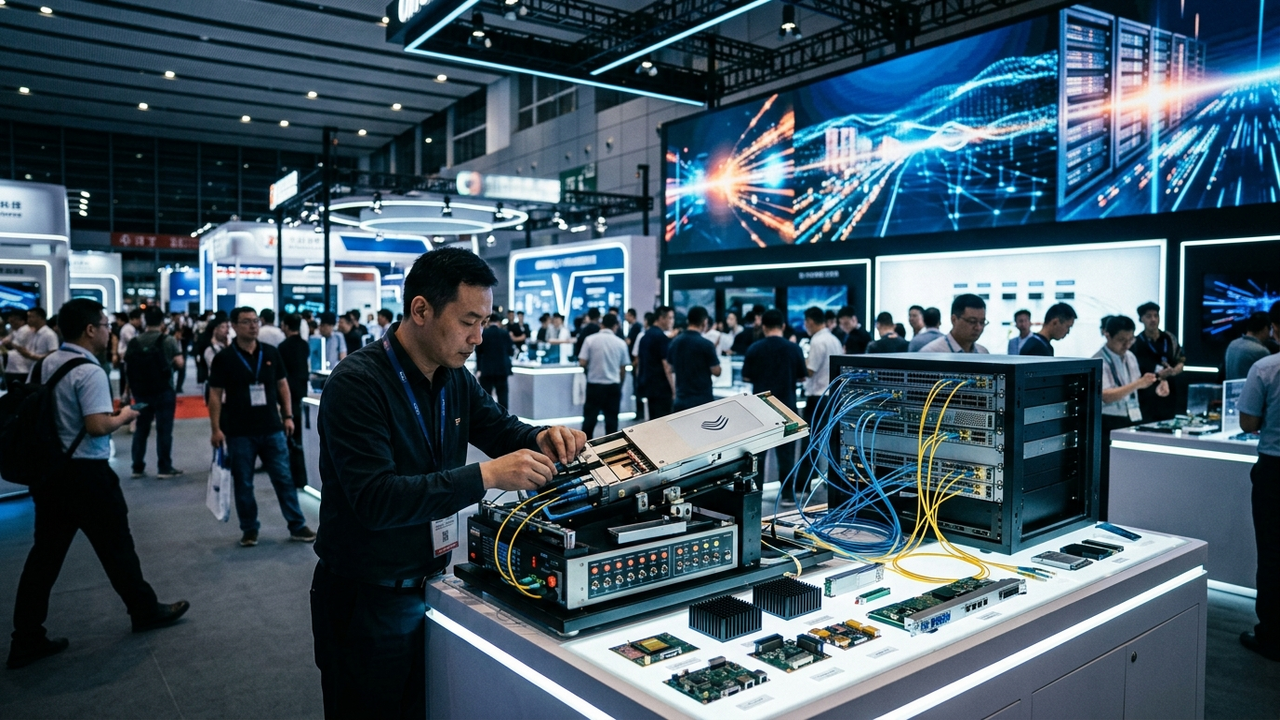
At the CIOE 2026 Shenzhen exhibition, a critical stress point was highlighted: the surging demand from AI clusters is severely tightening the supply capacity of optical interconnects. While 1.6T optical modules are transitioning to mass production and commercial validation, the availability of upstream components such as Digital Signal Processors (DSPs) and driver silicon is emerging as a significant bottleneck, impeding the broader scaling of supply.
Technical Details
Currently, 800G optical modules constitute the primary shipments for AI infrastructure, but 1.6T modules are rapidly evolving to meet next-generation bandwidth requirements, moving from laboratory demonstrations to limited mass production. This shift reflects the exponential increase in data transmission needs for AI workloads. The exhibition showcased strong interest in new optical interconnect architectures, including LPO (Linear Pluggable Optics), NPO (Near-Package Optics), and CPO (Co-Packaged Optics). These technologies aim to reduce power consumption and latency, integrating optical connectivity more efficiently with AI chips.
Furthermore, thin-film lithium niobate (TFLN), recognized for its high-speed modulation capabilities and potential for miniaturization, is also progressing from research into low-volume production. However, the biggest challenge in scaling the mass production of these advanced optical components lies in the supply capacity of upstream semiconductor parts, including DSPs, driver silicon, and high-performance laser diodes. Shortages of these components are a primary factor limiting the overall production volume and market introduction speed of optical modules.
Background and Industry Context
The evolution of AI, particularly generative AI models, necessitates unprecedented computational power and data movement, placing immense strain on data center optical interconnect infrastructure. The manufacturing capabilities for conventional optical components are struggling to keep pace with this rapidly escalating demand. Supply constraints, especially for technically complex and time-consuming DSPs, and laser diodes manufactured with specific materials, represent industry-wide challenges. This supply crunch directly impacts the deployment speed of AI infrastructure, potentially creating bottlenecks for enterprises seeking to harness the benefits of AI.
Outlook
The shortage of upstream components may constrain the growth of the AI infrastructure optical interconnect market in the short term, but it will simultaneously stimulate technological innovation and supply chain restructuring. The industry is exploring diverse strategies, such as developing DSP-free solutions (e.g., LPO), diversifying component sourcing from different suppliers, and pursuing vertical integration. Moving forward, strengthening the supply chain and expanding manufacturing capacity will be key to the widespread adoption of 1.6T modules and TFLN devices. This is expected to further enhance the performance and cost-efficiency of AI computing, accelerating new technological innovations.
Source: https://pandaily.com/cioe-shenzhen-ai-optical-1-6t-modules-supply-tight
Get our weekly technology intelligence — free
Receive an infographic that lets you judge at a glance whether each field’s analysis report is worth reading.
Subscribe Free — Weekly Tech Intelligence
By subscribing, you’ll receive Troy-Technical’s weekly technology intelligence newsletter.
- Your email and selected fields are used only to deliver the newsletter.
- We never share your information with third parties.
- You can unsubscribe anytime via the link in each email.
See our Privacy Policy for details.
Takes about a minute · Unsubscribe anytime






Comments