
Polymer materials play an indispensable role in diverse industrial sectors such as electronics, medicine, automotive, and energy. However, the discovery and development of new high-performance polymers remain time-consuming and costly challenges due to their vast chemical space and complex synthesis and characterization processes. A research team has analyzed the current state of AI-powered polymer discovery workflows and proposed a groundbreaking blueprint for constructing an autonomous closed-loop polymer discovery ecosystem.
Key Findings
- Identified six key system-level challenges in AI-powered polymer discovery workflows.
- Devised a blueprint for an autonomous closed-loop polymer discovery ecosystem to address these challenges.
- Envisions seamless AI integration across polymer design, synthesis, characterization, and optimization stages.
- Potential to dramatically accelerate and enhance the efficiency of new polymer development cycles.
Technical Details
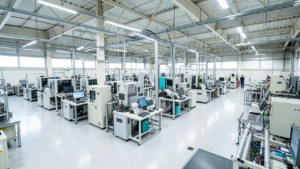
The research team identified six major bottlenecks in AI-powered polymer discovery, including lack of data standardization, difficulty in integrating heterogeneous data, insufficiency of physics-informed models, limitations in integration with autonomous experimental robots, ethical and regulatory concerns, and optimization of human-in-the-loop processes. To overcome these, the proposed autonomous closed-loop ecosystem integrates several elements. First, it establishes a standardized platform for data collection and management, storing diverse experimental data in an integrable format. Second, it develops ‘physics-aware AI,’ combining advanced machine learning models with physical constraints to more accurately predict the relationship between polymer structure and properties. Third, it links robotic automated synthesis and characterization systems with AI, enabling autonomous execution of experiments and data acquisition. This loop autonomously repeats a cycle where AI predicts, robots experiment, and AI analyzes results to propose the next experiments, significantly shortening the human-involved trial-and-error process.
Background & Context
Polymer science has historically relied heavily on an ‘Edisonian’ approach, driven by experience and intuition over decades. However, the high-performance, high-functionality, and sustainable polymer materials demanded by modern society can no longer be efficiently discovered with this approach. The advent of AI enables the fusion of computational science, data science, and robotics, ushering in a new paradigm for materials science. Particularly, to efficiently explore the complex parameter space of polymer materials, including composition, chain length, structure, and molecular weight distribution, AI’s predictive power and autonomous experimental systems’ high-throughput capabilities are essential. This research lays a crucial foundation for the polymer industry to meet the demands for accelerated innovation and sustainability.
Strategic Significance & Outlook
This blueprint for an autonomous closed-loop polymer discovery ecosystem is expected to have a transformative impact on the development of next-generation polymer materials. For instance, it is anticipated to accelerate the creation of new materials in diverse fields such as more environmentally friendly biodegradable polymers, self-healing materials, high-efficiency energy conversion polymers, and biocompatible medical polymers. In the future, researchers will be able to focus on more strategic challenges, with AI and robots handling routine experiments and data analysis. The realization of this ecosystem is expected to dramatically improve the efficiency of polymer R&D, enhance the competitiveness of the entire industry, and provide new material solutions to address various societal needs.
Get our weekly technology intelligence — free
Receive an infographic that lets you judge at a glance whether each field’s analysis report is worth reading.
Subscribe Free — Weekly Tech Intelligence
By subscribing, you’ll receive Troy-Technical’s weekly technology intelligence newsletter.
- Your email and selected fields are used only to deliver the newsletter.
- We never share your information with third parties.
- You can unsubscribe anytime via the link in each email.
See our Privacy Policy for details.
Takes about a minute · Unsubscribe anytime








Comments