Key Findings
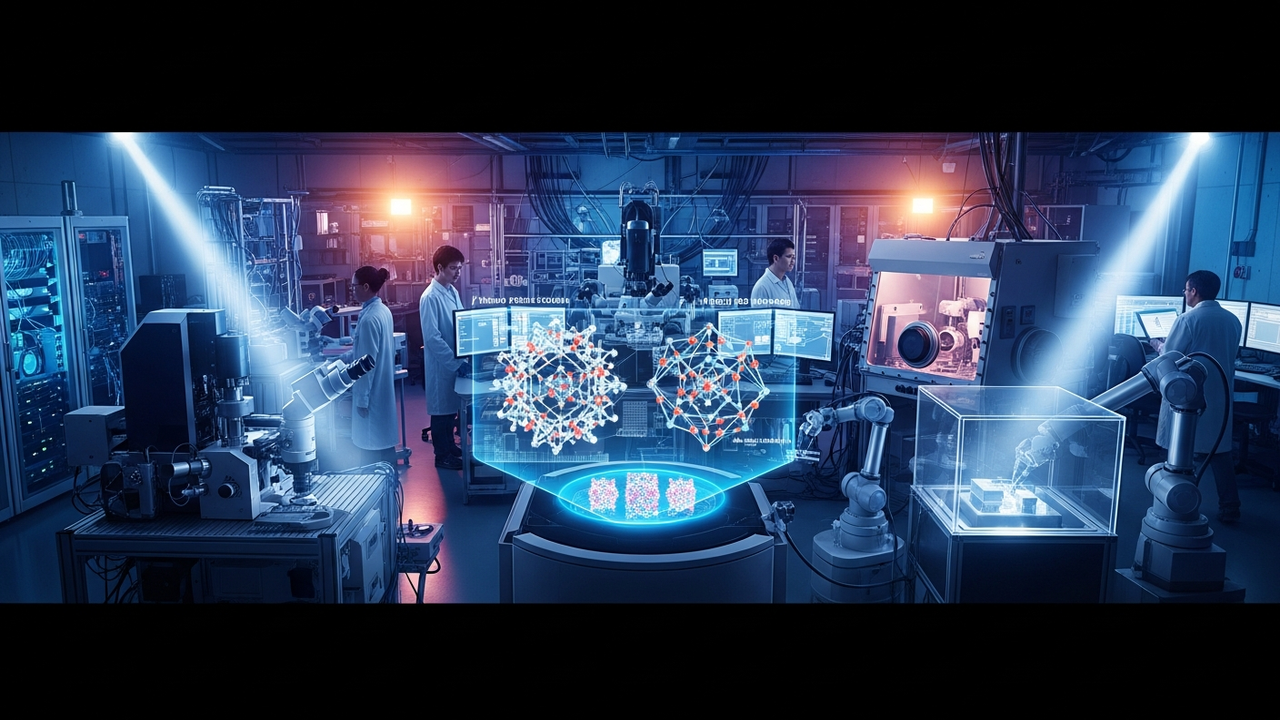
A team of scientists at Argonne National Laboratory has announced new insights that revolutionize the design and application of MXene, a rapidly emerging class of two-dimensional (2D) materials. By harnessing artificial intelligence (AI) and machine learning (ML), they demonstrated the ability to precisely control the elemental composition, structure, and surface chemistry of MXene, enabling the atomic-level design of materials tailored for specific application areas. This breakthrough opens the way for efficient development of bespoke MXene materials across a wide range of technological fields, including energy storage, catalysis, electronics, communications, biomedicine, and even space systems.
Technical / Clinical Details
- What are MXenes: MXenes are a family of 2D materials consisting of a few atomic layers of transition metal carbides, nitrides, or carbonitrides. They possess high electrical conductivity, hydrophilicity, and surface area, making them promising for diverse applications such as electrochemical energy storage, electromagnetic shielding, and catalysis.
- AI/ML Accelerated Design: The research team used AI and ML algorithms to efficiently narrow down from millions of possible elemental combinations to MXene compositions with specific desired properties. This dramatically accelerates the material discovery process compared to traditional trial-and-error experimentation. AI learns and predicts how synthesis conditions, atomic defects, and surface functional groups affect the final material properties of MXene.
- Atomic-Level Control: AI and ML provide insights for precisely controlling MXene’s microstructure and surface chemistry, including not only composition but also layered structure, surface termination groups (e.g., -O, -F, -OH), and the introduction of atomic-level defects. This level of control is essential for ‘tuning’ MXene’s electrical, catalytic, and mechanical properties to specific applications.
- Optimization of Multifunctionality: AI provides guidelines for simultaneously optimizing multiple functionalities that MXene possesses, such as high electrical conductivity and catalytic activity. This facilitates their application in multifunctional devices.
Background & Context
2D MXene materials have garnered significant attention in cutting-edge technology sectors such as electronics, energy, environment, and medicine due to their unique physicochemical properties. However, the diverse compositions and structures of MXenes made systematic exploration challenging with conventional experimental approaches. The introduction of AI and ML provides a powerful means to address this complexity and overcome bottlenecks in materials development. National research institutions like Argonne National Laboratory play a critical role in leveraging AI to enhance U.S. technological leadership and enable the rapid market introduction of high-performance materials.
Strategic Significance & Outlook
The AI/ML-driven design approach for MXene holds the potential to transform the paradigm of new materials development. This technology will bring significant breakthroughs in improving the performance of batteries and supercapacitors, developing next-generation catalysts, realizing high-efficiency sensors and flexible electronics, and even biomedical applications (e.g., biosensors, drug delivery). In the future, AI is expected to expand its role as an ‘AI co-scientist,’ collaborating with human scientists to design more complex material systems and elucidate unknown physical phenomena. This advancement provides an indispensable foundation for building a sustainable and high-performance future society.
Source: https://www.anl.gov/article/from-atomic-chaos-to-custom-materials