Key Findings
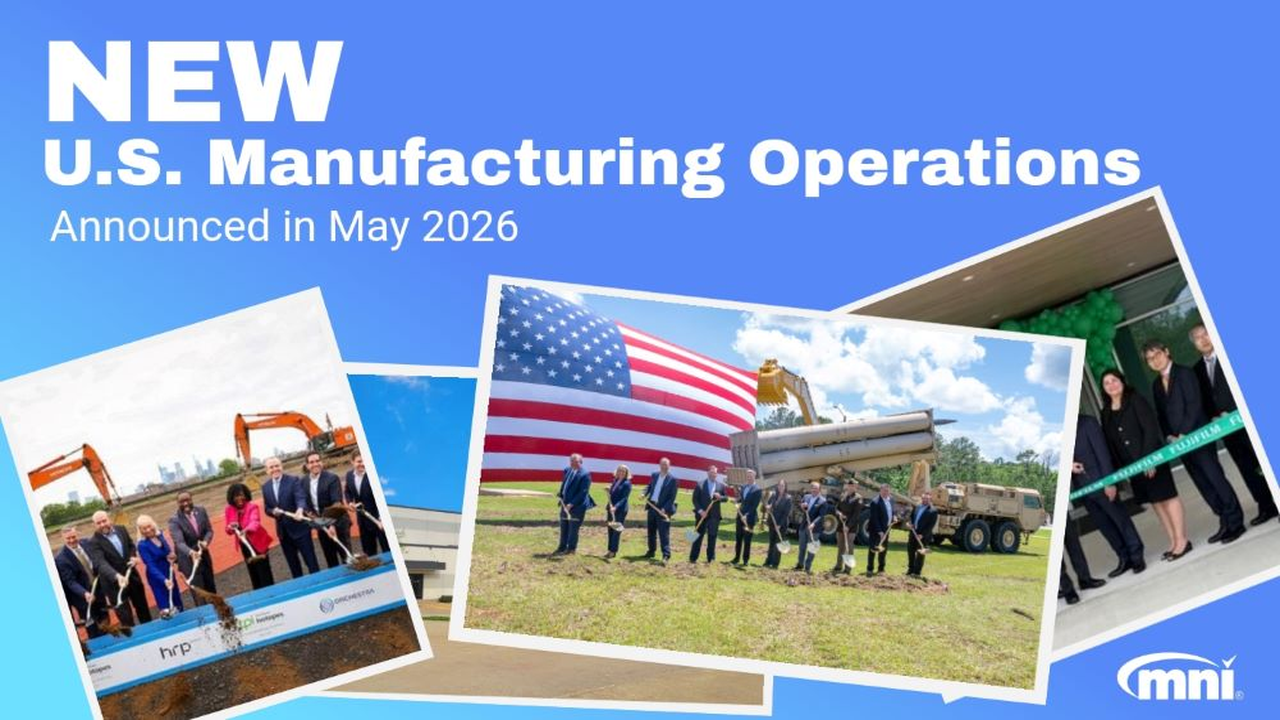
In May 2026, the U.S. industrial sector announced the establishment of several significant new manufacturing plants, revealing an acceleration of major investments specifically in the materials and recycling fields. This trend aligns with the U.S. government’s policy to strengthen supply chains and enhance domestic production capabilities, symbolizing the establishment of new manufacturing hubs and capacities within the polymer and advanced materials sectors. These new investments are expected to contribute to stimulating the domestic economy and creating jobs.
Technical & Clinical Details
While the article does not provide specific details on technologies or individual plants, it is inferred that the new facilities in the materials sector aim to boost production capacity for high-performance polymers, composite materials, bio-based materials, or recycled plastics. Examples could include advanced polymers essential for EV battery materials or renewable energy components, or plastic chemical recycling facilities crucial for advancing the circular economy. Investments in the recycling sector are likely directed towards plants incorporating advanced processes (e.g., depolymerization, solvent extraction, AI-powered sorting technologies) to produce high-quality recycled materials from post-consumer plastic and textile waste. These new plants are expected to adopt automated manufacturing processes and smart factory concepts to maximize production efficiency and quality.
Background & Context
In recent years, escalating geopolitical risks and recognized supply chain vulnerabilities have driven the U.S. to promote reshoring of critical industries and strengthening domestic manufacturing capabilities as a national strategy. This encompasses strategic sectors such as semiconductors, batteries, and advanced materials. The plastics and composite materials industries are crucial as they provide essential foundational materials for a wide range of end-use industries including automotive, aerospace, construction, and medical. Securing domestic production capacity for these materials is therefore paramount. Furthermore, investments in recycling and bio-based materials are also increasing due to growing interest in sustainability.
Strategic Significance & Outlook
The new manufacturing plant announcements in May 2026 bear significant implications for the future of U.S. manufacturing. These investments are set to accelerate domestic technological innovation, create high-skilled jobs, and bolster international competitiveness. Particularly, new capabilities in the polymer and recycling sectors will form a vital foundation for the U.S. to lead the transition to a circular economy and build a sustainable future. Continued investments of this nature are expected to solidify the U.S.’s position as a more resilient and self-reliant player in the global supply chain.
Source: https://www.industryselect.com/blog/new-us-manufacturing-plants-unveiled-in-may-2026/









Comments