Key Findings
A collaborative research team from the U.S. Department of Energy’s (DOE) Argonne National Laboratory, the University of Chicago, and Purdue University has developed an AI-driven autonomous inverse design workflow, demonstrating an unprecedentedly rapid pathway from desired target properties directly to polymer synthesis recipes. This innovative system combines AI ‘reading’ tools (including Large Language Models, LLMs) that automatically extract data from scientific literature with machine learning to predict optimal polymer building block combinations. Subsequently, an autonomous laboratory, dubbed Polybot, automatically synthesizes polymers based on the AI’s predictions and feeds results back into the AI in a ‘closed-loop’ process. This enables rapid generation of custom materials with fewer experiments, marking a breakthrough in significantly shortening material development timelines.
Technical / Clinical Details
- Autonomous Inverse Design Workflow: This workflow takes desired final material properties (e.g., specific strength, flexibility, thermal stability) as input, and the AI reverse-engineers the chemical structure and synthesis pathway of a polymer likely to possess those properties. This is an inverse approach to traditional forward design (predicting properties from structure).
- AI ‘Reading’ Tools and LLMs: As the initial stage of research, AI automatically extracts information such as material synthesis methods, properties, and relevant chemical structures from unstructured text data like existing scientific papers and patents. Large Language Models (LLMs) play a crucial role in building a structured knowledge base from this unstructured data.
- Machine Learning Optimization: The extracted data is used to train machine learning models, which learn how different monomers and polymerization conditions affect the final polymer properties. Based on this knowledge, the AI predicts the optimal combination of building blocks to achieve the target properties.
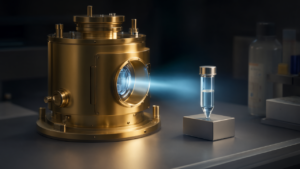
- Polybot (Autonomous Lab): Based on AI predictions, Polybot, a robotic chemist, automatically performs polymer synthesis, purification, and characterization. Polybot can precisely control operations such as liquid handling, heating/cooling, and mixing, executing experiments at high throughput. Experimental results are fed back to the AI in real-time, continuously improving model accuracy.
- Efficiency Improvement: This closed-loop system dramatically reduces the number of experiments required compared to human-led experimentation, shortening development times from months or years to weeks or months.
Background & Context
Polymer materials are indispensable across numerous industries, including medical, automotive, electronics, and packaging. However, the development of custom polymers meeting specific requirements has been a time-consuming and costly bottleneck due to complex chemistry and synthesis processes. The integration of AI and autonomous laboratories provides a powerful means to overcome this challenge. The collaboration between the U.S. DOE and leading universities highlights national strategic investment in this field and the importance of academic-industrial partnerships.
Strategic Significance & Outlook
This autonomous inverse design workflow is poised to revolutionize polymer materials development and accelerate the market launch of new products. In the future, its application is expected to extend to non-polymer materials (e.g., catalysts, battery materials). The collaboration between AI and autonomous labs makes the era of “AI co-scientists” a reality, allowing materials scientists to focus on more complex and creative problems. This technology holds the potential to provide innovative solutions across a wide range of fields, from developing biocompatible materials for personalized medicine to sustainable packaging materials and high-performance composites, contributing to overall societal progress.