
Key Findings
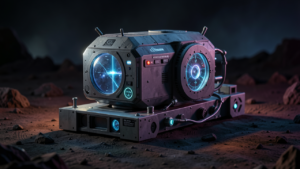
NASA is adopting an innovative, streamlined management approach to accelerate the development of the SR-1 Freedom Nuclear Electric Propulsion (NEP) demonstration mission to Mars, setting an ambitious target for a late 2028 launch. This mission will represent the first flight demonstration of NEP technology for deep-space exploration, where electricity generated by a nuclear reactor will power electric thrusters to propel the spacecraft towards Mars.
Technical & Clinical Details
The SR-1 Freedom mission will utilize a nuclear reactor as a power source to supply electricity to electric thrusters (typically ion engines or Hall thrusters), achieving very high specific impulse (fuel efficiency) and prolonged acceleration. This capability enables travel further and faster with the same amount of fuel compared to conventional chemical propulsion rockets. To expedite development, NASA is actively pursuing the reuse of existing hardware, including the Power and Propulsion Element (PPE) designed for the lunar Gateway, and established reactor designs from the U.S. Department of Energy (DOE). The PPE integrates critical power management and propulsion functions essential for nuclear electric propulsion systems, and leveraging existing designs significantly contributes to cost reduction and decreased development risk.
Background & Industry Context
Human missions to Mars and deep-space exploration have consistently faced challenges due to the vast distances and long durations, including astronaut radiation exposure, the cost of transporting supplies, and mission flexibility. Nuclear Electric Propulsion has been studied for many years as one of the most promising solutions to these challenges. Its high specific impulse reduces the required fuel mass and allows for larger payloads, thereby enhancing the scientific value and operational efficiency of missions. NASA’s acceleration of this NEP demonstration mission signifies a transition to a faster development cycle for space-based nuclear systems and reflects the strong commitment of the United States to open new frontiers in space exploration.
Future Outlook
The success of the SR-1 Freedom mission will be a decisive step towards the practical implementation of nuclear electric propulsion technology. Once established, this technology will dramatically shorten travel times to Mars, improving astronaut safety and mission success rates. This will pave the way for humanity to establish permanent bases on Mars and conduct long-term scientific exploration. Furthermore, NEP is applicable not only to Mars but also to exploration missions to other celestial bodies in the outer solar system, holding the potential to exponentially expand the scope of human deep-space exploration. This mission is expected to redefine future space transportation and serve as a catalyst for technological innovation across the entire space industry.



Comments