Key Findings
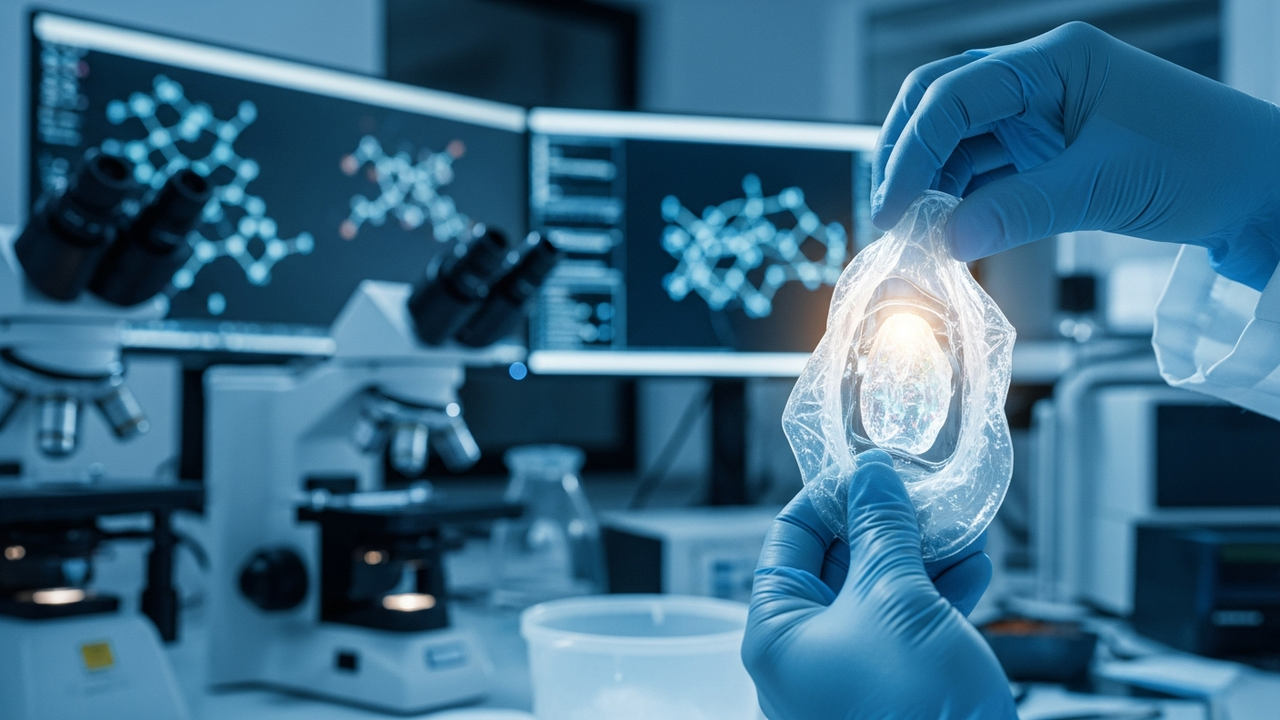
Scientists have achieved a significant materials science breakthrough by chemically integrating protein crystals with polymer hydrogels, resulting in a novel class of materials that are both highly elastic and self-healing. This unprecedented hybrid material can expand to 180% of its original dimensions and over 500% of its volume while remarkably retaining its crystallinity and macroscopic shape. Furthermore, it possesses the intrinsic ability to self-heal defects that emerge during these extreme expansion and contraction cycles.
Technical / Clinical Details
- Hybrid Material Design: The material is constructed by covalently linking ordered protein crystals within a dynamic polymer hydrogel network. The protein crystals provide structural integrity and specific functionalities, while the polymer hydrogel imparts flexibility and the self-healing mechanism through reversible bonds (e.g., hydrogen bonds, dynamic covalent bonds).
- Exceptional Mechanical Properties: The ability to stretch to 180% of its original length and increase volume by over 500% is a remarkable feat for a crystalline material, typically associated with rigidity. This elasticity is attributed to the flexible polymer matrix accommodating the protein crystals while maintaining their internal order.
- Autonomous Self-Healing: When micro-cracks or other defects form due to mechanical stress, the dynamic bonds within the polymer network can spontaneously re-form across the damaged interfaces, effectively repairing the material without external intervention. This self-repair capability significantly enhances the material’s durability and lifespan.
- Retention of Crystallinity: Maintaining crystallinity during substantial deformation is critical. Crystalline structures are responsible for many desirable physical properties, such as optical or electronic functions. Preserving this order ensures that the material’s functional attributes are retained even under dynamic conditions.
Background & Context
For decades, materials scientists have sought to combine the ordered, functional properties of crystalline solids with the flexibility and repair capabilities of polymeric soft matter. The inherent rigidity of crystals and the malleability of polymers presented a formidable challenge in creating such hybrid materials. This breakthrough provides a novel strategy to bridge this gap, opening new avenues for designing advanced functional materials.
Strategic Significance & Outlook
The unique combination of elasticity, crystallinity, and self-healing properties positions this new material for a wide range of transformative applications. In energy storage, it could lead to more robust and longer-lasting batteries by enabling electrode or separator components that can tolerate volume changes during charge/discharge cycles. For sensors, it offers the potential for highly sensitive, flexible, and durable devices that can self-repair. Other promising areas include soft robotics, biomedical implants, and even dynamic optical devices where structural integrity under strain is paramount. This discovery not only advances fundamental materials science but also provides a powerful platform for engineering sustainable, high-performance technologies for the future.
Source: https://www.energy.gov/science/bes/articles/highly-elastic-and-self-healing-protein-crystals



Comments