Key Findings
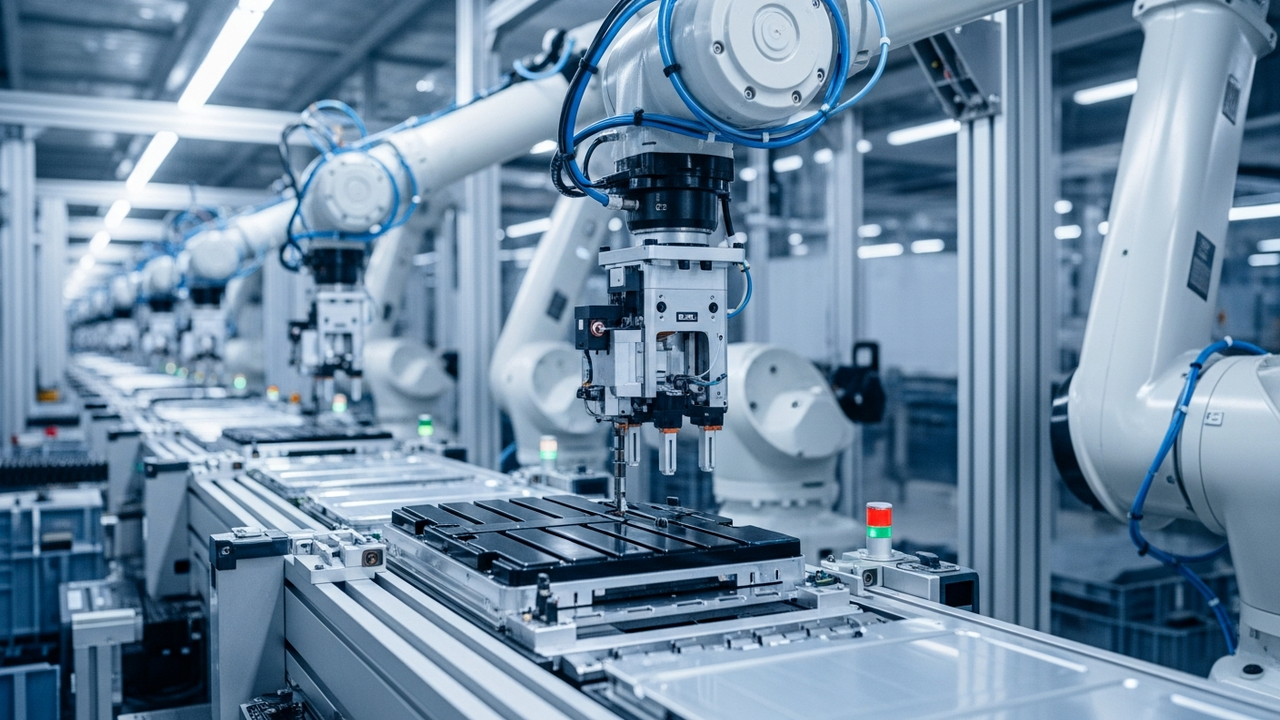
Global battery manufacturing giants, including Tesla, CATL, and BYD, are pioneering a paradigm shift in energy storage production by integrating revolutionary “dry electrode technology” into their manufacturing lines. This innovative method, which bypasses liquid solvents for direct application of active materials onto current collectors, holds the potential to reduce manufacturing costs by up to 50% and boost energy density by 15-20%. This advancement promises to significantly lower the environmental footprint and cost of battery production while simultaneously enhancing overall efficiency.
Technical Details and Manufacturing Advantages
Dry electrode technology represents one of the most significant innovations in battery manufacturing in decades, offering a range of tangible benefits:
- Substantial Manufacturing Cost Reduction: Traditional wet processes require expensive liquid solvents (e.g., NMP) and energy-intensive drying stages. Dry electrode manufacturing eliminates the need for these solvents and subsequent drying, potentially cutting production costs by up to 50%. This has a particularly profound economic impact in gigafactory-scale production environments.
- Improved Energy Density: Dry electrodes exhibit less swelling of active materials and fewer issues with binder uniformity compared to their wet-processed counterparts, enabling the fabrication of denser and thicker electrodes. This can lead to a 15-20% increase in cell-level energy density, contributing to extended electric vehicle range and longer operating times for portable electronic devices. The ability to reduce the proportion of inactive materials directly enhances the overall energy density of the cell.
- Reduced Environmental Impact: By eliminating organic solvents, the technology achieves zero emissions of hazardous substances like NMP, drastically lowering its environmental footprint. This significantly improves the sustainability profile of battery manufacturing.
- Enhanced Material Utilization Efficiency: Minimal solvent-related defects and process losses lead to improved utilization efficiency of expensive active materials and a reduction in material waste.
- Scalability and Diverse Applications: Dry electrode technology is adaptable for mass production using roll-to-roll processes and is applicable not only to lithium-ion batteries but also to next-generation energy storage devices such as solid-state batteries, ultracapacitors, and even sodium-ion batteries.
Background & Industry Context
The explosive growth of the electric vehicle (EV) market and the increasing demand for renewable energy storage necessitate high-performance, low-cost, and environmentally friendly battery manufacturing technologies. Tesla, through its acquisition of Maxwell Technologies, developed and implemented dry electrode processes for its 4680 battery cells. Chinese giants CATL and BYD are also aggressively adopting this technology to enhance their production efficiency and cost competitiveness. Geographically, North America leads in research and pilot-scale implementation, while Asia focuses on cost-effective scaling. European battery manufacturing faces significant ramp-up challenges, including high scrap rates and low yields, making dry electrode technology a potential solution to bridge these gaps.
Strategic Significance & Outlook
Dry electrode technology has the potential to redefine the standard for battery manufacturing. In the coming years, the technology is expected to be further refined and adapted to a wider range of battery chemistries (e.g., LFP, high-nickel, silicon anodes). The integration of automation and AI-driven in-line quality control systems will further boost productivity and reduce manufacturing costs. This will accelerate the adoption of electric vehicles and make grid-scale energy storage solutions more economical, playing a crucial role in achieving global decarbonization targets.