Key Findings
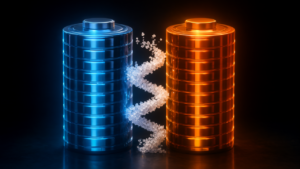
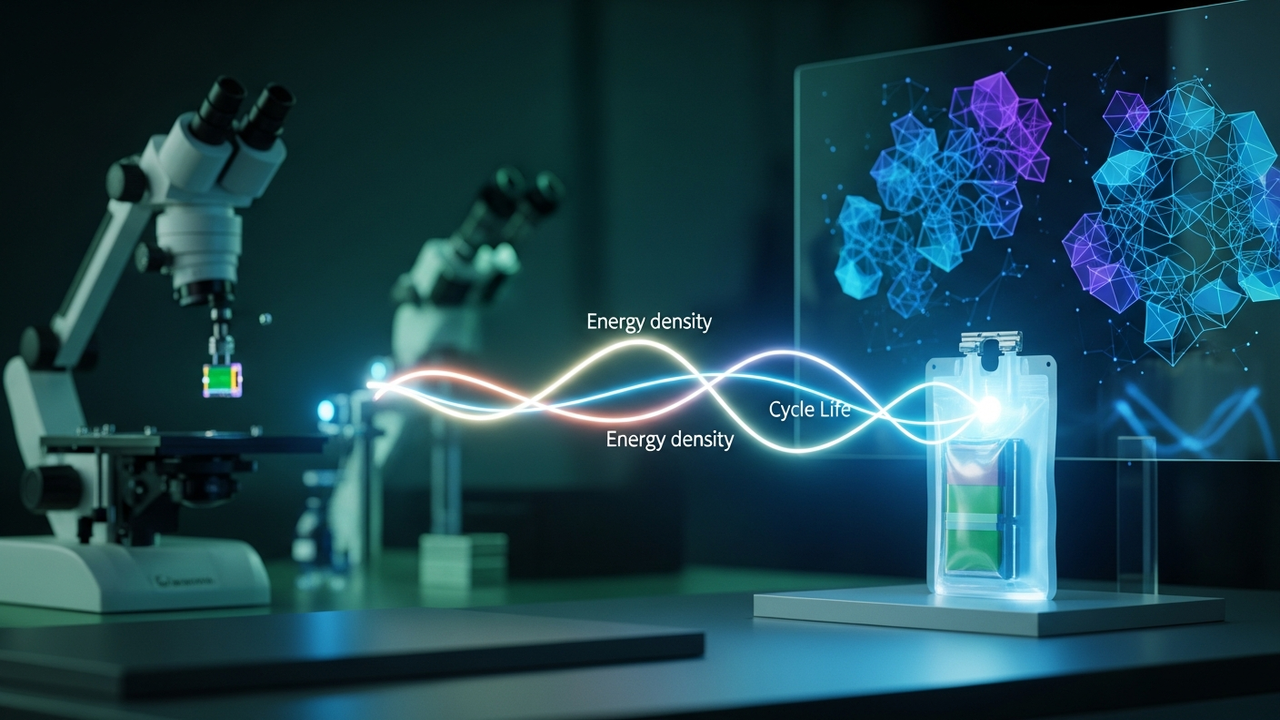
A pivotal academic study has demonstrated that Li6MnO4 is an exceptionally promising dual-functional prelithiation (lithium compensation) material, synergistically enhancing both the energy density and cycle life of lithium-ion batteries (LIBs). Specifically, in pouch cells utilizing NCM cathodes and graphite anodes, the addition of Li6MnO4 dramatically improved capacity retention after 500 cycles from 82.0% to an impressive 95.7%. The research further highlighted its broad applicability, as NCM cathodes paired with next-generation Si/C anodes in coin full-cells exhibited an increase in 1000-cycle capacity retention from 32.4% to 48.9%, firmly establishing its dual-functional efficacy.
Technical Details
Lithium-ion batteries often suffer from initial capacity loss due to the formation of the solid electrolyte interphase (SEI) layer on active material surfaces during the first cycle, and the irreversible consumption of lithium ions by next-generation silicon (Si) anodes. Prelithiation is a technique designed to compensate for this initial lithium loss, thereby improving battery performance. The Li6MnO4 employed in this study provides not just a lithium source, but exerts synergistic effects through its dual functions:
- Compensation for Lithium Loss: Li6MnO4 supplies lithium in a stable form, compensating for the initial capacity loss incurred by SEI formation and lithium uptake in silicon anodes. This directly translates to improved practical energy density.
- Stabilization of SEI Layer: Species generated from Li6MnO4 facilitate the formation of a more stable SEI layer on the anode surface. This suppresses lithium dendrite growth and reduces electrolyte decomposition, thereby mitigating electrode degradation and significantly extending the battery’s cycle life.
- Impact on NCM/Graphite Pouch Cells: After 500 cycles, cells without Li6MnO4 showed 82.0% capacity retention, while those with the additive achieved 95.7%. This directly contributes to enhancing the performance of existing LIBs with graphite anodes.
- Impact on NCM/Si-C Coin Full Cells: Silicon/carbon anodes, highly anticipated next-generation anode materials, face significant challenges from volume expansion and SEI instability, making cycle life improvement critical. The observed increase in 1000-cycle capacity retention from 32.4% to 48.9% with Li6MnO4 addition represents a major stride towards the practical commercialization of Si-anode LIBs.
Background & Industry Context
The widespread adoption of electric vehicles (EVs) and energy storage systems (ESS) is driving a relentless demand for LIBs with higher energy density, longer cycle life, and lower costs. Silicon anodes, due to their higher theoretical capacity than graphite, are considered indispensable for next-generation LIB performance, yet their Achilles’ heel has been the shortened cycle life due to volume expansion. Prelithiation technologies are gaining significant attention as an effective means to overcome this challenge. Current LIBs typically experience an initial capacity loss of approximately 5-15% in the first cycle, making compensation crucial for final product performance.
Strategic Significance & Outlook
Dual-functional prelithiation materials like Li6MnO4 are poised to play a critical role in next-generation lithium-ion battery technology. Their commercialization will accelerate the market entry of high-energy-density LIBs, particularly those employing silicon anodes. Future work will focus on validating the scalability and cost-effectiveness of Li6MnO4 synthesis, and its applicability to different cell formats and battery chemistries (e.g., high-nickel cathodes). If widely adopted, this technology promises to enhance EV range and durability, improve the economics of renewable energy storage, and significantly contribute to achieving a sustainable society.
Source: https://pubs.acs.org/doi/10.1021/acssuschemeng.6c00169