Key Findings
A novel biocompatible adiposome nanoparticle platform has been developed for the efficient delivery of the hydrophobic anticancer drug docetaxel (DTX), demonstrating significantly reduced systemic toxicity while achieving comparable or superior antitumor efficacy in various malignancy models compared to commercial formulations.
Technical / Clinical Details
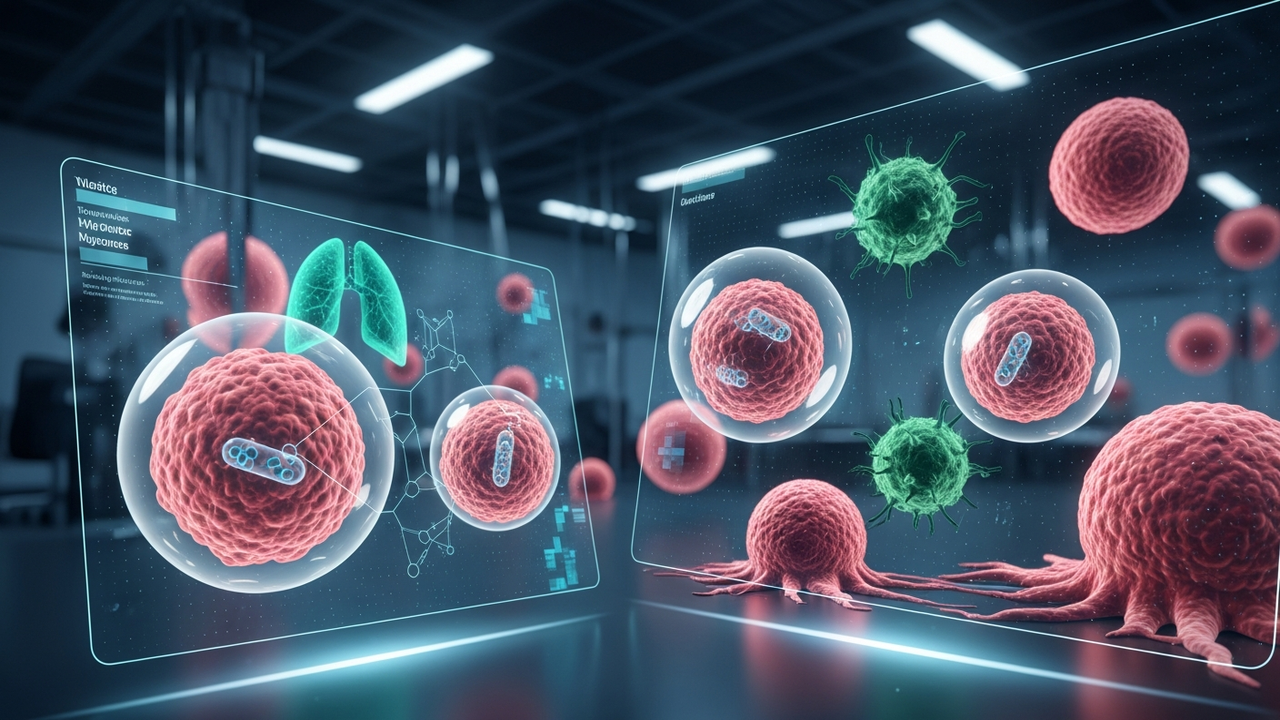
The developed adiposomes mimic cellular membrane properties, enhancing their biocompatibility and enabling efficient drug transport to target cells within the body. In vivo studies showed that non-targeted DTX-Ad effectively reduced the systemic side effects typically associated with conventional docetaxel formulations (e.g., myelosuppression, neuropathy) while maintaining equivalent tumor regression. Furthermore, three types of targeted DTX-Ad, specifically designed for lung, multiple myeloma, and hepatocellular carcinoma, demonstrated potent antitumor activity—suppressing tumor growth and extending survival—in respective animal models. This targeted delivery mechanism leverages specific receptors or antigens in the tumor microenvironment, thereby increasing drug concentration at the tumor site and minimizing off-target effects on healthy tissues.
Background & Context
Efficient delivery of hydrophobic drugs has long been a challenge in oncology due to their poor solubility, unstable pharmacokinetics, and propensity for systemic toxicity. While existing nanoparticle drug delivery systems continue to evolve, adiposomes offer the potential for enhanced biocompatibility and safety by utilizing biologically derived lipid components. The ability to achieve targeted delivery is particularly crucial in cancer therapy for maximizing drug efficacy and minimizing adverse effects.
Strategic Significance & Outlook
This adiposome platform represents a significant step toward personalized medicine for a wide range of malignancies. Future efforts will focus on further preclinical and clinical trials to validate its safety and efficacy. Should this technology reach clinical application, it could offer a more effective and less toxic treatment option for patients with difficult-to-treat cancers. Moreover, the platform’s potential for delivering other hydrophobic drugs beyond docetaxel suggests broad breakthroughs in the field of nanomedicine.
Source: https://www.biorxiv.org/content/10.64898/2026.06.01.729180v1.full-text