Key Findings
A recent perspective article focuses on the transformative role of ‘intelligent living biosensors,’ which emerge from the cutting-edge convergence of synthetic biology and nanotechnology. These living biosensors offer a completely novel approach, wherein genetically engineered microorganisms detect specific environmental or biological signals and convert them into measurable signal outputs. This technology has the potential to fundamentally overturn existing methodologies and redefine future monitoring and diagnostic systems across environmental monitoring, food safety assessment, and biomedical diagnostics. Specifically, in the critical area of mycotoxin (mold toxin) monitoring, it is expected to revolutionize food safety management by providing continuous, real-time surveillance and early warning capabilities.
Technical and Clinical Details
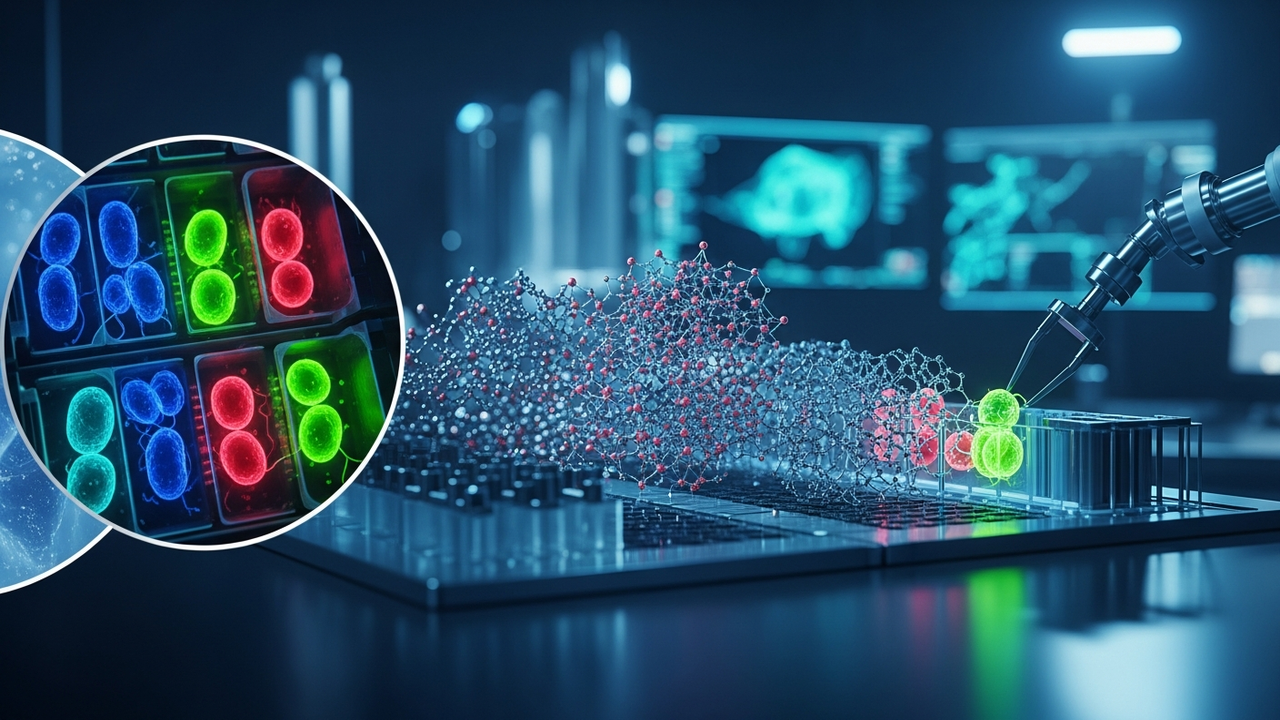
The core of living biosensors lies in the ability to design genetic circuits within microorganisms (such as bacteria or yeast) that, in response to specific target molecules (in this case, mycotoxins), produce a detectable output like light (fluorescence or bioluminescence), color change, electrical signals, or the generation of specific metabolites. For example, in the presence of mycotoxins, a specific promoter within the microorganism might be activated, leading to the expression of a downstream reporter gene that produces a fluorescent protein. Nanotechnology further enhances the sensitivity, specificity, and robustness of living biosensors by enabling the miniaturization and integration of these microorganisms onto small platforms, optimizing the interface between microbes and sensor surfaces, and allowing for signal amplification. This combination enables highly accurate mycotoxin detection even in complex matrices such as food samples, environmental water, and soil.
Background and Industry Context
Mycotoxins are toxic secondary metabolites produced by fungi that grow on agricultural commodities (grains, nuts, coffee beans, etc.) and pose severe threats to human and animal health. However, existing mycotoxin detection methods are often time-consuming, costly, and require specialized equipment, limiting rapid on-site monitoring in food processing chains and storage facilities. Living biosensors offer a low-cost, highly sensitive, real-time, and field-deployable solution to these challenges. The fusion of synthetic biology and nanotechnology allows for the creation of ‘intelligent’ sensor systems that not only detect but also autonomously respond to environmental changes and possess self-healing capabilities.
Strategic Significance and Outlook
Intelligent living biosensors are expected to find wide-ranging applications beyond mycotoxin monitoring. In the food safety sector, they can be utilized for quality control throughout the entire supply chain from production to consumption. In agriculture, they can monitor soil and crop health, and in environmental applications, they can detect water pollution and hazardous substances. In biomedical diagnostics, more advanced applications such as in vivo detection of specific disease biomarkers or pathogens are also within scope. Future research will focus on improving long-term sensor stability, microorganism containment, and overcoming regulatory hurdles, advancing development towards practical application in more complex environments. This technology holds the potential to be a powerful tool for achieving a safer and more sustainable society.
Source: https://irispublishers.com/mcms/pdf/MCMS.MS.ID.000678.pdf