Background
The rapid advancement of artificial intelligence (AI) has ignited an unprecedented demand for high-performance memory, particularly High Bandwidth Memory (HBM). This surge has led to significant HBM supply shortages, which are fast becoming a critical bottleneck for the entire AI chip market. Industry analysts, such as Bernstein, project that while TSMC’s CoWoS packaging capacity is expected to reach 125,000 wafers per month by the end of 2026, HBM demand is forecast to outpace this supply increase.
NVIDIA stands as a primary customer for next-generation AI accelerators featuring HBM4. Although SK Hynix, Samsung, and Micron are all certified HBM4 suppliers, SK Hynix is widely anticipated to secure the majority of HBM4 supply for NVIDIA’s Vera Rubin platform. Responding to this immense AI-driven demand, SK Hynix has already sold out its HBM supply for 2026 and plans substantial capacity expansions, including an investment of approximately $200 billion for an advanced HBM packaging plant in Indiana slated for operation by late 2028. The current equipment procurement from Hanmi Semiconductor represents a strategic, pre-emptive investment by SK Hynix aimed at bolstering HBM4 mass production and solidifying its leadership in this crucial memory segment.
Key Announcement
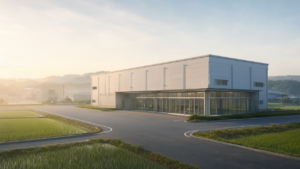
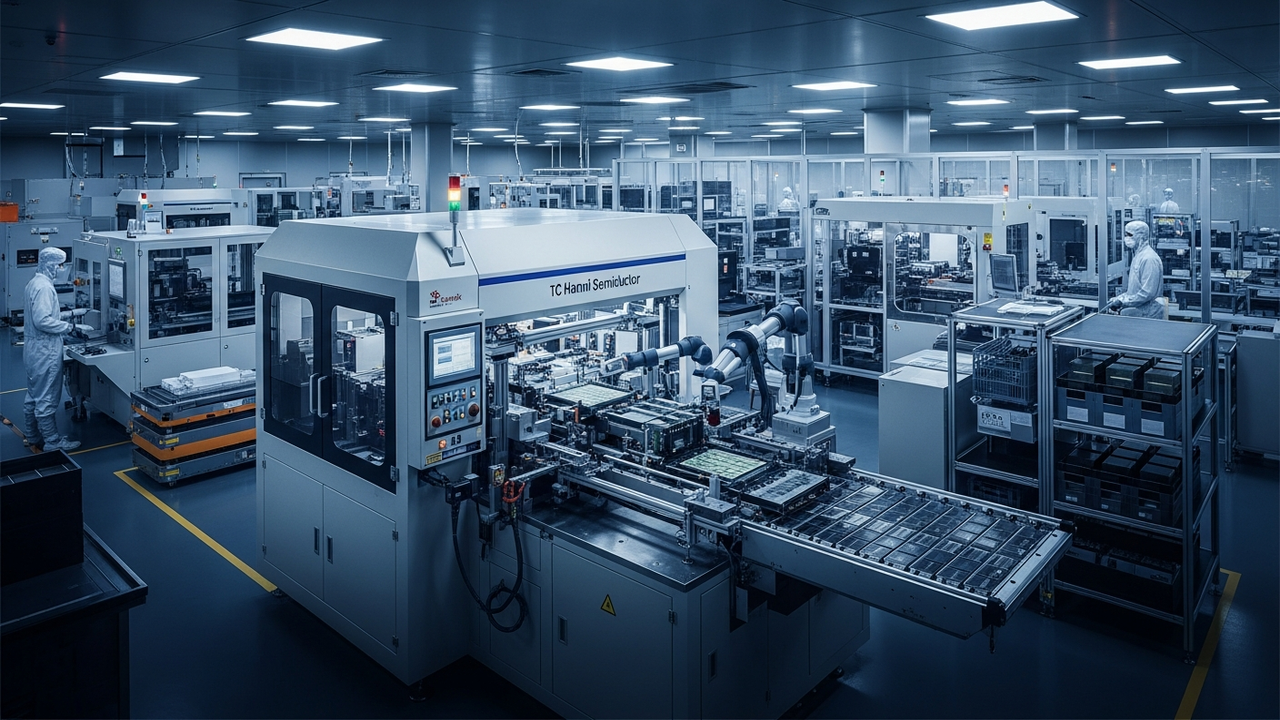
SK Hynix has placed a substantial order totaling ₩44.2 billion (approximately $28.7 million USD) with Hanmi Semiconductor for its state-of-the-art “TC Bonder 4.5 Griffin” equipment. This strategic capital expenditure is designed to significantly enhance SK Hynix’s cutting-edge HBM4 production capabilities. The acquired equipment is scheduled for installation at SK Hynix’s new M15X factory in Cheongju by early September 2026, positioning the company for an early ramp-up of HBM4 mass production to meet the explosive growth in AI chip demand and establish a stable supply system for this next-generation memory.
Technical Specifications and Strategic Advantage
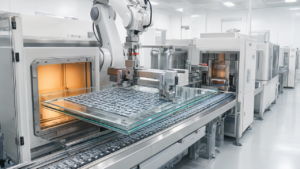
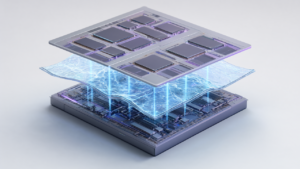
Thermo-compression bonders (TC Bonders) are a cornerstone of the HBM manufacturing process, representing one of the most critical post-packaging stages. These sophisticated machines are essential for precisely stacking multiple DRAM chips vertically to form a multi-layer HBM module. Hanmi Semiconductor’s “TC Bonder 4.5 Griffin” is specifically engineered to deliver high precision, rapid processing speeds, and superior yield, particularly for high-layer-count memories like HBM4.
This advanced bonding technology is paramount for enabling fine-pitch copper-to-copper bonding and other sophisticated interconnection techniques, which critically determine the overall performance, thermal dissipation, and reliability of the entire HBM stack. By integrating these state-of-the-art bonders into its new M15X factory currently under construction in Cheongju, SK Hynix aims to dramatically expand its DRAM and HBM production capacities, specifically establishing a robust mass production system for HBM4. Furthermore, SK Hynix is recognized as a key supplier of HBM4 for NVIDIA’s Vera Rubin platform, leveraging proprietary technologies such as Mass Reflow Molded Underfill (MR-MUF) in conjunction with these new bonders to secure a significant competitive advantage.
Future Outlook and Strategic Implications
SK Hynix’s procurement of TC Bonders from Hanmi Semiconductor marks a pivotal milestone in its strategy to establish a robust mass production system for HBM4. This significant investment is underpinned by persistent industry forecasts predicting continuous growth in HBM demand within the AI market through 2030. SK Hynix plans to fully outsource HBM4 base die production to TSMC’s 12nm process and integrate MR-MUF technology with the new TC Bonders in the packaging stage to achieve both high yields and superior performance.
Looking ahead, the company is committed to continuous investment in the development of even higher-density HBM stacks, including future generations like HBM4E and HBM5. By leading the evolution of HBM technology, SK Hynix aims to maintain its dominant position in the AI-driven memory market. These proactive capital expenditures and technological advancements are expected to play a crucial role in alleviating current HBM supply shortages, thereby fostering further development and expansion of the overall AI infrastructure.