Background and Industry Context
The semiconductor industry is confronting the physical limits of Moore’s Law, making performance improvements solely through miniaturization increasingly challenging. In response, advanced packaging has emerged as a new frontier for enhancing chip performance. The explosive demand from AI and HPC, requiring faster data processing, higher bandwidth, and superior power efficiency, has spurred radical innovation in packaging technology. Packaging is no longer merely a backend process; it is now recognized as a core engineering discipline that determines system-level design and performance. However, this evolution also brings new challenges related to manufacturing scalability, process stability, high-density interconnections, and ultimately, product reliability.
Key Developments
Semiconductor packaging has evolved from a simple protective function to a strategic technology dictating performance, power efficiency, and cost. Beginning with 2D integration, 2.5D and 3D IC integration are now mainstream, driving the explosive growth of AI and High-Performance Computing (HPC) applications. Innovative technologies such as TSMC’s CoWoS, CoPoS, and Fan-Out Wafer Level Packaging (FOWLP), along with chiplet designs, are central to this evolution.
Technological Deep Dive
The evolution of advanced packaging encompasses diverse approaches:
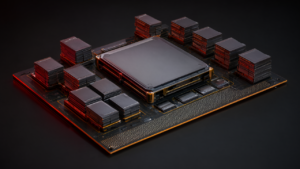
- 2.5D Integration: The most prominent example is TSMC’s CoWoS (Chip-on-Wafer-on-Substrate). This technique horizontally places multiple dies (e.g., logic, HBM) on a silicon interposer, enabling high-density connectivity. Adopted in products by AMD, NVIDIA, and Apple, it delivers significant improvements in data bandwidth and power efficiency. Various CoWoS-S, CoWoS-R, and CoWoS-L variants exist, optimized for specific application requirements.
- 3D IC Integration: Exemplified by TSMC’s SoIC (System-on-Integrated-Chips) and Intel’s Foveros, this method vertically stacks multiple dies, allowing for ultra-high-density integration with shorter connection paths. This is achieved through Through-Silicon Via (TSV) technology and, increasingly, microbump-less copper-to-copper hybrid bonding. Hybrid bonding is key to miniaturizing connection pitches between devices to below 10 micrometers, maximizing performance and power efficiency.
- Chiplet Design: This approach constructs systems by combining smaller “chiplets,” which are functional blocks derived from a monolithic large chip. It enhances design flexibility, allows for the integration of chips from different process nodes, thereby improving cost efficiency and scalability. Intel’s Embedded Multi-die Interconnect Bridge (EMIB) is also part of this trend.
- High Bandwidth Memory (HBM): Essential for AI accelerators, HBM provides data bandwidth far exceeding conventional DRAM by vertically stacking multiple DRAM dies. Development of custom HBM (cHBM) is also progressing, offering memory solutions optimized for specific applications.
- Glass-Core Packaging: As an emerging technology, glass substrates are gaining attention as next-generation interposer and substrate materials. Glass offers excellent dimensional stability, a low coefficient of thermal expansion, and superior high-frequency characteristics, leading to improved thermal management and signal integrity, opening possibilities for finer wiring and higher-density integration.
Future Outlook
The continuous evolution of advanced packaging technology forms the foundation for the development of all next-generation technologies, including AI, 5G, autonomous driving, and cloud computing. Hybrid bonding and glass-core packaging, in particular, are expected to play crucial roles in future device integration. The industry is poised to overcome manufacturing challenges in these technologies and drive mass production, further enhancing semiconductor chip performance and cost efficiency. Furthermore, advancements in heterogeneous integration techniques will facilitate the development of custom chips with more diverse functionalities, accelerating the provision of solutions optimized for specific applications. Packaging technology is predicted to remain at the forefront of semiconductor innovation.
Source: https://www.springerprofessional.de/en/advanced-packaging/52495696