Background & Industry Context
The evolution of AI has dramatically escalated the demand for computational and data processing capabilities, rendering conventional monolithic chip designs increasingly insufficient. Consequently, chiplet architectures and advanced packaging technologies are emerging as critical enablers for enhancing performance and cost-efficiency in next-generation AI accelerators. While leaders in the AI semiconductor market, such as NVIDIA, integrate HBM and GPUs at high densities using technologies like TSMC’s CoWoS, the supply capacity of advanced packaging has become a significant bottleneck in AI infrastructure development.
Intel has invested extensively in packaging technologies over many years, developing proprietary solutions like EMIB and Foveros. This partnership with Tesla marks a crucial milestone for Intel Foundry Services (IFS) as it fully commits to offering these cutting-edge technologies to external clients. Tesla, which extensively deploys its self-developed AI chips in autonomous driving, robotics, and other AI applications, views this collaboration with Intel as a strategic move to further bolster its AI infrastructure.
Key Findings
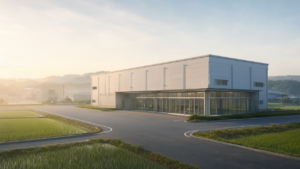
Tesla has announced plans to scale its AI6 chip-powered data center clusters through a strategic partnership with Intel Foundry Services (IFS). This collaboration will leverage Intel’s advanced packaging technologies, including EMIB (Embedded Multi-die Interconnect Bridge) and Foveros, to achieve optimal placement of High Bandwidth Memory (HBM) modules and 3D stacking of AI6 components. The goal is to construct high-density, high-performance AI processing units. This innovative chiplet strategy is slated for realization at the ‘Terafab’ project in Austin, Texas.
Technical Details
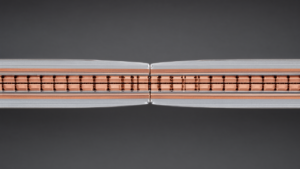
At the core of this partnership are Intel’s advanced packaging technologies. The AI6 chip, designed for high-performance AI workloads, critically relies on maximizing data bandwidth and power efficiency. Intel’s EMIB technology enables the connection of multiple dies—such as the AI6 compute die and HBM modules—at extremely close proximity within the same package. This significantly reduces signal latency and boosts data transfer speeds compared to conventional packaging techniques. By positioning HBM modules close to the AI6 compute die, the AI6 can efficiently leverage the necessary memory bandwidth, thereby enhancing its processing capabilities for data-intensive tasks.
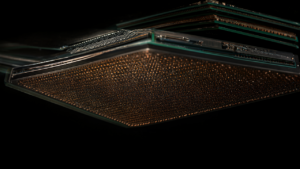
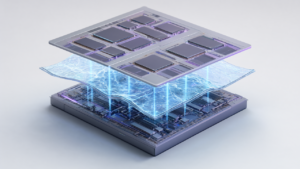
Furthermore, Intel’s Foveros technology facilitates the vertical 3D stacking of multiple AI6 components. This enables exceptionally high integration density and functionality within a single package node. Foveros allows for direct micro-bump connections between dies, leading to shorter interconnect paths and lower power consumption. This chiplet-based approach allows Tesla to combine multiple instances of the AI6 chip with HBM and other components to construct modular and scalable AI computing units. Production is planned for Intel’s ‘Terafab,’ a large-scale manufacturing site Intel is developing in Austin, Texas, as part of its broader initiative to strengthen its foundry business and expand semiconductor manufacturing capacity within the United States.
Future Outlook
The partnership between Intel and Tesla is poised to further underscore the importance of advanced packaging in AI chip design and manufacturing. This collaboration will not only maximize the performance and efficiency of the AI6 chips but also expand Intel Foundry Services’ customer base and accelerate the growth of Intel’s foundry business. Production at Austin’s ‘Terafab’ holds strategic significance for strengthening semiconductor manufacturing capabilities within the United States. This chiplet strategy, leveraging advanced packaging technologies, is expected to optimize power consumption and footprint in AI data centers, contributing to the broader adoption and advancement of AI technologies. In the future, such heterogeneous integration and 3D stacking hold the potential to become the standard for AI hardware design.
Source: https://torovictorioso.substack.com/p/the-formula-1-engine-of-ai