Key Findings
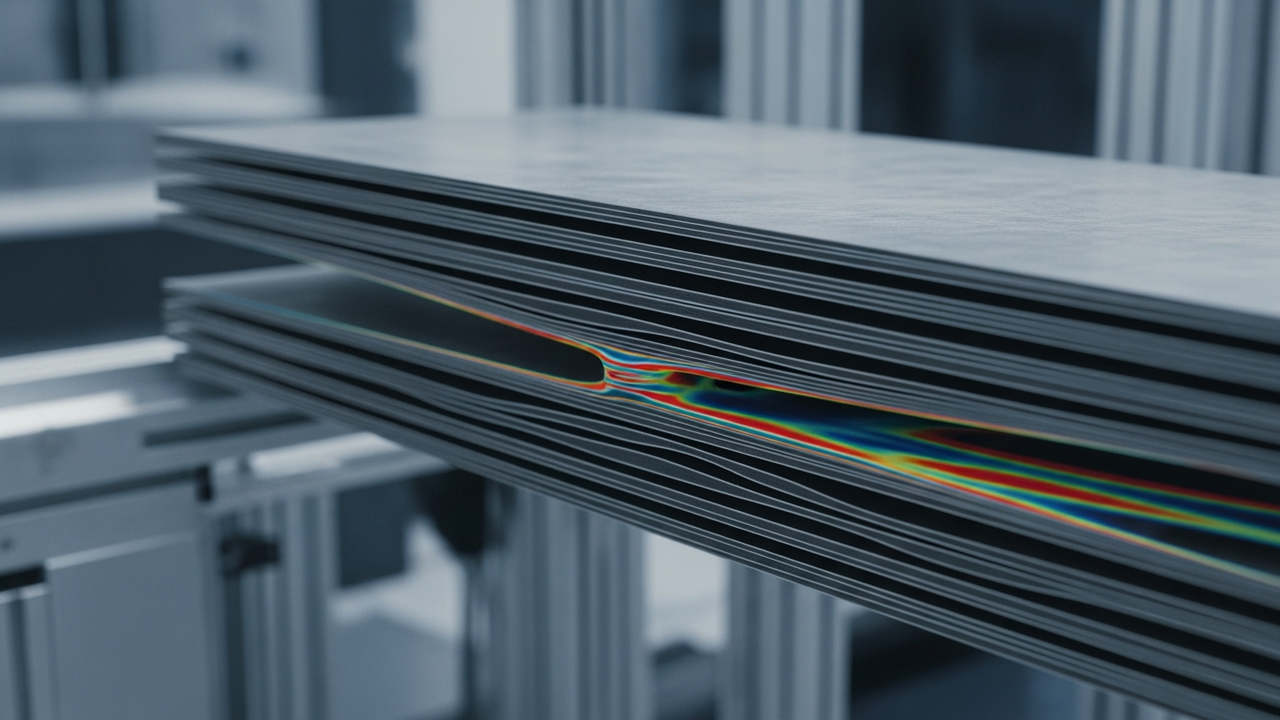
Research published on ResearchGate meticulously investigates the alterations in microstructure and phonon thermal conductivity of lamellar dual-phase high-entropy alloys (HEAs) when subjected to tensile strain. This study specifically aims to deepen the understanding of the exceptional mechanical properties and thermal stability exhibited by eutectic HEAs, such as Al0.7CoCrFeNi, further building upon recent discoveries that these materials can simultaneously achieve both high strength and high ductility.
Technical / Clinical Details
Lamellar dual-phase HEAs are characterized by their microstructure, where multiple crystal phases are alternately arranged, imparting unique mechanical and thermal properties. In this study, experimental and computational methods were employed to analyze how the material deforms under tensile stress and how the internal phase interfaces and crystal lattices influence phonon behavior (quantum particles that transmit heat). Eutectic HEAs like Al0.7CoCrFeNi, with their fine lamellar structure, can suppress grain boundary sliding and phase transformation, thereby achieving both high yield strength and fracture elongation. Changes in phonon thermal conductivity indicate how the material’s thermal conduction efficiency can be tuned by stress conditions, which is a crucial factor for material design in high-temperature environments.
Background & Context
High-entropy alloys, containing multiple principal elements in equimolar or near-equimolar ratios, are attracting significant attention as next-generation structural materials due to their superior properties (e.g., high-temperature strength, corrosion resistance, radiation resistance) not typically found in conventional alloys. The discovery of eutectic HEAs, which combine high strength and ductility, is particularly critical for meeting the demand for high-performance materials in extremely harsh environments found in the aerospace industry, energy sectors (e.g., nuclear power plants and gas turbines), and the automotive industry. However, a complete understanding of the complex microstructure of these materials and their resulting mechanical and thermal properties has been a significant challenge for practical implementation. This research contributes to that understanding, enabling the design of more predictable and reliable HEAs.
Strategic Significance & Outlook
These research findings pave the way for industrial applications of lamellar dual-phase HEAs. The characteristic change in thermal conductivity under mechanical load, in particular, could inspire the development of smart thermal management systems and structural materials with self-diagnostic capabilities. Future research will likely focus on investigating HEA behavior under a wider range of temperatures and load conditions, as well as evaluating long-term durability aspects such as fatigue and creep properties. This is expected to accelerate the optimization and practical application of HEAs in a broad range of high-performance applications, including aircraft engine components, nuclear power plant components, and extreme environment sensors.




Comments