Key Findings
Researchers at the Chinese Academy of Agricultural Sciences have successfully developed iron-fortified biochar (FeBC), demonstrating its capability to reduce harmful gas emissions (such as ammonia, methane, and nitrous oxide) from agricultural composting processes by 50%. This innovative material also concurrently improves compost quality, marking a significant step towards more sustainable agricultural practices.
Technical / Clinical Details
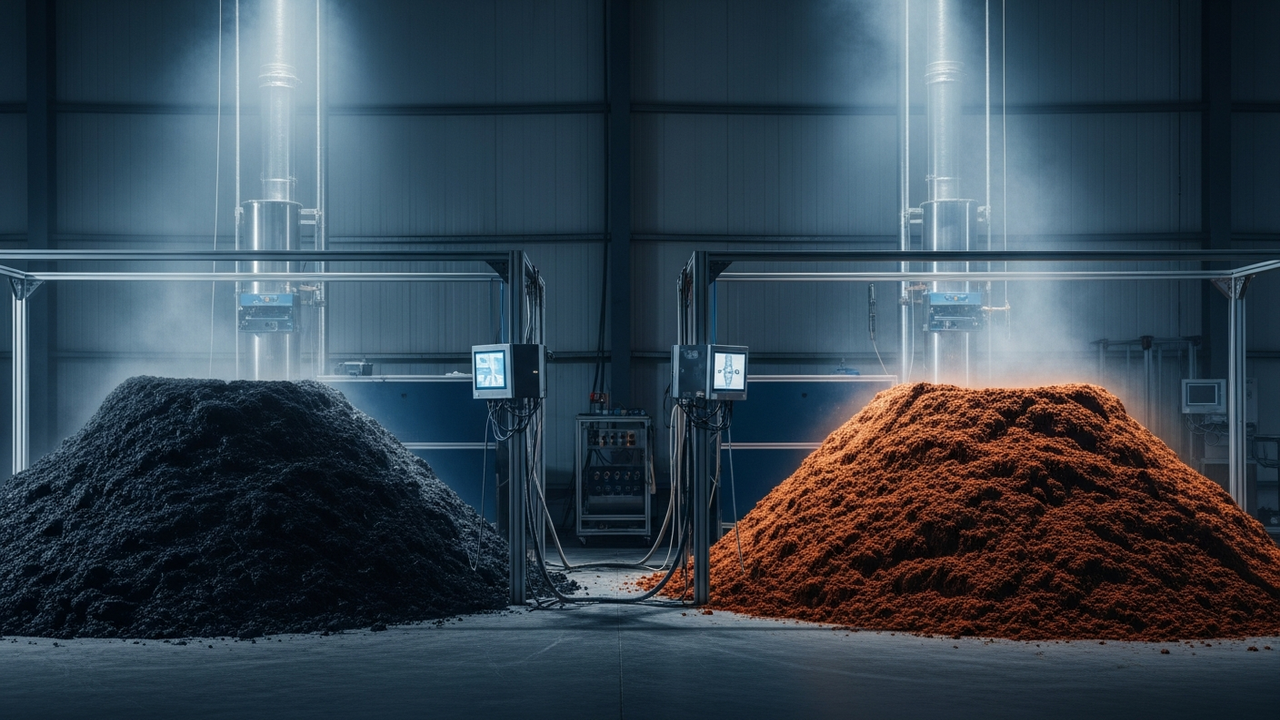
FeBC is produced using biochar derived from corn stalks, pyrolyzed at high temperatures. The research team impregnated this biochar with a specific iron solution, ensuring a uniform dispersion of iron components across the material’s surface. This fortification process dramatically increased the specific surface area of FeBC by 4.6 times compared to the original biochar, providing more adsorption and reaction sites. Furthermore, the surface becomes rich in functional groups like carboxyl and hydroxyl groups, which facilitate chemical bonding and adsorption of harmful gas molecules. Greenhouse gases such as ammonia (NH3) and methane (CH4) are efficiently captured and converted by FeBC’s high adsorption capacity and catalytic effects, significantly suppressing their release into the atmosphere.
Background & Context
Agricultural composting is vital for organic waste recycling but poses environmental challenges due to the emission of harmful gases that cause greenhouse effects and foul odors. These gases exacerbate climate change and negatively impact local living environments. Traditional composting methods often struggle to mitigate harmful gas emissions, frequently requiring costly equipment. While biochar has garnered attention for its porous structure and carbon sequestration capabilities in soil amendment and pollutant adsorption, its specific performance in mitigating harmful gas emissions has been limited. The Chinese Academy of Agricultural Sciences’ research addresses this gap by enhancing biochar’s functionality with iron, offering an environmentally friendly and cost-effective solution.
Strategic Significance & Outlook
This iron-fortified biochar (FeBC) technology holds the potential to revolutionize environmental management in agriculture. Halving harmful gas emissions will significantly contribute to achieving greenhouse gas reduction targets and improve regional air quality. Future steps include establishing mass production techniques for FeBC, exploring its applicability to biochar derived from different agricultural wastes, and evaluating its long-term effectiveness and cost-performance in real farm environments. Furthermore, by combining its gas mitigation capabilities with its function as a soil amendment, FeBC is expected to see international adoption as a ‘two-in-one’ solution that enhances crop productivity and protects the environment. This represents a crucial step toward building sustainable food production systems.






Comments