Background
The relentless advancement of robotics faces significant constraints from conventional battery technology, particularly concerning operational safety, energy density, and performance across diverse environmental conditions. Traditional lithium-ion batteries, relying on flammable liquid electrolytes, present inherent fire risks and experience substantial performance degradation at temperature extremes. These limitations severely restrict the capabilities and deployment scenarios for advanced robots, drones, and autonomous vehicles, hindering their potential in sensitive environments or challenging operational zones.
Key Findings
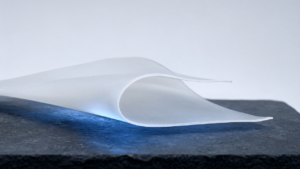
Solid-state batteries are poised to redefine the capabilities of robotic systems by addressing these critical limitations. This technology provides intrinsic safety through non-flammable solid electrolytes, such as oxide-based (e.g., LLZO) and sulfide-based (e.g., Li6PS5Cl) materials, fundamentally eliminating the risks of fire and thermal runaway. This enhanced safety profile is crucial for robots operating in close proximity to humans or within sensitive industrial and environmental settings, enabling more flexible deployment and reducing the need for extensive protective measures.
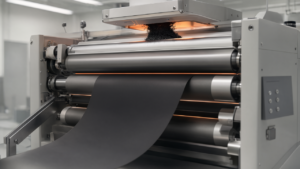
Furthermore, these batteries boast an exceptionally wide operating temperature range, effectively performing from -40°C to 80°C. This broad thermal tolerance makes solid-state batteries ideal for robots deployed in extreme conditions, from sub-zero arctic exploration to high-temperature industrial hot zones, where conventional batteries would fail. A key design innovation, bipolar stacking, significantly enhances volumetric energy density by directly connecting cells in series. This approach minimizes redundant packaging and maximizes space utilization within a robot’s often compact frame, also offering geometric flexibility for seamless structural integration into complex robotic systems.
Sulfide-based electrolytes are particularly noteworthy, demonstrating high room-temperature ionic conductivities (exceeding 10⁻³ S cm⁻¹) and robust performance even at subzero temperatures. This breakthrough addresses a long-standing challenge for conventional batteries, ensuring consistent power delivery in cold environments. The integration of solid-state batteries will therefore enable robots to achieve longer operational durations, operate safely across a wider array of challenging environments, and feature more compact, efficient designs. This technological shift is set to accelerate innovation across sectors like manufacturing, logistics, healthcare, and space exploration, providing a versatile and robust power source aligned with the evolving demands for safer, more powerful, and more versatile autonomous systems. Future development efforts will focus on scaling manufacturing and reducing costs to facilitate widespread adoption.
Source: #
Get our weekly technology intelligence — free
Receive an infographic that lets you judge at a glance whether each field’s analysis report is worth reading.
Subscribe Free — Weekly Tech Intelligence
By subscribing, you’ll receive Troy-Technical’s weekly technology intelligence newsletter.
- Your email and selected fields are used only to deliver the newsletter.
- We never share your information with third parties.
- You can unsubscribe anytime via the link in each email.
See our Privacy Policy for details.
Takes about a minute · Unsubscribe anytime