Key Findings
TSMC’s CoWoS (Chip on Wafer on Substrate) advanced packaging technology continues to be a critical, albeit often hidden, bottleneck in the supply of AI chips. Despite the company’s aggressive target to reach approximately 125,000-130,000 wafers per month in production capacity by the end of 2026, this expansion is still falling short of the explosive demand for AI chips. TSMC’s CEO has explicitly stated that CoWoS capacity for 2026 is “very tight and sold out,” underscoring the severe supply constraints. Notably, Nvidia has already reserved a substantial portion—approximately 60%—of TSMC’s total CoWoS production for 2026, translating to 800,000-850,000 CoWoS wafers, which has driven advanced packaging prices to increase 2 to 4 times faster than the wafers themselves.
Technical & Economic Details
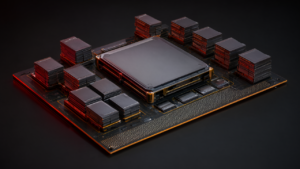
CoWoS technology enables the high-density integration of multiple logic dies with High Bandwidth Memory (HBM) stacks on a silicon interposer, dramatically boosting the performance and efficiency of AI processors. This technology is indispensable for achieving the high-speed data transfer and power efficiency required for complex AI computations, making it essential for AI chip leaders like Nvidia. Nvidia’s strategy of securing a significant portion of TSMC’s CoWoS capacity highlights its market dominance and simultaneously reveals the struggle other AI chip developers face in securing adequate supply. Consequently, the rising cost of advanced packaging is increasingly contributing to the overall manufacturing cost of AI chips, directly leading to higher prices for AI hardware.
Background & Context
The rapid evolution of AI has unleashed an unprecedented wave of demand on the semiconductor industry, while simultaneously creating new bottlenecks that traditional manufacturing processes cannot easily address. Advanced packaging is positioned as a new frontier for enhancing semiconductor performance, especially as Moore’s Law faces its physical limits. The supply constraints in TSMC’s CoWoS capacity directly impact the pace of AI infrastructure deployment and hold significant strategic implications for global AI competition. This situation also motivates competitors like Intel and Samsung to develop and strengthen their own advanced packaging solutions.
Strategic Significance & Outlook
The projection that TSMC’s CoWoS supply constraints will persist through 2026 indicates that the supply-demand balance in the AI chip market remains volatile. Nvidia’s continued securing of major CoWoS capacity will likely sustain its AI accelerator product dominance. However, supply limitations and rising costs could also slow down the development and deployment of broader AI applications. In the long term, while TSMC expands CoWoS capacity, the transition to next-generation packaging technologies like CoPoS, along with alternative solutions from Intel and Samsung, could contribute to diversifying and stabilizing the AI chip supply chain. The industry will continue to pursue innovation across all aspects of materials, equipment, and processes to resolve this critical bottleneck.
Source: https://www.indmoney.com/blog/us-stocks/tsmc-cowos-bottleneck-ai-chip-supply-squeeze-explained
Get our weekly technology intelligence — free
Receive an infographic that lets you judge at a glance whether each field’s analysis report is worth reading.
Subscribe Free — Weekly Tech Intelligence
By subscribing, you’ll receive Troy-Technical’s weekly technology intelligence newsletter.
- Your email and selected fields are used only to deliver the newsletter.
- We never share your information with third parties.
- You can unsubscribe anytime via the link in each email.
See our Privacy Policy for details.
Takes about a minute · Unsubscribe anytime