Key Findings
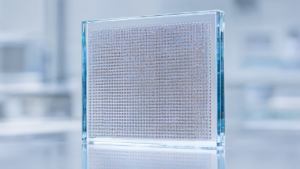
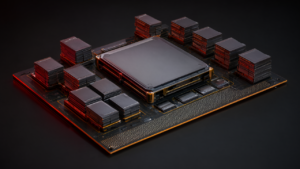
TSMC is actively working to strengthen its glass substrate supply chain for advanced versions of its CoWoS (Chip on Wafer on Substrate) packaging technology. The company is collaborating with display giant Innolux and Japanese IC substrate manufacturer Ibiden to develop next-generation packaging solutions optimized for high-performance AI GPUs. Glass substrates have demonstrated superior characteristics, including a 16% reduction in package warpage compared to conventional organic substrates, along with improvements in key electrical and thermal properties such as thermal expansion, electrical resistance, and inductance. While this technology holds immense potential to maximize the performance of high-end AI GPUs like NVIDIA’s Rubin and Blackwell chips, full-scale mass production is still considered to be a distant prospect.
Technical & Economic Details
The introduction of glass substrates is poised to dramatically improve ‘warpage,’ a major challenge in advanced packaging. Package warpage poses significant problems in multi-chip stacking and fine interconnect formation, negatively impacting yield and reliability. The low coefficient of thermal expansion and high rigidity of glass substrates are highly effective in mitigating this warpage issue. Furthermore, glass possesses superior dielectric properties compared to organic materials, capable of reducing electrical resistance and inductance in high-speed signal transmission. This enables faster data transfer between HBM (High Bandwidth Memory) and logic dies, while also enhancing power efficiency. TSMC’s partnership with Innolux and Ibiden is a strategic move not only for technology development but also for establishing a stable supply system for glass substrates, expected to push the boundaries of design flexibility and performance for next-generation AI accelerators.
Background & Context
The evolution of AI is imposing unprecedented demands on semiconductor chip design and packaging. Specifically, the training and inference of large-scale AI models require immense computational power and data transfer bandwidth, which traditional packaging technologies are increasingly struggling to support. While TSMC’s CoWoS has become a de facto standard for HBM-integrated AI chips, further performance enhancements and larger package sizes necessitate innovation in substrate materials. Glass substrates are attracting industry-wide attention as a promising solution to this challenge, with Intel also intensifying its investments in this technology. This competitive drive is a significant force pushing the limits of semiconductor performance in the AI era.
Strategic Significance & Outlook
TSMC’s leadership in strengthening the glass substrate supply chain will have a profound impact on the future of high-performance AI GPUs. The tangible achievement of a 16% reduction in warpage clearly demonstrates the superior advantages of glass substrates over conventional organic alternatives. If NVIDIA’s next-generation chips adopt glass substrates, AI accelerator performance is poised to reach new levels. However, significant technical challenges remain for mass production, including glass processing technologies, Through-Glass Via (TGV) formation, and compatibility with existing semiconductor manufacturing equipment. If these challenges are overcome and cost-effective mass production is established, glass substrates could become a mainstream advanced packaging technology, redefining computing performance in the AI era.
Get our weekly technology intelligence — free
Receive an infographic that lets you judge at a glance whether each field’s analysis report is worth reading.
Subscribe Free — Weekly Tech Intelligence
By subscribing, you’ll receive Troy-Technical’s weekly technology intelligence newsletter.
- Your email and selected fields are used only to deliver the newsletter.
- We never share your information with third parties.
- You can unsubscribe anytime via the link in each email.
See our Privacy Policy for details.
Takes about a minute · Unsubscribe anytime