Key Findings
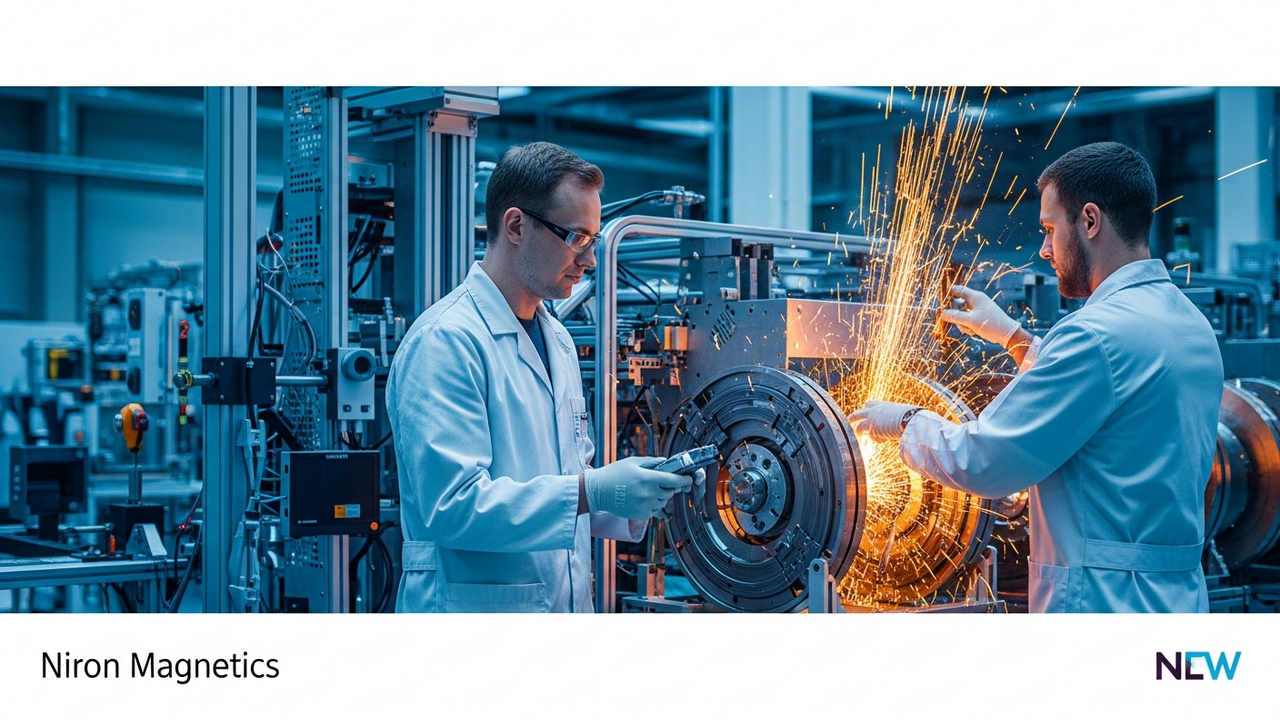
Intensified export restrictions on rare earth elements by China are accelerating global efforts to reduce reliance on these critical materials and establish alternative supply chains. Significant advancements in rare earth-free magnet development and commercialization are reported across the US, Europe, and Japan. Niron Magnetics, for instance, has established the capability to manufacture high-performance rare earth-free magnets from iron and nitrogen, targeting an annual production of 1,500 tons by 2028. Commercial deployment in high-end European speakers is anticipated within the year, marking a revolutionary step towards achieving comparable performance to traditional magnets using abundant and environmentally benign materials.
Technical Details
Technological development in rare earth-free magnets is progressing on multiple fronts. Niron Magnetics’ iron-nitrogen based technology not only mitigates geopolitical supply risks but also contributes to reduced manufacturing costs. This technology is expected to find applications in sectors demanding high performance, such as audio equipment and automotive components. Concurrently, German automotive supplier ZF Friedrichshafen is advancing the development of magnet-free motors for electric vehicles (EVs), aiming for mass production within a few years. This approach is significant as it fundamentally addresses concerns about magnet supply instability. In Japan, Daido Steel has developed high-performance permanent magnets that utilize only more readily available light rare earths while maintaining performance equivalent to conventional rare earth magnets. These magnets are already integrated into Honda’s hybrid vehicle motors, indicating successful practical implementation. Each of these technological pathways offers distinct solutions to the rare earth challenge, contributing to the establishment of more sustainable supply chains.
Background & Context
Rare earth elements are indispensable for modern high-tech industries, powering EV motors, wind turbines, smartphones, and defense systems. However, their production and refining are heavily concentrated in a few specific countries, with China dominating global supply, making the supply chain vulnerable to geopolitical tensions and export restrictions. Recognizing this, nations like the US and those in Europe have heavily invested in bolstering domestic rare earth production capabilities and fostering rare earth-free technological innovations. The recent announcements from these companies underscore that these strategic initiatives are beginning to yield tangible results, heralding a future of more stable material supply for global industries. The accelerating electrification of the automotive sector, in particular, is driving a dramatic increase in magnet demand, further elevating the criticality of rare earth-free technologies.
Strategic Significance & Outlook
The progression of rare earth-free magnet technology is poised to significantly impact future industrial structures. Firstly, stabilizing the supply chain will reduce raw material price volatility, ensuring more consistent product availability, which is a substantial benefit for automotive and consumer electronics manufacturers. Secondly, these technologies contribute to mitigating the environmental impact associated with rare earth mining, often linked to severe pollution. Adopting alternative technologies promises more sustainable material sourcing. Furthermore, increased competition will spur continued innovation in rare earth-free technologies, potentially leading to the development of even higher-performance and cost-effective magnets. In the long term, this will accelerate innovation across global high-tech industries and facilitate the broader adoption of clean energy technologies. The production targets of Niron Magnetics, the mass production goals of ZF Friedrichshafen, and the commercial deployment by Daido Steel are clear indicators that these promising outlooks are rapidly becoming a reality.
Get our weekly technology intelligence — free
Receive an infographic that lets you judge at a glance whether each field’s analysis report is worth reading.
Subscribe Free — Weekly Tech Intelligence
By subscribing, you’ll receive Troy-Technical’s weekly technology intelligence newsletter.
- Your email and selected fields are used only to deliver the newsletter.
- We never share your information with third parties.
- You can unsubscribe anytime via the link in each email.
See our Privacy Policy for details.
Takes about a minute · Unsubscribe anytime