Key Findings
Despite their growing commercial presence in stationary storage and electric vehicles, sodium-ion (Na-ion) battery production lines are currently challenged by low yields, estimated around 70%. This inefficiency is primarily attributed to material instability, process inconsistency, and a comparatively limited cycle life when benchmarked against established lithium-ion batteries. To combat these issues and significantly improve manufacturing yields, a multi-level testing framework, adapted from advanced lithium-ion battery quality control protocols, has been proposed. This systematic approach focuses on evaluating the batteries at particle, powder, electrode, and cell levels, proving critical for enhancing the reliability and production efficiency of Na-ion batteries.
Technical Details
The proposed multi-level testing framework aims to identify potential problems at each stage of the manufacturing process, allowing for early detection and corrective actions. This approach is designed to improve the quality of the final product and reduce rejection rates.
- Particle-Level Testing: Evaluates the morphology, size distribution, crystal structure, and surface composition of active material particles, which directly influence ion transport characteristics and reactivity.
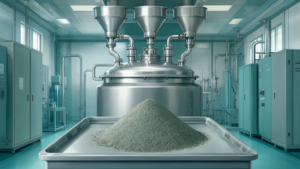
- Powder-Level Testing: Measures the density, flowability, specific surface area, and other properties of the powders used in electrode manufacturing, essential for uniform slurry preparation and electrode formation.
- Electrode-Level Testing: Assesses the uniformity, density, porosity, electrical conductivity, and binder distribution of the fabricated electrodes. These parameters are critical for determining battery capacity, internal resistance, and cycle life.
- Cell-Level Testing: Provides a comprehensive evaluation of prototype cells, including capacity, internal resistance, rate capability, cycle life, and safety (thermal stability), verifying performance under actual operating conditions.
Implementing this framework enables the identification of manufacturing bottlenecks and facilitates optimization across the entire process, from material selection to electrode fabrication and cell assembly. For example, the recent 60 GWh sodium-ion battery capacity agreement between CATL and Hyperstrong highlights the indispensable role of such quality control measures for GWh-scale commercial deployment.
Background & Industry Context
Sodium-ion batteries are rapidly gaining commercial traction in stationary energy storage and EV sectors as a next-generation battery leveraging abundant and inexpensive sodium resources. However, their widespread adoption hinges on the maturity of manufacturing processes and ensuring consistent quality. Similar to the early challenges faced by Li-ion batteries, Na-ion technology is grappling with issues like optimizing material properties, stabilizing manufacturing processes, and enhancing final product reliability. This testing framework provides a practical solution to address these challenges, laying a foundational groundwork for accelerating the industrialization of Na-ion battery technology.
Strategic Significance & Outlook
The implementation of a multi-level testing framework is expected to dramatically improve sodium-ion battery manufacturing yields and quality, leading to cost reductions and enhanced market competitiveness. Consequently, sodium-ion batteries are poised to expand their role not only as an alternative but also as a complementary technology to lithium-ion batteries. If this framework becomes an industry standard, it will strengthen quality assurance across the entire sodium-ion battery supply chain, significantly contributing to the proliferation of more sustainable and reliable energy storage solutions. As GWh-scale deployments advance, the importance of manufacturing-phase quality control will only continue to increase.
Source: https://iestbattery.com/case/multi-level-sodium-ion-battery-testing/
Get our weekly technology intelligence — free
Receive an infographic that lets you judge at a glance whether each field’s analysis report is worth reading.
Subscribe Free — Weekly Tech Intelligence
By subscribing, you’ll receive Troy-Technical’s weekly technology intelligence newsletter.
- Your email and selected fields are used only to deliver the newsletter.
- We never share your information with third parties.
- You can unsubscribe anytime via the link in each email.
See our Privacy Policy for details.
Takes about a minute · Unsubscribe anytime