Key Finding: Smart Composting with AI and Digital Twins Achieves Emission Reductions and Yield Boosts
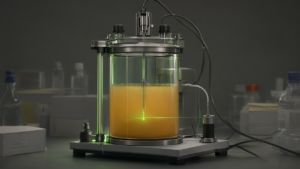
New research from CAS (Chemical Abstracts Service) reports that a smart composting system, integrating artificial intelligence (AI) and machine learning (ML), has successfully achieved the dual goals of reducing environmental impact and improving resource utilization. This system features advanced functionalities such as real-time tracking, predictive optimization of process conditions, maturity and quality forecasting, and anomaly detection. By leveraging digital twin technology, the composting system has transitioned from traditional empirical operations to data-driven predictive and prescriptive control, resulting in both reduced emissions and enhanced yields of compost products. This achievement is not limited to composting technology but clearly demonstrates the versatile applicability of AI in broad bioprocess optimization, indicating its potential across numerous industries.
Technical & Clinical Details: Precision Control via AI and Sensor Integration
- Real-Time Tracking and Sensor Integration: The smart composting system monitors critical process parameters in real time through a network of sensors, including temperature, humidity, oxygen concentration, CO2 emissions, and ammonia emissions. This data serves as input for the AI/ML models.
- Predictive Optimization and Prescriptive Control: Machine learning algorithms predict future process conditions based on real-time and historical training data. This enables automatic and dynamic adjustments to operations such as aeration, watering, and mixing, as needed, to maintain optimal composting conditions. For example, if an increase in methane emissions is predicted, appropriate aeration is triggered to prevent anaerobic conditions.
- Maturity and Quality Prediction: AI models possess the ability to predict the degree of compost maturation and its final quality (e.g., nutrient content, pathogen levels). This allows for harvesting at the optimal time and ensures consistency in product quality.
- Anomaly Detection and Digital Twin: Anomalous patterns in process data are quickly detected by AI. The digital twin functions as a virtual replica of the physical composting process, updated with real-time data. This allows operators to simulate the impact of potential issues in a virtual environment and test countermeasures proactively.
Background & Industry Context: Need for Sustainable Resource Management
Waste management and resource circularity are urgent challenges for achieving a sustainable society. Composting is a critical process that transforms organic waste into valuable soil amendments, but traditional operations have relied on experience and intuition, leading to inefficiencies and environmental concerns. Particularly, reducing emissions of greenhouse gases (GHG) such as methane and N2O is important from a climate change perspective. The integration of AI provides a powerful means to scientifically address these challenges.
Future Outlook: Broad AI Application in Bioprocesses and Driving Smart Factories
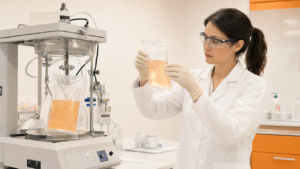
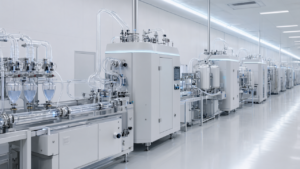
The application of AI and digital twins demonstrated in this research is not limited to composting processes; it is broadly applicable to diverse bioprocesses, including biopharmaceutical manufacturing, food and beverage fermentation processes, and wastewater treatment. Real-time monitoring of process parameters, predictive modeling, and autonomous control hold the potential to dramatically improve the efficiency, sustainability, and quality of any bioprocess. This represents a significant step towards realizing the smart factories envisioned by Pharma 4.0 and Industry 4.0, and is poised to drive future industrial innovation.
Source: https://www.cas.org/resources/cas-insights/composting
Get our weekly technology intelligence — free
Receive an infographic that lets you judge at a glance whether each field’s analysis report is worth reading.
Subscribe Free — Weekly Tech Intelligence
By subscribing, you’ll receive Troy-Technical’s weekly technology intelligence newsletter.
- Your email and selected fields are used only to deliver the newsletter.
- We never share your information with third parties.
- You can unsubscribe anytime via the link in each email.
See our Privacy Policy for details.
Takes about a minute · Unsubscribe anytime