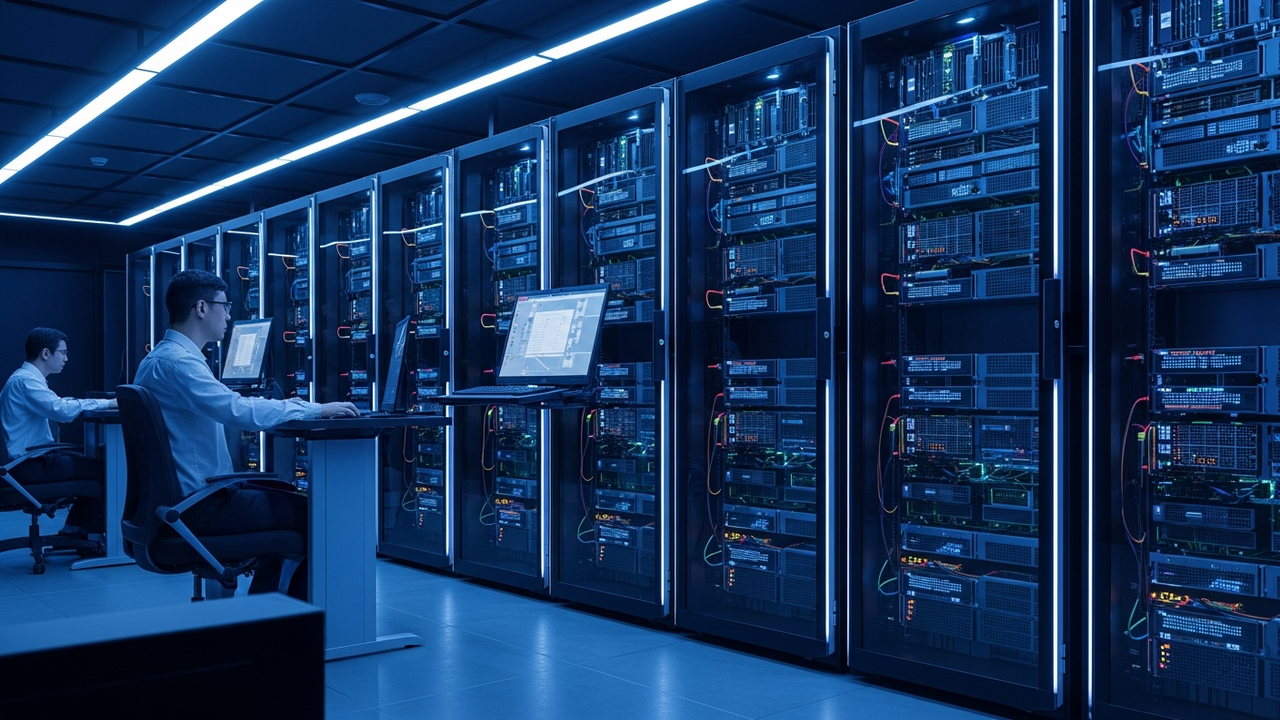
AI Era Server Internal Bottlenecks and the Necessity of Optical Technology
The rapid proliferation of generative AI and High-Performance Computing (HPC) workloads is forcing significant transformations in traditional server architectures. Particularly, data transmission speeds between CPUs, GPUs, and memory within servers are becoming a bottleneck to performance improvements. Conventional electrical wiring faces limitations as distance increases, leading to greater signal attenuation, higher power consumption, and bandwidth constraints. Consequently, server manufacturers are exploring the integration of optical technology to overcome these bottlenecks and build next-generation AI servers.
Foxconn’s Full Entry into Optoelectronic Integrated Server Development
Responding to this trend, Taiwan’s Foxconn (Hon Hai Precision Industry), the world’s largest electronics manufacturing services (EMS) provider, has reportedly made a full-fledged entry into developing next-generation servers with optoelectronic integration technology at their core. This strategic shift aims to fundamentally resolve internal server data transmission bottlenecks in response to the explosive growth of AI and HPC workloads.
Technical Approach and Anticipated Benefits
Foxconn is targeting the following optical technology integrations in its next-generation servers:
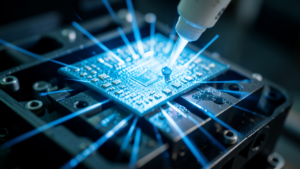
- Chiplet-to-Chiplet Optical Interconnects: Introducing optical technology for connections between multiple chiplets comprising server CPUs and GPUs, enabling ultra-high-speed and low-latency data transfer.
- Board-to-Board Optical Interconnects: Applying optics to connections between different printed circuit boards (PCBs) within servers, facilitating efficient transmission of large volumes of data.
- Improved Transmission Speed and Reduced Power Consumption: By using light instead of electrical signals, signal attenuation is suppressed, transmission speeds are dramatically increased, and significant power consumption reductions are achieved. This directly translates to lower operational costs and reduced environmental impact for the entire data center.
This move strongly indicates that server manufacturers are confronting the physical limitations of traditional electrical wiring, and the integration of optical technology is becoming an indispensable factor determining the performance and efficiency of AI servers. In the future, optoelectronic integration technology is likely to be standard in AI servers offered by Foxconn, which is expected to have a major impact on the data center industry, particularly in the design and construction of AI infrastructure.
Source: #




Comments