Key Findings
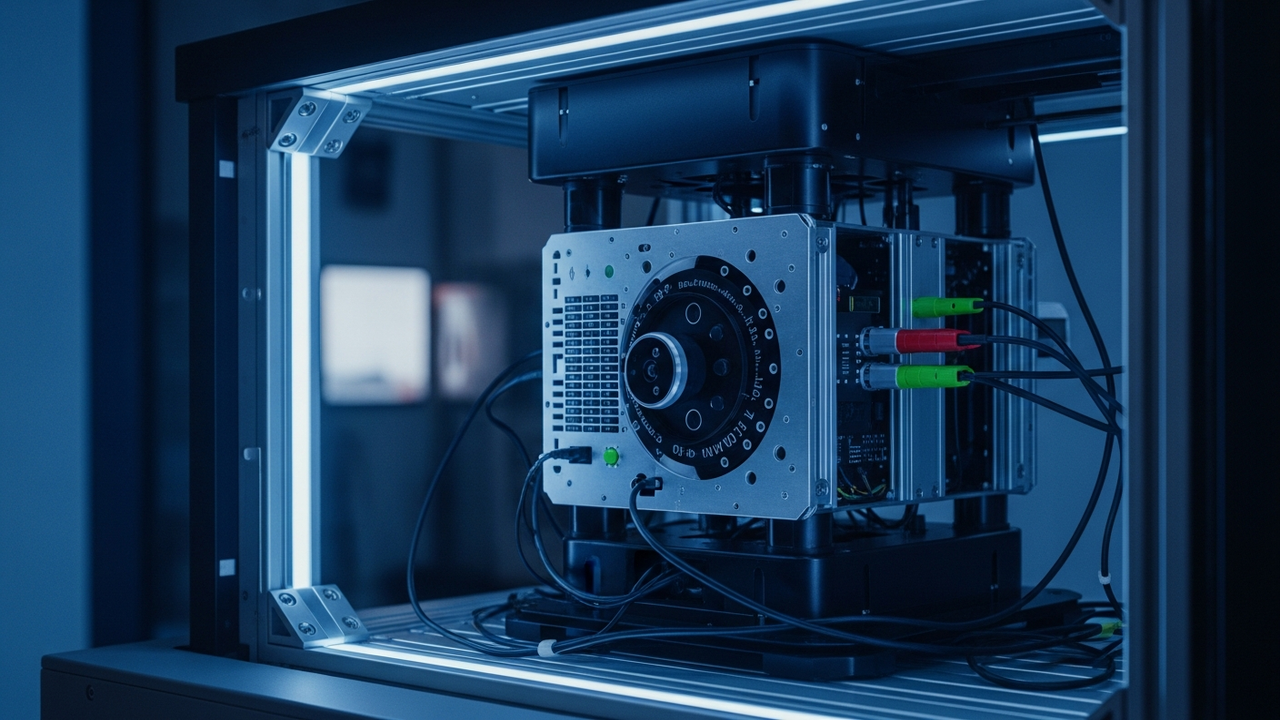
High-resolution direct Time-of-Flight (ToF) LiDAR modules are bringing groundbreaking spatial intelligence to edge AI by simultaneously providing multiple data streams, including precise depth maps, infrared images, reflectivity information, ambient light measurements, and confidence data. This innovative technology dramatically enhances sensing capabilities across a wide range of fields such as robotics, augmented reality/virtual reality (AR/VR), and industrial applications. It establishes a robust foundation for AI systems to more accurately understand and interact with the physical world in real-time.
Technical / Clinical Details
Direct ToF LiDAR precisely measures distance by emitting light pulses and directly calculating the time it takes for the reflected light to return from an object. High-resolution capabilities enable the generation of 3D models of environments with millimeter-level accuracy, significantly improving object recognition and obstacle avoidance, especially in complex scenes. The simultaneous provision of multiple data streams means that richer information can be extracted from a single sensor. For example, infrared images enhance visibility in darkness or low-light conditions, while reflectivity information helps identify material properties of objects. Confidence data quantifies measurement uncertainty, allowing AI algorithms to make more robust decisions. When integrated into edge AI, this data is processed in real-time on the device, supporting instantaneous decision-making and action.
Background & Context
The evolution of AI is expanding its application scope from cyberspace to the physical world, making the ability of autonomous systems and smart devices to accurately perceive and act upon their surroundings indispensable. Traditional 2D cameras excel in color information but lack depth, while radar is strong in depth but low in resolution. LiDAR fills these gaps by providing high-precision 3D depth information, but higher resolution and multi-functionality are crucial for addressing more complex AI tasks. Solutions like Hesai’s Kosmo Spatial Intelligence Platform are also noteworthy in elevating LiDAR’s capabilities to spatial intelligence, with the entire industry focusing on building digital twins of the physical world and real-time interaction.
Strategic Significance & Outlook
The enhancement of spatial intelligence through high-resolution direct ToF LiDAR provides a foundation for robots to operate more safely and autonomously, and for AR/VR experiences to become more immersive and interactive. In industrial applications, it will revolutionize precise quality inspection, automated material handling, and worker safety monitoring. In the future, this technology is expected to be applied in a wide range of fields, including autonomous vehicles, smart homes, medical diagnostics, and security systems, accelerating the realization of ‘Physical AI’ where AI seamlessly merges with the physical world. This technological innovation will be an indispensable component in forming the foundation of next-generation digital infrastructure and driving societal automation and intelligence.
Get our weekly technology intelligence — free
Receive an infographic that lets you judge at a glance whether each field’s analysis report is worth reading.
Subscribe Free — Weekly Tech Intelligence
By subscribing, you’ll receive Troy-Technical’s weekly technology intelligence newsletter.
- Your email and selected fields are used only to deliver the newsletter.
- We never share your information with third parties.
- You can unsubscribe anytime via the link in each email.
See our Privacy Policy for details.
Takes about a minute · Unsubscribe anytime




Comments