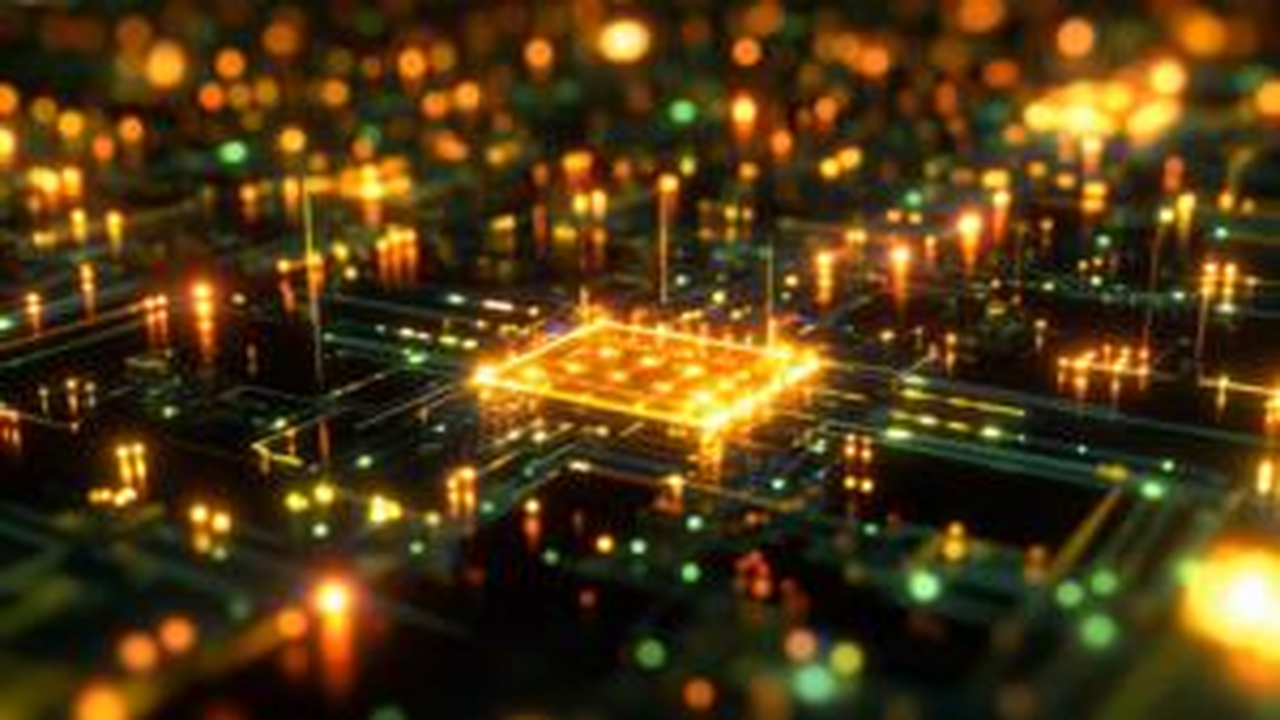
Addressing AI Compute Power and Space Challenges
The rapid advancement of artificial intelligence (AI) presents challenges of increasing computational demands in data centers and edge devices, coupled with escalating power consumption. Specifically, matrix operations and nonlinear activation functions, indispensable for AI workloads like deep learning, are pushing the limits of power efficiency in traditional electronic circuits. To tackle this, “optical computing” and “photonic AI accelerators” are gaining attention as promising technologies, but efficient implementation of nonlinearity in the optical domain has been a long-standing hurdle.
NUS Develops Breakthrough Photonic AI Accelerator
A research team at the National University of Singapore (NUS) has announced a new photonic accelerator that overcomes this nonlinearity challenge, enabling AI to compute and respond entirely within the optical domain. This groundbreaking accelerator features the following key characteristics:
- Nonlinear Computation in Full Optical Domain: It employs a unique architecture that converts optical signals into voltage-driven nonlinear responses, which are then fed back into the photonic circuit. This mimics the nonlinearity of the brain, allowing for highly efficient execution of key AI tasks like matrix multiplication.
- Significant Energy and Space Savings: In image recognition tasks using the MNIST handwritten digit dataset, it achieved a high classification accuracy of 91.6% while successfully reducing energy consumption by 20 times and occupied space by 40% compared to conventional photonic architectures.
- Potential for Hybrid Integration: The research team is also considering hybrid integration with lithium niobate and silicon photonics to further enhance performance.
Technical Significance and Industry Impact
This achievement represents a breakthrough in the efficient implementation of nonlinear activation functions, a long-standing challenge in optical computing, significantly improving the performance and practicality of photonic neural networks. With substantial reductions in power consumption and space, its potential for adoption in data centers with high AI workloads and edge AI devices requiring real-time processing is high. For instance, it could have a major impact on fields requiring high-speed, low-power AI processing, such as autonomous vehicles and industrial robots. While further development from the basic research stage, validation in real-world environments, and ensuring compatibility with mass production processes remain challenges, this technology marks a critical step in shaping the future of AI.




Comments