Key Findings
Xnergy Materials’ “Solid-State Batteries: The 2026 Guide to Chemistry & Status” provides an in-depth analysis of the properties, advantages, and challenges associated with the three primary solid electrolyte families—sulfides, oxides, and halides—that dictate solid-state battery (SSB) performance. Critically, the guide identifies interfacial contact resistance as a significant barrier to SSB commercialization, underscoring the necessity for targeted solutions.
Technical / Clinical Details
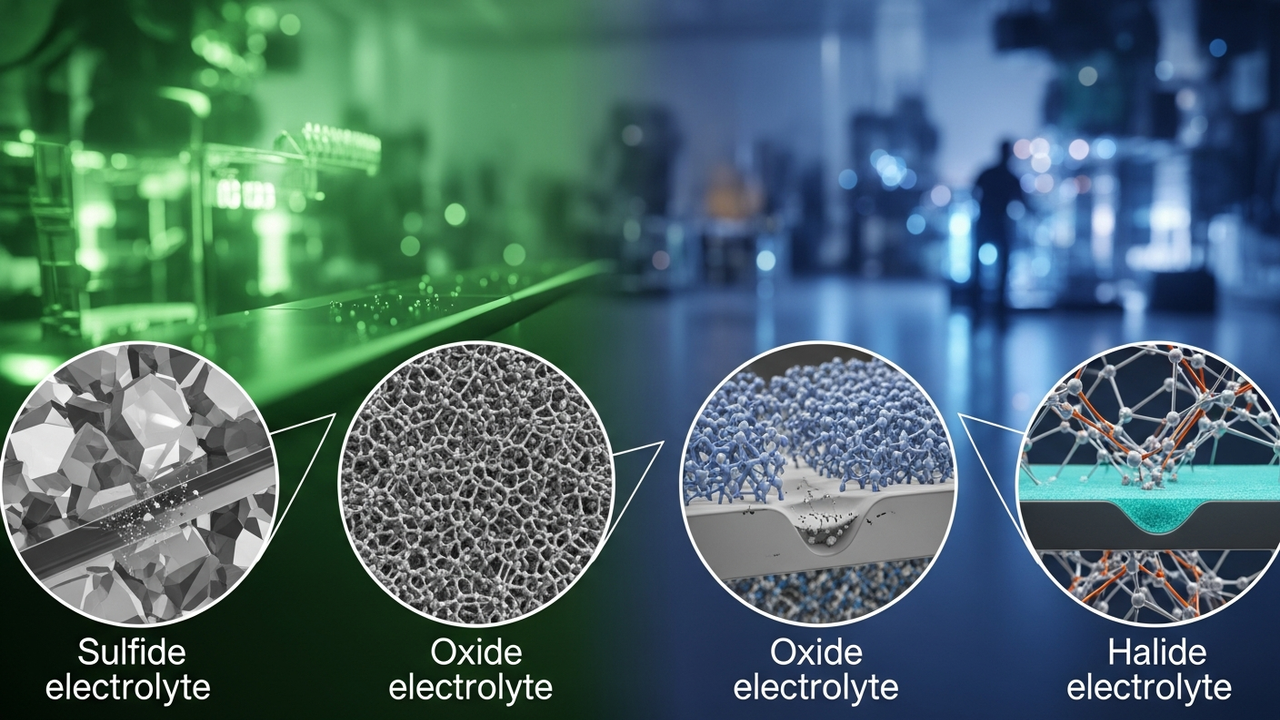
- Sulfide Solid Electrolytes: Characterized by high room-temperature ionic conductivity (above 10^-3 S/cm), comparable to liquid electrolytes in conventional Li-ion batteries. However, their instability in air and moisture, alongside the risk of hydrogen sulfide gas generation, presents manufacturing and sealing challenges.
- Oxide Solid Electrolytes: Offer excellent chemical and thermal stability, making them relatively easier to handle in ambient conditions. Prominent examples include garnet-type (e.g., LLZO) and NASICON-type materials, though they typically exhibit lower ionic conductivities than sulfides and higher interfacial resistance with electrodes.
- Halide Solid Electrolytes: Represent a newer class of electrolytes, promising high voltage stability and improved ionic conductivity. These are still largely in the R&D phase, requiring further validation regarding stability and cost-effectiveness.
Beyond comparing these electrolyte characteristics, the guide elaborates on how interfacial resistance between electrodes and solid electrolytes is a primary driver of increased internal resistance, reduced power output, and diminished cycle life in SSBs. It specifically points to insufficient physical contact and parasitic chemical reactions at the solid-solid interface as key inhibitors of lithium ion transport.
Background & Context
Solid-state batteries are garnering significant attention as a next-generation power source for electric vehicles (EVs), stationary energy storage, and portable electronics, primarily due to their inherent safety advantages—eliminating the risks of electrolyte leakage and fire associated with liquid electrolytes. They also promise higher energy density and longer cycle life. Nevertheless, the commercialization of SSBs faces substantial hurdles, including the selection of suitable solid electrolytes, compatibility with electrode materials, manufacturing costs, and the persistent interfacial challenges.
Strategic Significance & Outlook
The Xnergy Materials guide suggests that critical approaches for overcoming these challenges include advanced interfacial layer formation techniques, optimized electrode materials, and high-pressure stacking technologies. For practical implementation, leveraging the strengths of each electrolyte family through hybrid approaches and innovating to reduce production costs will be essential. This technical guide serves as a valuable resource for SSB researchers, engineers, and investors to understand market dynamics and technical impediments, thereby informing future development strategies.
Source: https://xnergy.us/solid-state-batteries-2026-guide/
Get our weekly technology intelligence — free
Receive an infographic that lets you judge at a glance whether each field’s analysis report is worth reading.
Subscribe Free — Weekly Tech Intelligence
By subscribing, you’ll receive Troy-Technical’s weekly technology intelligence newsletter.
- Your email and selected fields are used only to deliver the newsletter.
- We never share your information with third parties.
- You can unsubscribe anytime via the link in each email.
See our Privacy Policy for details.
Takes about a minute · Unsubscribe anytime