Background: Tackling the AI Memory Wall
The relentless growth of artificial intelligence (AI) is pushing the boundaries of computing, demanding not only immense processing power but also groundbreaking memory solutions capable of efficiently storing and accessing vast amounts of data. Traditional memory technologies like DRAM and NAND flash are struggling to keep pace, presenting challenges in speed and density, respectively. The resulting ‘memory wall’ – a bottleneck in data movement between processor and memory – has become a critical constraint for high-performance AI systems.
Ferroelectric memory (FeRAM or FeFET), with its unique combination of non-volatility, high speed, and low power, has emerged globally as a highly promising candidate to overcome this ‘memory wall’ challenge. Research institutions and companies worldwide are actively developing this technology, and Imec’s latest achievement significantly boosts the industry’s overall efforts toward higher performance and lower power consumption for AI systems.
Key Breakthroughs: Vertical Stacking and Voltage Reduction
Imec has announced a significant breakthrough in ferroelectric memory development specifically tailored for AI systems. Their researchers have successfully demonstrated a vertically stacked FeFET (Ferroelectric Field-Effect Transistor) architecture leveraging Indium Gallium Zinc Oxide (IGZO) as the channel material. Complementing this, they have also achieved a notable reduction in the operating voltage for ferroelectric capacitors. These innovations collectively pave the way for high-density, low-power memory solutions critical for the demanding requirements of next-generation AI applications.
Technical Deep Dive: Enhancing FeFET Performance and Efficiency
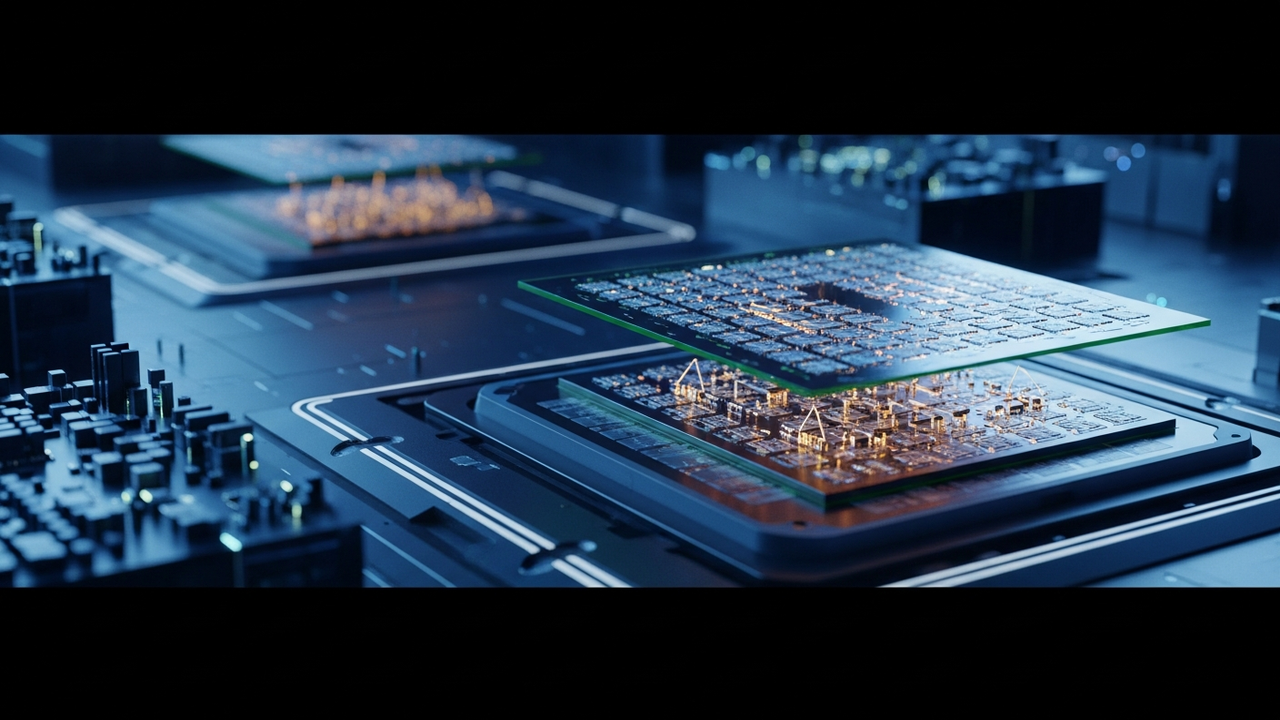
The core of Imec’s innovation lies in its vertically stacked IGZO-based FeFET architecture. By arranging memory cells in three dimensions, this design dramatically enhances storage density per unit area, a crucial factor for miniaturization and performance scaling in advanced AI hardware. The strategic choice of IGZO as the semiconductor channel material is pivotal, offering both high electron mobility and exceptionally low leakage current. These properties are instrumental in boosting overall FeFET performance, contributing to faster operation and significantly lower standby power consumption.
Furthermore, the successful reduction of operating voltage in the ferroelectric capacitors directly translates to decreased memory power consumption. This profound improvement in energy efficiency impacts a broad spectrum of AI systems, from power-constrained, battery-powered AI edge devices to large-scale data centers. Ferroelectric memory uniquely offers the tantalizing prospect of combining non-volatility with operational speeds approaching SRAM and densities comparable to DRAM. This unique blend holds immense promise for radically enhancing data processing efficiency, especially for emerging paradigms such as AI in-memory computing and highly integrated edge AI applications, addressing the data movement bottleneck head-on.
Strategic Significance & Outlook: Redefining Memory for Next-Gen AI
Imec’s significant advancements in ferroelectric memory technology are poised to redefine the very role of memory within AI systems, serving as a catalyst for the development of far more powerful and energy-efficient AI hardware. The combined benefits of enhanced storage density and reduced operating voltage are expected to accelerate the proliferation of sophisticated edge AI devices and enable a more seamless and consistent AI infrastructure extending from cloud data centers to the intelligent edge.
This technology is strategically positioned to be a pivotal player in the fiercely competitive next-generation memory landscape. Anticipated applications include serving as a viable, high-performance alternative to NAND flash memory for persistent storage and as high-density embedded memory directly integrated into logic chips. This innovation is also deeply intertwined with broader semiconductor roadmaps, including advanced memory, logic integration, and advanced packaging techniques such as chiplets and 3D stacking. Through this breakthrough, Imec is expected to make a foundational contribution to the continued evolution of AI technology and its pervasive deployment across a vast array of electronic devices.
Source: https://www.inelectronics.co.uk/imec-advances-ferroelectric-memory-for-ai-systems/
Get our weekly technology intelligence — free
Receive an infographic that lets you judge at a glance whether each field’s analysis report is worth reading.
Subscribe Free — Weekly Tech Intelligence
By subscribing, you’ll receive Troy-Technical’s weekly technology intelligence newsletter.
- Your email and selected fields are used only to deliver the newsletter.
- We never share your information with third parties.
- You can unsubscribe anytime via the link in each email.
See our Privacy Policy for details.
Takes about a minute · Unsubscribe anytime