Key Findings
A recent research paper published on arXiv proposes an innovative design for a high-performance, space-based AI infrastructure system. This system envisions networking numerous solar-powered satellites via Free-Space Optical Inter-Satellite Links (FSO ISL) and positioning them in specific sun-synchronous orbits. The design aims to achieve significantly enhanced ‘near-continuous power supply’ and ‘ultra-low latency’ compared to terrestrial systems, while also optimizing launch costs. This opens a new frontier for next-generation AI computing by overcoming the power and cooling constraints faced by Earth-based AI data centers.
Technical and Clinical Details
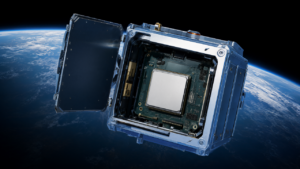
The proposed AI infrastructure consists of a large number of small satellites, each equipped with high-performance AI processing units. These satellites will exchange data at high speeds using FSO ISL technology, forming a global data center network. By placing them in sun-synchronous orbits, the constellation can receive almost continuous sunlight, ensuring a stable power supply. This fundamentally addresses challenges like reliance on fossil fuels and nighttime interruptions for solar power generation on Earth. However, precisely controlling the close-proximity flight and maintaining the configuration of such a large satellite constellation will require advanced orbital control technologies and autonomous navigation systems. Furthermore, integrating radiation-hardened designs to prevent electronic damage from space radiation, and effective heat dissipation mechanisms (e.g., hierarchical thermal control architectures, PCM heat storage) are critical technical challenges. Maximizing the power efficiency of the AI chips themselves is also indispensable.
Background and Industry Context
With the increasing complexity of AI models and the explosive growth in data volume, terrestrial data centers are facing immense challenges in power consumption and thermal management. The maturation of mega-constellation technologies, as seen in SpaceX’s Starlink and Amazon’s Project Kuiper, is enhancing the feasibility of space-based computing infrastructure. The proposal in this paper extends these existing communication infrastructures to high-performance AI processing. It is expected to contribute to real-time analysis of Earth observation data, onboard intelligence for space exploration missions, and enhanced resilience for cloud computing services on Earth. Space-based AI data centers hold broad strategic significance, including providing services to remote areas and disaster recovery for networks.
Strategic Significance and Outlook
The realization of this space-based AI infrastructure will bring about significant transformation across the entire space economy. High-performance computing capabilities in orbit will offer new data-driven services to various industries on Earth and dramatically improve the autonomy and efficiency of space exploration. Future research will focus particularly on miniaturization and performance enhancement of radiation-hardened devices, autonomous operation technologies for large constellations, and establishing economically sustainable launch and operational models. If these challenges are resolved, space will become a new ‘edge’ for information processing and AI, significantly expanding humanity’s digital frontier.
Source: https://arxiv.org/html/2511.19468v2
Get our weekly technology intelligence — free
Receive an infographic that lets you judge at a glance whether each field’s analysis report is worth reading.
Subscribe Free — Weekly Tech Intelligence
By subscribing, you’ll receive Troy-Technical’s weekly technology intelligence newsletter.
- Your email and selected fields are used only to deliver the newsletter.
- We never share your information with third parties.
- You can unsubscribe anytime via the link in each email.
See our Privacy Policy for details.
Takes about a minute · Unsubscribe anytime