Key Findings
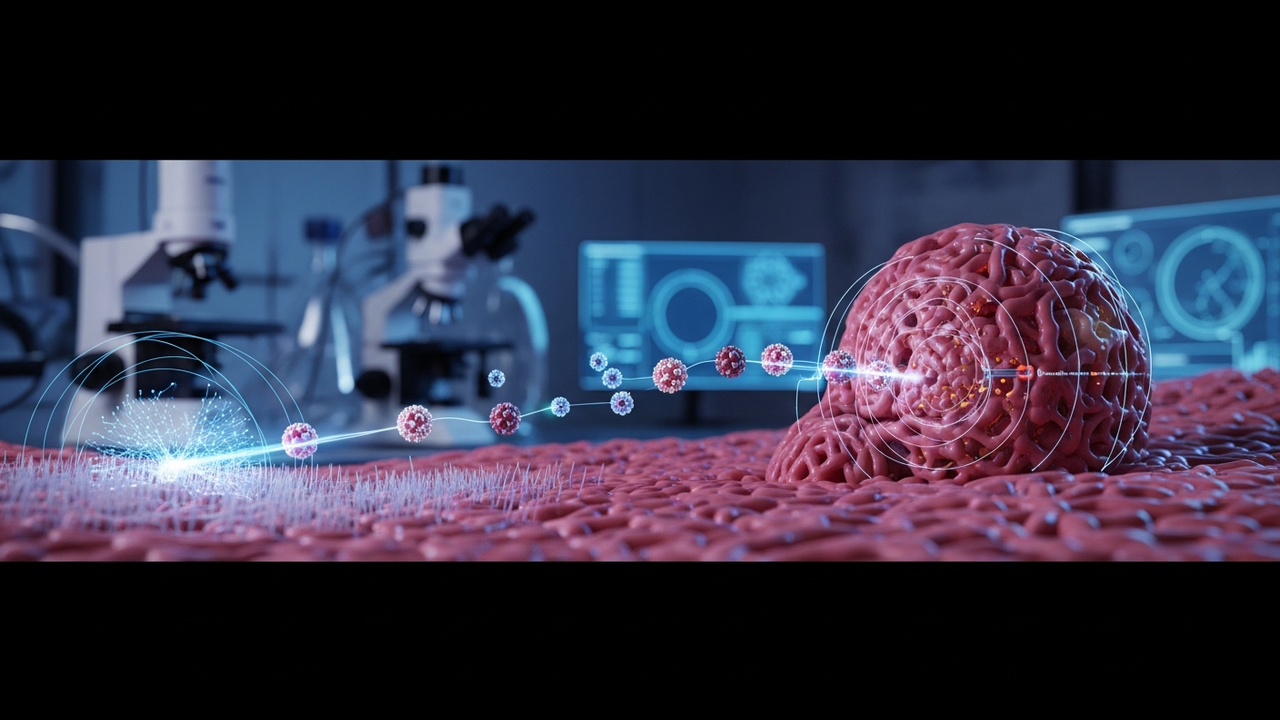
A review article published in ACS Publications’ ‘Bioconjugate Chemistry’ meticulously elucidates the mechanistic barriers that impede the efficient delivery and accumulation of systemically administered nanoparticle-based therapeutics in solid tumors. Crucially, the paper proposes novel delivery strategies that involve actively modifying the tumor microenvironment to substantially enhance nanoparticle access and therapeutic efficacy.
Technical / Clinical Details
The review identifies primary challenges for nanoparticle therapeutics, including complex design, batch-to-batch variability in manufacturing, and heterogeneity in particle size. These factors directly influence blood circulation time, biodistribution, and tumor penetration. Furthermore, solid tumors present unique biophysical barriers, such as a dense extracellular matrix, abnormal vasculature, high interstitial fluid pressure, and poor lymphatic drainage, which collectively hinder deep nanoparticle penetration. Consequently, many nanoparticles accumulate in the peritumoral region but fail to reach target cells before systemic clearance. The proposed strategies to overcome these barriers include:
- Tumor Vasculature Normalization: Inhibiting angiogenesis to remodel abnormal tumor vessels towards a more normalized, less leaky, and more efficient transport pathway.
- Reduction of Interstitial Pressure: Utilizing enzymes like hyaluronidase to degrade the extracellular matrix, thereby lowering interstitial fluid pressure within the tumor and promoting nanoparticle infiltration.
- Optimization of Immune Cell Interactions: Modulating the function of immune cells, such as tumor-associated macrophages and T cells, to enhance nanoparticle retention within tumors and amplify anti-tumor immune responses.
- Application of Physical Delivery Techniques: Employing external stimuli like ultrasound, microbubbles, or photothermal effects to transiently increase tumor permeability and facilitate nanoparticle extravasation and penetration.
These strategies aim to render the tumor microenvironment more “permissive” for nanoparticles, maximizing delivery efficiency.
Background & Context
Nanoparticle-based drug delivery systems have been the subject of intensive research for decades due to their potential to enhance drug target specificity and reduce systemic toxicity in cancer treatment. Despite promising in vitro results, many nanomedicines have underperformed in clinical trials for solid tumors, primarily due to the aforementioned complex barriers imposed by the tumor microenvironment. This review offers a critical new perspective, suggesting that beyond optimizing nanoparticle design, modifying the biological environment itself is essential for bridging this translational gap and advancing the treatment of intractable cancers.
Strategic Significance & Outlook
The approach of modulating the tumor microenvironment holds immense promise for significantly improving the clinical success rate of nanoparticle therapeutics. Future research will likely focus on the integrated optimization of these strategies with advanced nanoparticle designs. For example, smart nanoparticles that release drugs in response to specific tumor microenvironmental cues, or combination therapies involving nanoparticles that normalize tumor vasculature alongside conventional anticancer agents, are anticipated. This research also contributes to the advancement of personalized medicine, potentially leading to tailored nanoparticle delivery strategies based on individual tumor characteristics. Ultimately, these innovations are expected to accelerate the development of new treatments for metastatic and drug-resistant cancers, substantially improving patient prognosis.
Source: https://pubs.acs.org/doi/10.1021/acs.bioconjchem.6c00162
Get our weekly technology intelligence — free
Receive an infographic that lets you judge at a glance whether each field’s analysis report is worth reading.
Subscribe Free — Weekly Tech Intelligence
By subscribing, you’ll receive Troy-Technical’s weekly technology intelligence newsletter.
- Your email and selected fields are used only to deliver the newsletter.
- We never share your information with third parties.
- You can unsubscribe anytime via the link in each email.
See our Privacy Policy for details.
Takes about a minute · Unsubscribe anytime