Key Findings
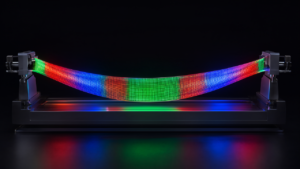
A recent study published in MDPI presents an optimized polyurethane/carbon nanotube (CNT) composite that exhibits remarkable mechanical strength, thermal conductivity, and, most notably, stress-free two-way shape memory behavior. This innovative material can undergo precise, remote manipulation through light stimulation, offering a significant advancement in smart material design.
Technical / Clinical Details
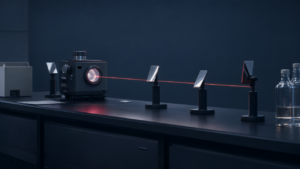
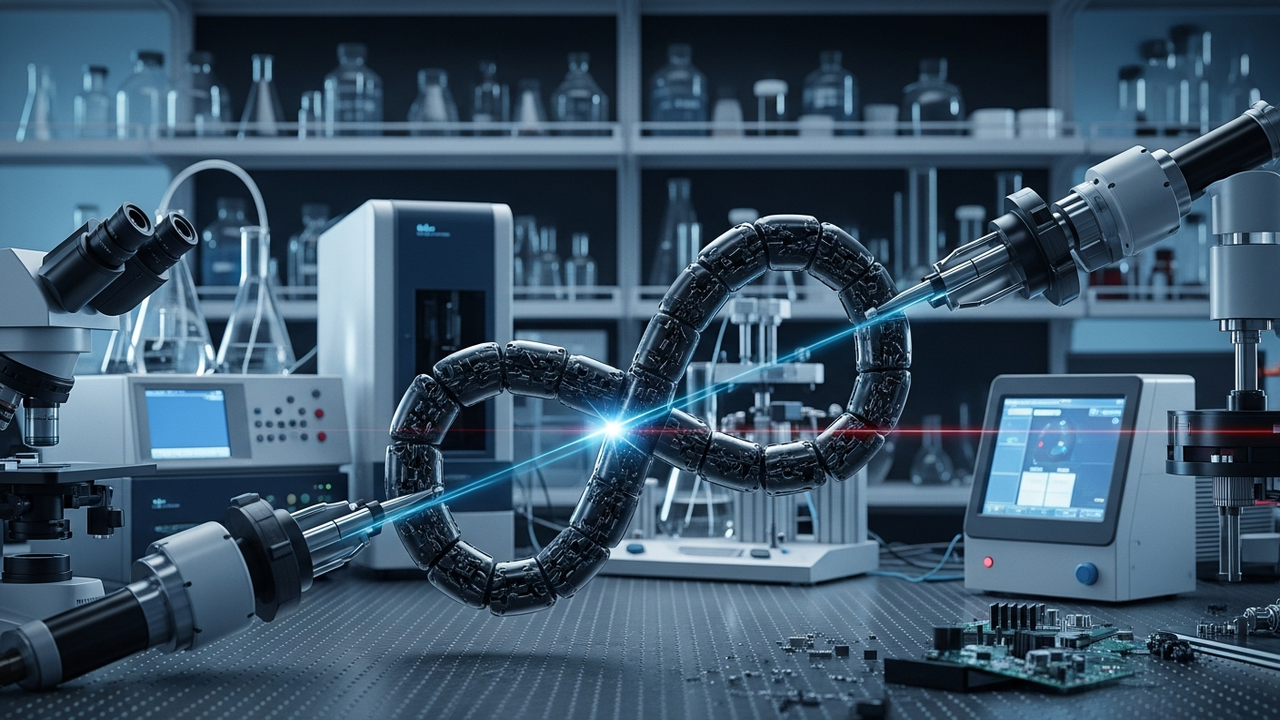
The novel polyurethane/CNT composite breaks through limitations of traditional shape memory polymers. By uniformly dispersing CNTs within the polyurethane matrix, the composite’s tensile strength and elastic modulus are significantly enhanced. The high aspect ratio and excellent thermal conductivity of CNTs boost the material’s overall thermal conductivity and accelerate its thermal responsiveness. The most significant achievement is the attainment of “stress-free two-way shape memory” after specific training cycles (e.g., cyclic stretching), allowing the material to reversibly switch between two stable shapes without external mechanical bias. This phenomenon is attributed to the induced microstructural rearrangement and stabilization of the CNT network within the polymer. Furthermore, by leveraging CNTs’ efficient absorption of near-infrared light and its conversion to heat, the material’s shape can be precisely and remotely controlled using external light stimuli, such as a laser. At higher temperatures, the composite also shows potential “vitrimer” properties, suggesting self-healing and recyclability through dynamic covalent bond rearrangement, highlighting its multifunctionality.
Background & Context
Shape memory materials have garnered considerable attention for applications in self-healing structures, smart actuators, and adaptive components. However, most existing materials are limited to one-way shape memory, and achieving two-way memory typically requires continuous external stress. The lack of remote control and multifunctionality has also been a barrier to widespread practical application. This research provides a new design paradigm by maximally utilizing the nanostructure of CNTs to overcome these limitations. It reconfirms the crucial value of nanotechnology in realizing unprecedented high-performance smart materials by imparting the physical properties of carbon nanotubes to polymers.
Strategic Significance & Outlook
This stress-free two-way shape memory polyurethane/CNT composite holds transformative potential across diverse application areas. In aerospace, it could contribute to lighter and more functional deployable antennas or variable wing structures. In robotics, it offers new possibilities for actuators in soft robots, enabling more complex and human-like movements. Medical applications might include smart catheters or drug delivery devices that change shape in response to temperature or light. Furthermore, applications in smart textiles, wearable devices, and self-healing coatings for everyday products are also anticipated. While establishing large-scale production techniques and cost reduction remain key challenges, the potential impact of this material is immense and far-reaching.
Source: https://www.mdpi.com/2073-4360/18/13/1582
Get our weekly technology intelligence — free
Receive an infographic that lets you judge at a glance whether each field’s analysis report is worth reading.
Subscribe Free — Weekly Tech Intelligence
By subscribing, you’ll receive Troy-Technical’s weekly technology intelligence newsletter.
- Your email and selected fields are used only to deliver the newsletter.
- We never share your information with third parties.
- You can unsubscribe anytime via the link in each email.
See our Privacy Policy for details.
Takes about a minute · Unsubscribe anytime