Background
Carbon-based nanomaterials, particularly graphene and carbon nanotubes (CNTs), represent a cornerstone of next-generation materials science, celebrated for their extraordinary mechanical, electrical, and thermal properties. While powerful individually, ongoing research actively explores synergistic combinations of these materials to unlock even greater performance. Arc plasma technology stands out as a rapid and efficient synthesis method, leveraging high-temperature, high-energy plasma to produce high-purity, high-performance nanomaterials. This approach offers significant advantages over conventional techniques like Chemical Vapor Deposition (CVD) by drastically reducing synthesis times. Such high-performance materials are crucial for addressing pressing global challenges, including advanced energy storage, environmental sensing, and sustainable hydrogen fuel technologies.
Key Findings
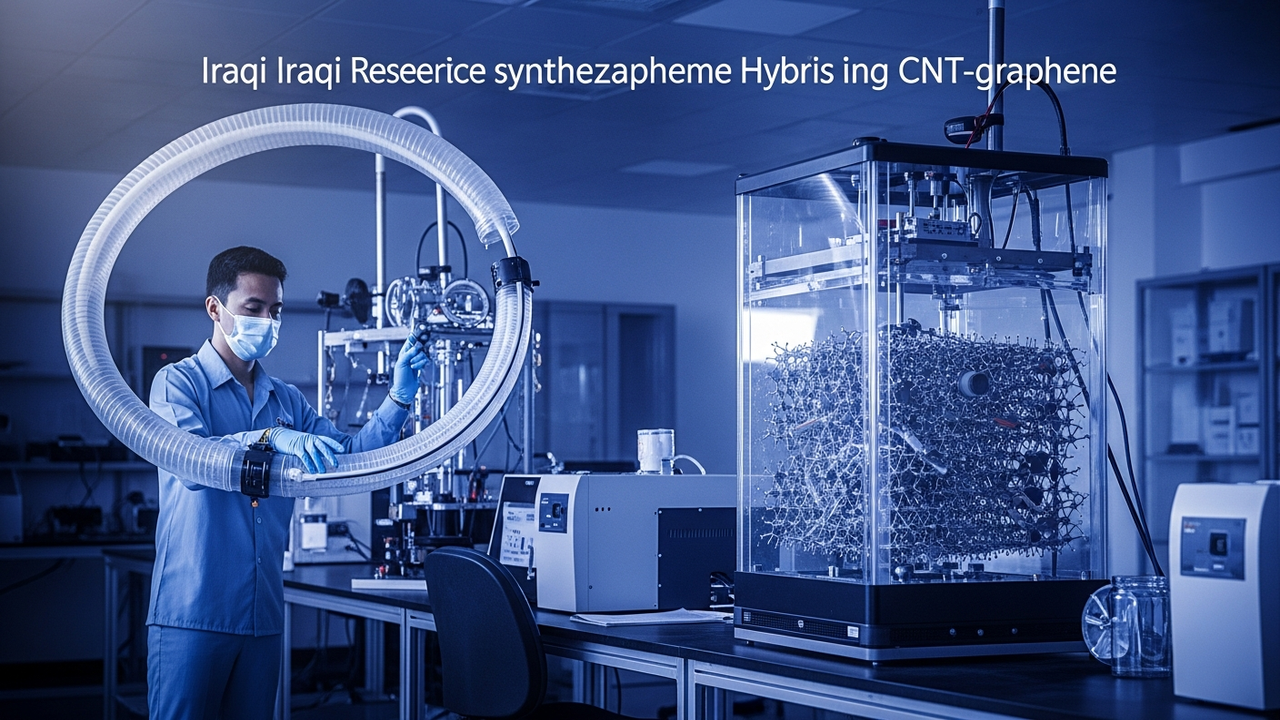
Researchers, publishing in the ‘Iraqi Journal of Applied Physics,’ have successfully synthesized a high-performance carbon nanotube (CNT)-graphene hybrid nanocomposite using an innovative arc plasma technique. This rapid, efficient 15-minute process transforms graphite into a bilayer structure of graphene and multiwall carbon nanotubes (MWCNTs) through simultaneous exfoliation and growth. The resulting material exhibits exceptional properties: a specific surface area of 1401 m²/g (±38 m²/g) and an electrical conductivity of 52.2×10³ S/cm (±2.1×10³ S/cm).
This unique synthesis method effectively combines the strengths of both graphene—renowned for its high electrical conductivity—and CNTs—celebrated for mechanical strength and large surface area. The impressive specific surface area of 1401 m²/g significantly surpasses many conventional carbon materials, making it exceptionally advantageous for gas adsorption, crucial for applications like hydrogen storage and catalysis. Concurrently, the high electrical conductivity ensures rapid electron transfer, a vital characteristic for high-performance energy storage devices and sensitive electronic sensors. The synergistic effects within this hybrid structure provide enhanced stability and functionality beyond what either graphene or CNTs can achieve alone.
The exceptional physicochemical properties of this CNT-graphene hybrid position it as a transformative material across several critical applications. For hydrogen storage, its high surface area facilitates efficient molecular adsorption, laying crucial groundwork for next-generation fuel cell technologies. In sensing, its superior conductivity promises ultra-sensitive gas and biosensors. As an electrode material, it is projected to dramatically boost the efficiency of supercapacitors and lithium-ion batteries by combining high capacity with rapid charge/discharge capabilities. The team plans future work on establishing large-scale synthesis techniques, evaluating long-term stability, and conducting real-world application demonstrations. This pioneering research not only marks a significant advancement in nanomaterial science but also underscores the growing contributions of Middle Eastern research to global technological innovation.
Source: https://ijap-iq.com/index.php/ijap/article/view/505
Get our weekly technology intelligence — free
Receive an infographic that lets you judge at a glance whether each field’s analysis report is worth reading.
Subscribe Free — Weekly Tech Intelligence
By subscribing, you’ll receive Troy-Technical’s weekly technology intelligence newsletter.
- Your email and selected fields are used only to deliver the newsletter.
- We never share your information with third parties.
- You can unsubscribe anytime via the link in each email.
See our Privacy Policy for details.
Takes about a minute · Unsubscribe anytime