Key Findings
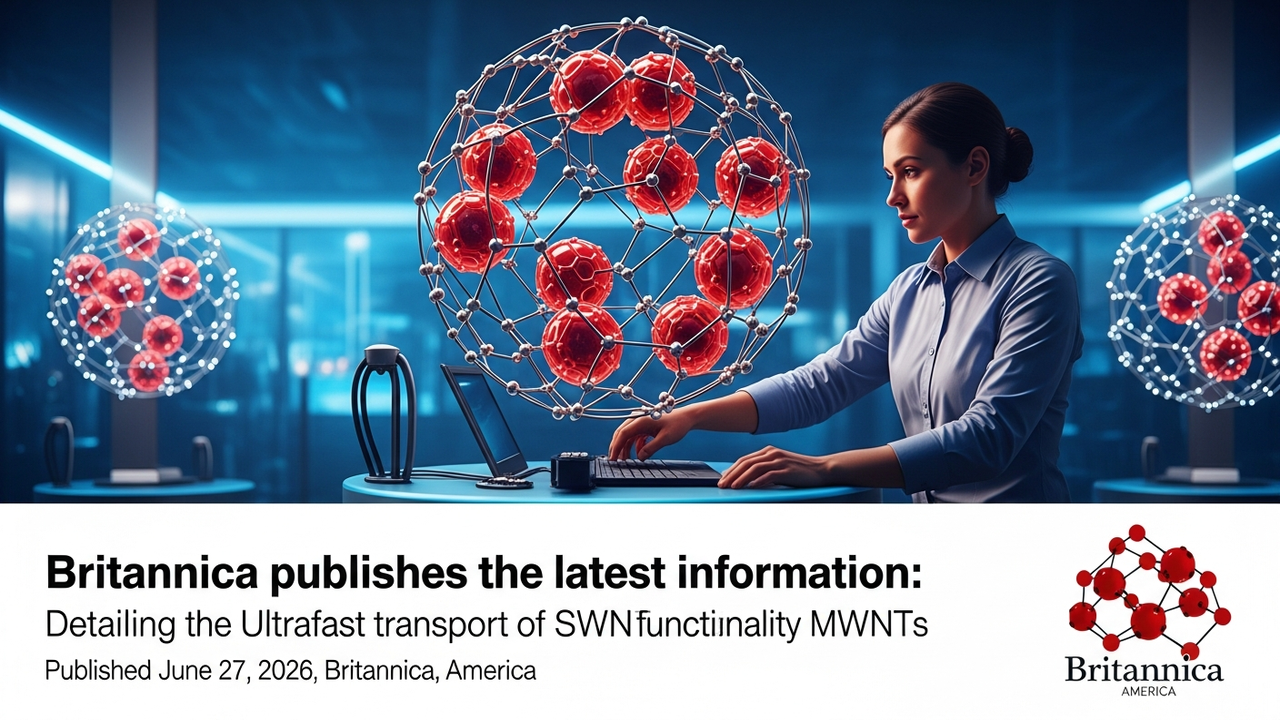
A recent article from Britannica provides an in-depth exploration of single-walled carbon nanotubes (SWNTs) and multi-walled carbon nanotubes (MWNTs), crucial members of the fullerene family. The piece highlights their distinct properties and extensive application potential, specifically emphasizing SWNTs’ ultra-efficient electrical and thermal conduction capabilities exceeding diamond, and MWNTs’ high elasticity and multifunctional attributes.
Technical / Clinical Details
Single-Walled Carbon Nanotubes (SWNTs): SWNTs consist of a single graphene sheet rolled into a cylinder, with diameters merely a few nanometers. This extremely small size and perfect crystalline structure enable a phenomenon called “ballistic transport,” where electrons move without scattering, facilitating ultra-efficient electrical conduction. This implies carrying current with significantly lower resistance than conventional copper wires, making them promising for next-generation ultra-high-speed electronic devices and miniaturized circuits. Furthermore, SWNTs exhibit faster phonon transport (a mechanism for heat conduction) than diamond, holding potential as superior thermal management materials.
Multi-Walled Carbon Nanotubes (MWNTs): MWNTs comprise multiple concentric graphene sheets, generally having larger diameters and more complex structures than SWNTs. MWNTs demonstrate very high elasticity and can absorb large external loads through reversible deformations, making them ideal for shock absorbers and reinforcing agents in high-performance composite materials. Their applications are diverse, serving as catalyst supports to accelerate chemical reactions, or as active layers in highly sensitive chemical sensors for environmental monitoring and medical diagnostics. Moreover, when added to polymer composites like plastics, MWNTs significantly enhance the material’s electrical conductivity and mechanical strength, contributing to the realization of lightweight and high-performance products.
Background & Context
Since their discovery in 1991, carbon nanotubes (CNTs) have garnered immense interest across various fields, including materials science, electronics, medicine, and energy, due to their unique nanoscale structure and exceptional physical and chemical properties. Their extraordinary strength, conductivity, and thermal conductivity hold the potential to create products with novel functionalities and performances previously unattainable with conventional materials. As members of the fullerene family, CNTs have laid the foundation for nanotechnology and inspired extensive research and development. Specifically, SWNTs and MWNTs, with their differing properties, are utilized according to specific applications, showcasing the versatility in nanomaterial design.
Strategic Significance & Outlook
The ultra-fast electron transport properties of SWNTs are expected to revolutionize high-performance electronics, including next-generation transistors, interconnects for quantum computing, and ultra-high-frequency devices. Meanwhile, the multifunctionality of MWNTs is anticipated to lead to widespread adoption in various industries such as lightweight automotive components, aerospace structural materials, sports equipment, medical implants, and energy storage devices. Challenges for the commercialization of these nanomaterials still include establishing large-scale synthesis techniques, ensuring quality uniformity, and reducing costs, but research institutions and companies worldwide are actively working to address these issues. Fullerenes and carbon nanotubes will continue to stand at the forefront of nanotechnology, driving innovation across numerous industries.
Source: https://www.britannica.com/science/fullerene/Carbon-nanotubes
Get our weekly technology intelligence — free
Receive an infographic that lets you judge at a glance whether each field’s analysis report is worth reading.
Subscribe Free — Weekly Tech Intelligence
By subscribing, you’ll receive Troy-Technical’s weekly technology intelligence newsletter.
- Your email and selected fields are used only to deliver the newsletter.
- We never share your information with third parties.
- You can unsubscribe anytime via the link in each email.
See our Privacy Policy for details.
Takes about a minute · Unsubscribe anytime